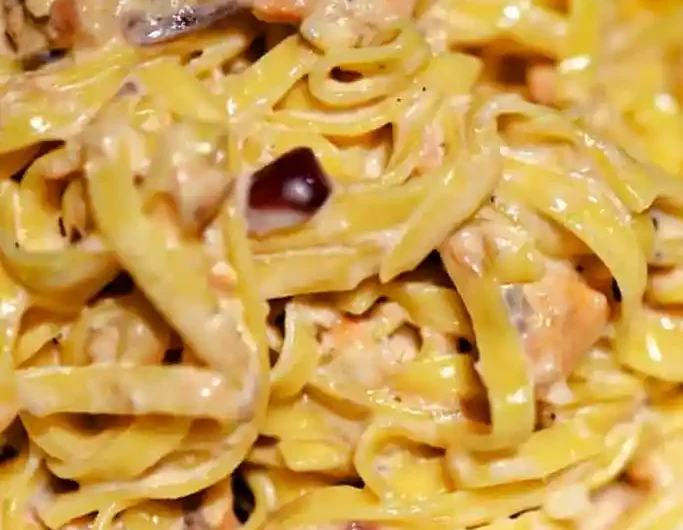
This fast pasta dish combines fresh salmon and a rich cream sauce in under 15 minutes. It is an ideal choice for busy weeknights when you need a restaurant-quality meal quickly.
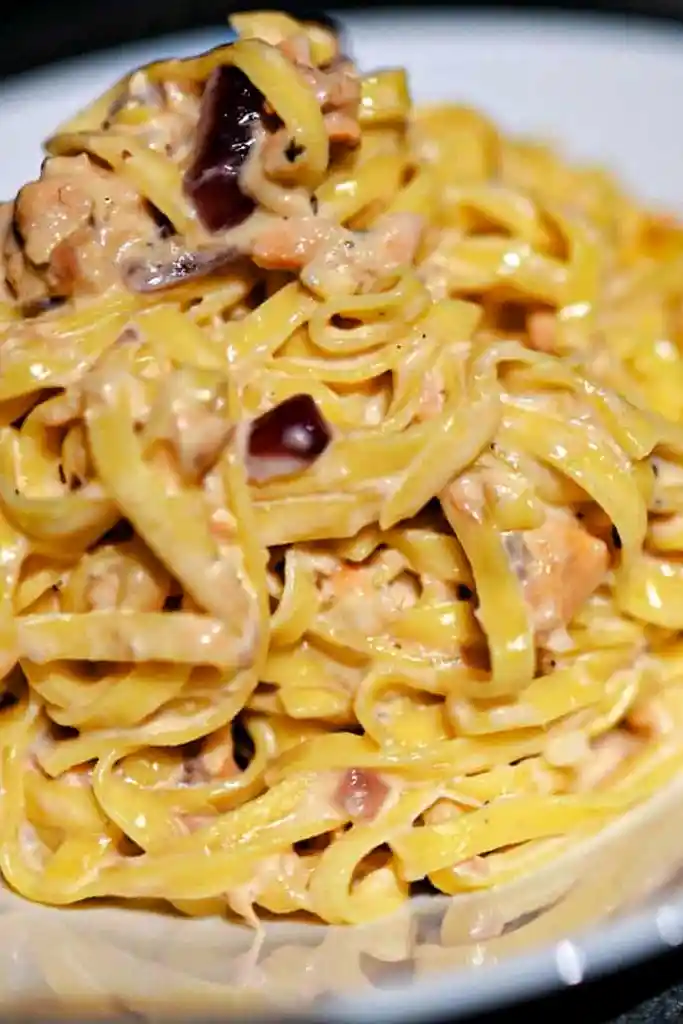
List of ingredients
- 250 g linguine – use fresh for a softer texture or dry for a classic bite.
- 150 g fresh salmon – cut into bite-sized pieces; canned salmon is a viable alternative.
- 20 g butter – used for sautéing the aromatics.
- 1 small red onion – finely chopped for a touch of sweetness.
- 2 cloves garlic – minced for aromatic depth.
- 150 ml single cream – double cream can be used for a thicker, richer consistency.
- 1/4 tsp salt – to season the sauce.
- 1/4 tsp freshly ground pepper – for a subtle heat.
step-by-step instructions
- Boil the pasta: Cook linguine in salted water for 8-10 minutes or according to package directions until al dente.
- Melt butter: While the pasta is boiling, melt the butter in a pan over medium heat.
- Sauté onion: Add the chopped red onion and sauté for 2 to 3 minutes until it becomes soft.
- Add garlic: Stir in the minced garlic and cook for an additional 30 seconds.
- Cook salmon: Add salmon pieces and cook for 2-3 minutes. Break the fish apart for smaller bits or cook larger chunks for 5-6 minutes to ensure they are done.
- Create cream sauce: Pour in the cream and stir for one minute. Season the mixture with salt and pepper.
- Reserve pasta water: Save 150 ml of the starchy pasta water before draining the linguine.
- Combine pasta and sauce: Transfer the cooked linguine to the pan and stir in 100 ml of the reserved water.
- Emulsify: Toss gently until the pasta is well coated. Add more pasta water if the sauce appears too thick.
- Finish and serve: Serve immediately with a final pinch of freshly ground pepper on top.
Professional Cooking Tips for Success
Reserve the Starchy Pasta Water
The reserved pasta water contains starch released from the linguine during boiling. This starch acts as an emulsifier, helping the cream and butter bind to the pasta without separating. It ensures a glossy, smooth coating on every strand.
Control the Salmon Heat
Cook the salmon over medium heat to avoid toughening the proteins. If the pan is too hot, the salmon may sear and become dry rather than remaining tender. Monitor the color change to light pink to determine doneness.
Achieve the Perfect Al Dente Texture
Remove the pasta from the water a minute before the package suggests. The pasta will continue to cook for a short time when tossed in the hot cream sauce. This prevents the linguine from becoming mushy.
Sauté Aromatics Thoroughly
Ensure the red onion is fully translucent and soft before adding the garlic. Garlic burns much faster than onions and can become bitter if added too early. The 30-second window is sufficient for releasing the garlic’s flavor.
Ingredient Substitutions and Alternatives
Using Canned Salmon
Canned salmon is an excellent pantry alternative for this recipe. Ensure you drain the fish well and remove any visible bones or skin. Stir it in gently at the end to avoid over-processing the fish.
Incorporating Smoked Salmon
If using smoked salmon, reduce the salt in the recipe as the fish is already cured. Add smoked salmon strips at the very end of the process after the heat is turned off. The residual heat will warm the fish without overcooking it.
Dairy-Free Cream Substitutes
For a dairy-free version, replace the single cream with cashew cream or full-fat coconut milk. Be aware that coconut milk adds a slight sweetness to the dish. Stir in a squeeze of lemon to balance the flavor profile.
Alternative Pasta Shapes
Fettuccine or pappardelle are great substitutes for linguine as they hold heavy cream sauces well. If using shorter pasta like penne, you may need slightly more sauce to cover the surfaces. Adjust the pasta water ratio accordingly.
Substituting the Red Onion
Shallots can be used for a more delicate, refined flavor than red onion. Yellow or white onions also work well, though they lack the slight sweetness of the red variety. Finely dice them to ensure they cook evenly.
Flavor Variations to Try
Adding Fresh Lemon Zest
Stir in one teaspoon of fresh lemon zest just before serving. The acidity of the lemon cuts through the richness of the cream and butter. This brightens the overall flavor of the salmon.
Incorporating Fresh Spinach
Add two handfuls of baby spinach to the pan after the salmon is cooked. Stir for one minute until the leaves have just wilted. This adds color and nutrients to the meal.
Adding Caper Accents
Stir in a tablespoon of drained capers along with the cream. Capers provide a salty, briny pop that complements the fatty nature of the salmon. Reduce added salt if using this variation.
Using Fresh Parsley or Dill
Fresh dill is a classic pairing for salmon and should be chopped and stirred in at the end. Parsley provides a clean, grassy note that refreshes the palate. Both herbs should be added after removing the pan from heat.
Adding Sliced Mushrooms
Sauté sliced cremini or button mushrooms with the onions for an earthier taste. Cook the mushrooms until they release their moisture and brown slightly. This adds a savory depth to the cream sauce.
Serving Suggestions
Pairing with a Side Salad
Serve this pasta with a light arugula salad dressed with lemon and olive oil. The peppery greens balance the creamy weight of the pasta. A classic Caesar salad is another strong option.
Garnishing for Presentation
Top the dish with a sprinkle of fresh chives or microgreens for a professional look. A final crack of black pepper adds visual contrast. Use a twisting motion with tongs to plate the pasta in a neat mound.
Pairing with Roasted Vegetables
Roasted asparagus or steamed broccoli florets complement the flavors of this dish. These vegetables add a necessary crunch and fiber. Place them on the side or toss them directly into the pasta.
Choosing the Right Dinnerware
Serve the pasta in shallow bowls to keep the sauce concentrated around the noodles. Pre-heating the bowls in a warm oven prevents the cream sauce from thickening too quickly. This ensures the meal stays hot until the last bite.
Storage and Reheating Guidelines
Proper Refrigeration Methods
Store leftovers in an airtight container to prevent the pasta from absorbing odors from the fridge. Allow the pasta to cool slightly before sealing the lid to avoid excessive condensation. This helps maintain the texture of the salmon.
Maximum Storage Duration
This dish is best consumed within two to three days. After this period, the cream sauce may begin to break or the salmon may lose its texture. Always check for freshness before consuming.
Reheating in a Pan
Reheating on the stovetop is the best method to maintain quality. Place the pasta in a skillet over low heat and add a splash of milk or water to loosen the sauce. Stir gently to avoid breaking the salmon pieces.
Microwave Reheating Tips
If using a microwave, heat the pasta on a medium power setting in short intervals. Stir the dish every minute to ensure even heating. Adding a teaspoon of water helps recreate the creaminess of the sauce.
Make-Ahead Strategies
Prepping Aromatics in Advance
You can chop the red onion and mince the garlic several hours before cooking. Store them in a small container in the refrigerator. This reduces the active prep time to just a few minutes.
Preparing the Salmon
Cut the salmon into bite-sized cubes and store them in a sealed container on a bed of parchment paper. Ensure the salmon is kept at a cold temperature until the moment it hits the pan. This maintains the structural integrity of the fish.
Measuring Ingredients Early
Place the cream, butter, and seasonings in measured bowls (mise en place). This prevents the garlic from burning while you are searching for the cream. It allows for a seamless transition between steps.
Troubleshooting Common Issues
Dealing with a Broken Sauce
If the cream sauce separates into oil and liquid, whisk in a tablespoon of pasta water over low heat. Constant stirring helps re-emulsify the fats. Avoid boiling the sauce aggressively, as high heat can cause cream to split.
Preventing Overcooked Salmon
Check the salmon’s internal temperature or appearance; it should be opaque and flake easily with a fork. Overcooked salmon becomes rubbery and loses its moisture. Remove the pan from heat the moment the fish is cooked through.
Fixing a Sauce That is Too Thick
If the sauce becomes too thick or sticky, gradually stir in more reserved pasta water. Add the water one tablespoon at a time until the desired consistency is reached. The pasta will continue to absorb liquid, so keep a little extra water on hand.
Addressing Bland Flavors
If the dish tastes flat, add a small pinch of salt or a drop of lemon juice. Salt enhances the natural flavor of the salmon and the richness of the cream. Taste the sauce before adding the pasta to ensure the seasoning is correct.
Frequently Asked Questions
Can I use frozen salmon?
Yes, you can use frozen salmon, but it must be completely thawed before cooking. Pat the salmon dry with paper towels to ensure it sears properly in the butter. Cooking frozen salmon directly can lead to excess water in the sauce.
Which cream is best for this recipe?
Single cream provides a lighter, more fluid sauce that is less heavy on the palate. Double cream creates a much thicker, velvet-like consistency that is more indulgent. Choose based on your preference for richness.
How do I prevent the salmon from sticking?
Ensure the butter is fully melted and shimmering before adding the fish. Do not crowd the pan, as this lowers the temperature and causes sticking. Let the salmon sear for a minute before attempting to flip or move the pieces.
Can I use whole wheat pasta?
Whole wheat linguine works well and adds a nuttier flavor and more fiber. Note that whole wheat pasta often requires a slightly longer boiling time. Adjust the cook time based on the specific brand’s instructions.
Is it possible to add cheese?
Yes, stirring in a handful of grated Parmesan cheese at the end adds a salty, umami depth. Add the cheese after removing the pan from the heat to prevent it from clumping. This creates a more traditional Alfredo-style finish.
Print
Quick Creamy Salmon Pasta with Linguine
- Total Time: 15 minutes
- Yield: 2 servings 1x
- Diet: General
Description
A quick and luscious creamy salmon linguine that can be prepared in just 15 minutes, making it an ideal comfort food dinner for two.
Ingredients
- 250 g linguine
- 150 g fresh salmon, cut into bite-size pieces
- 20 g butter
- 1 small red onion
- 2 cloves garlic, minced
- 150 ml single cream
- 1/4 tsp salt
- 1/4 tsp freshly ground pepper
Instructions
- Boil: Boil the pasta in salted water for 8-10 minutes or according to the instructions on the package until al dente.
- Melt: Melt the butter in a pan over medium heat.
- Saute: Add the chopped red onion and saute for 2 to 3 minutes until soft.
- Aromatics: Add the garlic and cook for another 30 seconds.
- Cook Fish: Add the salmon and cook for 2-3 minutes, breaking it down if desired.
- Cream: Add the cream and stir for one minute, then season with salt and pepper.
- Drain: Save 150 ml pasta water and drain the linguine.
- Combine: Transfer the linguine to the pan, add 100 ml of pasta water, and toss gently until covered.
- Serve: Serve immediately with a pinch of freshly ground pepper on top.
Notes
Save the starchy pasta water to help emulsify the sauce. Canned salmon or smoked salmon can be used as alternatives.
- Prep Time: 5 minutes
- Cook Time: 10 minutes
- Category: Pasta
- Method: Stovetop
- Cuisine: Italian
Nutrition
- Serving Size: 1 serving
- Calories: 699 kcal
- Sugar: 4 g
- Sodium: 424 mg
- Fat: 46 g
- Saturated Fat: 25 g
- Unsaturated Fat: 18 g
- Trans Fat: 1 g
- Carbohydrates: 45 g
- Fiber: 3 g
- Protein: 27 g
- Cholesterol: 154 mg
Keywords: creamy salmon linguine, quick pasta, 15-minute dinner, Italian seafood pasta