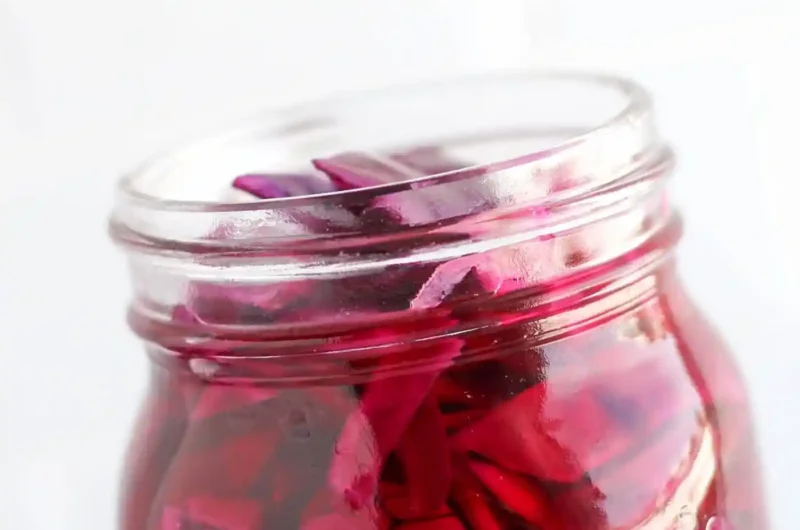
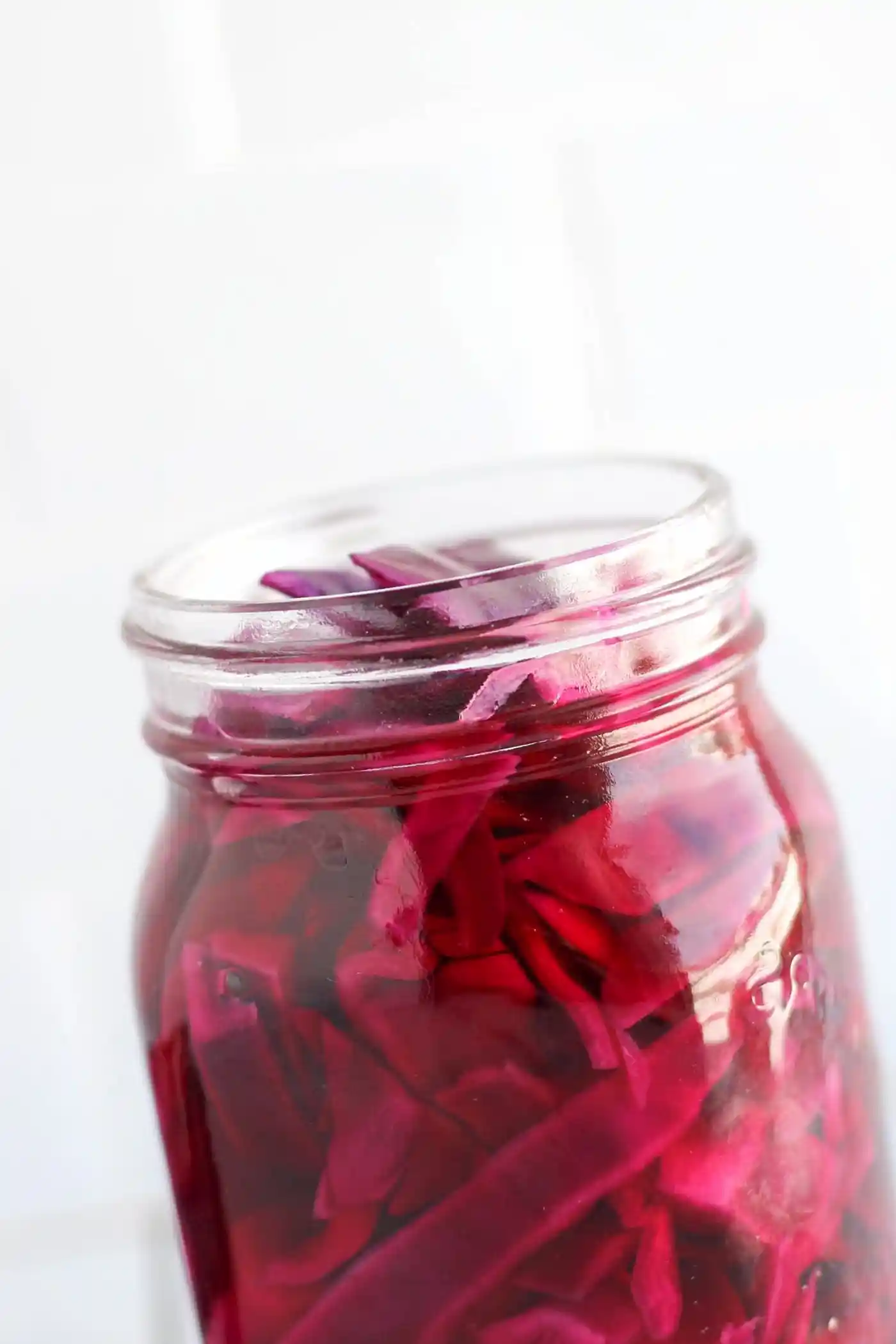
This quick pickled red cabbage adds a bright, tangy crunch to any meal. It is prepared in minutes and is perfect for topping tacos, sandwiches, or salads.
List of ingredients
- 2 cups red cabbage, sliced (about 1/4 cabbage) – thin slices ensure faster pickling.
- 1 cup water – provides the volume for the brine.
- 1/2 cup apple cider vinegar – adds the essential tang.
- 1 tablespoon sugar – offsets the vinegar’s acidity.
- 1 teaspoon salt – helps draw out moisture.
step-by-step instructions
- Prepare the cabbage: Using a sharp knife, chop the red cabbage into thin slices and set aside.
- Prepare the brine: Combine water, apple cider vinegar, sugar, and salt in a saucepan.
- Heat the mixture: Bring the liquid to a simmer over medium-high heat, then remove the pan from the heat immediately.
- Combine: Pour the simmering water, vinegar, sugar, and salt mixture over the cabbage in a bowl or mason jar.
- Seal the container: If using a bowl, transfer the cabbage and liquid to a mason jar and screw the lid on tightly.
- Chill: Place the jar in the refrigerator and let it sit for at least 30 minutes before enjoying.
Selecting the Right Produce
Choose Firm Red Cabbage
Select a cabbage head that feels heavy for its size and firm to the touch. Avoid any heads that feel soft or have loose outer leaves.
Identify Vibrant Coloration
Look for a deep, rich purple hue on the outside of the cabbage. This indicates a high concentration of anthocyanins, which results in a more vivid pink color after pickling.
Inspect for Freshness
Ensure there are no brown spots or signs of decay on the leaves. Fresh cabbage provides the best snap and crunch for quick pickling.
Preparation Techniques
Use a Sharp Chef’s Knife
A very sharp knife prevents bruising the cabbage leaves during the slicing process. This keeps the edges clean and helps the brine penetrate more efficiently.
Shred Using a Mandoline Slicer
For perfectly uniform slices, use a mandoline with a shredding blade. This ensures that every piece of cabbage pickles at the same rate.
Aim for Thin Consistency
Slicing the cabbage as thinly as possible increases the surface area. More surface area allows the vinegar and salt to penetrate the cabbage faster.
Understanding the Pickling Brine
The Role of Apple Cider Vinegar
Apple cider vinegar provides a fruity acidity that is less harsh than white vinegar. It creates a balanced flavor profile that complements savory dishes.
Balancing Acidity with Sugar
The sugar does not make the pickles sweet but instead rounds out the sharp edges of the vinegar. It prevents the brine from tasting overly aggressive.
Using Salt for Osmosis
Salt draws water out of the cabbage cells through osmosis. This process allows the seasoned brine to enter the cabbage, seasoning it from the inside out.
The Importance of Simmering
Heating the brine ensures that the sugar and salt are completely dissolved. This creates a homogenous solution that flavors the cabbage evenly.
Flavor Customizations
Adding Minced Fresh Garlic
Add two cloves of minced garlic to the jar before pouring in the brine. This adds a savory, pungent depth that pairs well with grilled meats.
Incorporating Whole Black Peppercorns
Adding a teaspoon of whole peppercorns provides a subtle, woody heat. These release flavor slowly as the cabbage sits in the refrigerator.
Adding Dried Mustard Seeds
Mustard seeds add a slight bitterness and a classic pickling aroma. They also provide a small popping texture when eaten.
Including Fresh Dill Sprigs
Fresh dill adds a bright, herbaceous note to the red cabbage. This is particularly effective if you are using the pickles for seafood dishes.
Adding Red Pepper Flakes for Heat
A pinch of crushed red pepper flakes introduces a mild spice. This contrast works well against the sweetness of the apple cider vinegar.
Using Sliced Jalapeños for Spice
Thinly sliced jalapeños can be added along with the cabbage. This creates a spicy pickled medley that is excellent for tacos.
Adding Whole Coriander Seeds
Coriander seeds provide a citrusy, floral undertone. They are an excellent addition for those who want a more complex flavor profile.
Using Sliced Carrots for Color
Adding shredded carrots creates a colorful mix of orange and pink. Carrots also add a different, sweeter crunch to the final product.
Alternative Ingredient Options
Substituting White Distilled Vinegar
White vinegar can be used for a cleaner, sharper acidic taste. It is a good choice if you want the cabbage flavor to stand out more.
Using Rice Vinegar for Mildness
Rice vinegar is naturally sweeter and milder than apple cider vinegar. It is ideal for Asian-inspired dishes or those sensitive to strong vinegar tastes.
Replacing Sugar with Maple Syrup
Maple syrup can be used as a liquid sweetener for a deeper, earthier taste. Use the same quantity as the sugar requested in the recipe.
Using Honey Instead of White Sugar
Honey provides a rich, floral sweetness that blends well with cabbage. Be sure to whisk it thoroughly into the hot brine to avoid clumps.
Substituting Agave Nectar
Agave nectar is a neutral liquid sweetener that dissolves quickly. It is a great alternative for keeping the flavor profile clean and bright.
Using Sea Salt vs. Table Salt
Coarse sea salt can be used, but it may take longer to dissolve in the saucepan. Ensure it is fully melted before pouring it over the cabbage.
Best Ways to Serve Pickled Cabbage
Topping Shrimp Tacos
Place a heap of pickled cabbage on top of grilled shrimp and avocado. The acidity cuts through the richness of the seafood and cream sauces.
Adding to BBQ Pulled Chicken
Use the cabbage as a topping for pulled chicken sandwiches. The tanginess provides a necessary contrast to sweet and smoky barbecue sauces.
Garnishing Grilled Salmon Fillets
Serve a small mound of cabbage on the side of a salmon fillet. The vinegar helps balance the fatty oils found in the fish.
Layering in Turkey Sandwiches
Replace traditional lettuce with pickled cabbage in a turkey and swiss sandwich. This adds both crunch and a bold flavor boost.
Mixing into Quinoa Nourish Bowls
Add a handful of cabbage to a bowl of quinoa, roasted sweet potatoes, and chickpeas. It acts as a built-in dressing for the grain base.
Serving Alongside Roasted Vegetables
Pair the cabbage with roasted cauliflower or Brussels sprouts. The pickled element adds brightness to the earthy, caramelized flavors of the vegetables.
Using as a Burger Topping
Add the cabbage to beef or plant-based burgers instead of raw onions. It provides a similar bite but with a more complex, tangy taste.
Adding to Greek-Style Salads
Mix pickled cabbage into a salad with cucumbers, olives, and feta cheese. It complements the salty notes of the olives and cheese perfectly.
Storage and Preservation
Selecting the Right Glass Jar
Use a glass mason jar rather than plastic containers. Glass is non-reactive and will not absorb the strong scent of the vinegar.
Ensuring a Proper Airtight Seal
Make sure the lid is screwed on tightly to prevent oxygen from entering. An airtight seal helps maintain the crunch of the cabbage for longer.
Optimal Refrigeration Temperature
Store the jar in the main body of the refrigerator, away from the door. Consistent cold temperatures prevent the cabbage from softening too quickly.
Signs of Spoilage to Watch For
Discard the cabbage if you notice any mold on the surface or an off-smelling odor. The brine should remain clear or slightly tinted pink.
Maximum Storage Duration
These quick pickles are best consumed within two to three weeks. While they remain safe longer, the texture will eventually become softer.
Managing Brine Levels
Ensure the cabbage remains fully submerged in the liquid. Use a clean spoon to press the cabbage down if it floats to the top.
Common Troubleshooting
Addressing Too Much Acidity
If the cabbage tastes too sour, add a tiny pinch more sugar. Stir it in well and let it sit for another hour to balance the flavor.
Preventing Sogginess
Do not overcook the brine; it should only reach a simmer. Pouring boiling liquid over the cabbage can partially cook it, leading to a loss of crunch.
Fixing Lack of Saltiness
If the flavor is flat, stir in a small amount of extra salt. Salt is the primary flavor enhancer that makes the other ingredients pop.
Handling Dull Coloration
Ensure you are using red cabbage rather than a pale variety. The pink color is a natural reaction between the cabbage’s pigments and the acid in the vinegar.
Frequently Asked Questions
Can I use this for canning?
No, this is a refrigerator pickle recipe and is not processed for shelf-stability. It must be kept refrigerated at all times.
Is this recipe vegan?
Yes, all the ingredients used are plant-based and contain no animal derivatives.
How soon can I eat these?
The cabbage is edible immediately, but the flavor develops significantly after 30 minutes of chilling.
Can I use green cabbage?
Yes, you can use green cabbage, though it will not have the same vibrant pink color and has a slightly different flavor profile.
Does the cabbage stay crunchy?
Yes, because the cabbage is not fully cooked, it retains a significant snap. The vinegar helps preserve this crisp texture over time.
Print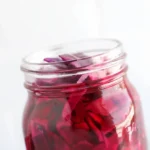
Quick Pickled Red Cabbage
- Total Time: 40 minutes
- Yield: 1 batch 1x
- Diet: Vegan, Gluten-Free
Description
This Quick Pickled Red Cabbage is so easy to make and so tasty! You’re going to want to eat it on everything. It’s a great addition to salads, tacos, nourish bowls, sandwiches and more.
Ingredients
- 2 cups red cabbage, sliced
- 1 cup water
- 1/2 cup apple cider vinegar
- 1 tablespoon sugar
- 1 teaspoon salt
Instructions
- Step: Using a sharp knife, chop the red cabbage into thin slices and set aside.
- Step: Combine water, apple cider vinegar, sugar and salt in a saucepan. Bring to a simmer over medium-high heat then remove from heat.
- Step: Pour the simmering water, vinegar, sugar and salt mixture over the cabbage in a bowl or mason jar. If using a bowl, next transfer the mixture to a mason jar and screw the lid on.
- Step: Place the jar with quick pickle mixture in the refrigerator and leave for at least 30 minutes.
Notes
Great for adding to sandwiches at lunch time and tacos for dinner.
- Prep Time: 10 minutes
- Cook Time: 5 minutes
- Category: Condiments
- Method: Quick Pickling
- Cuisine: American
Nutrition
- Serving Size: 1/4 cup
- Calories: 25 kcal
- Sugar: 3.5 g
- Sodium: 150 mg
- Fat: 0 g
- Saturated Fat: 0 g
- Unsaturated Fat: 0 g
- Trans Fat: 0 g
- Carbohydrates: 4 g
- Fiber: 1 g
- Protein: 0.5 g
- Cholesterol: 0 mg
Keywords: pickled red cabbage, quick pickles, vegan, gluten-free, condiment