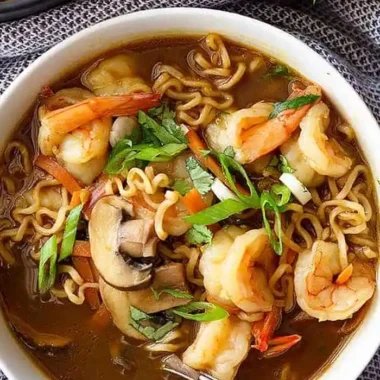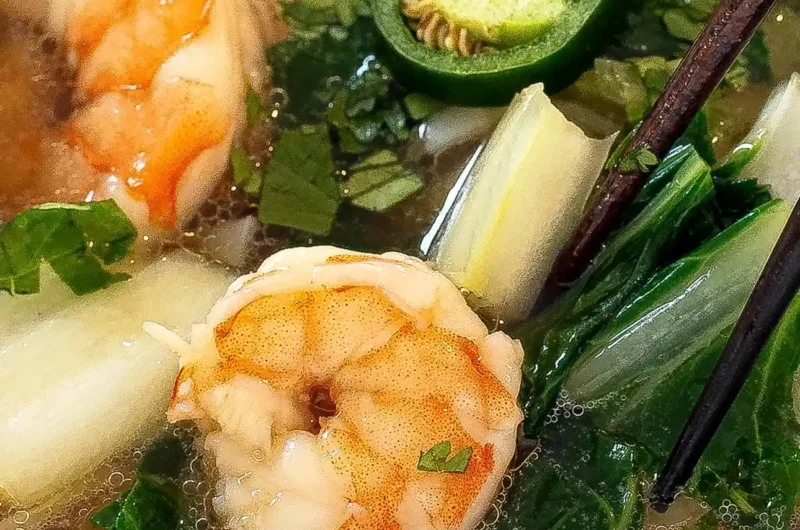
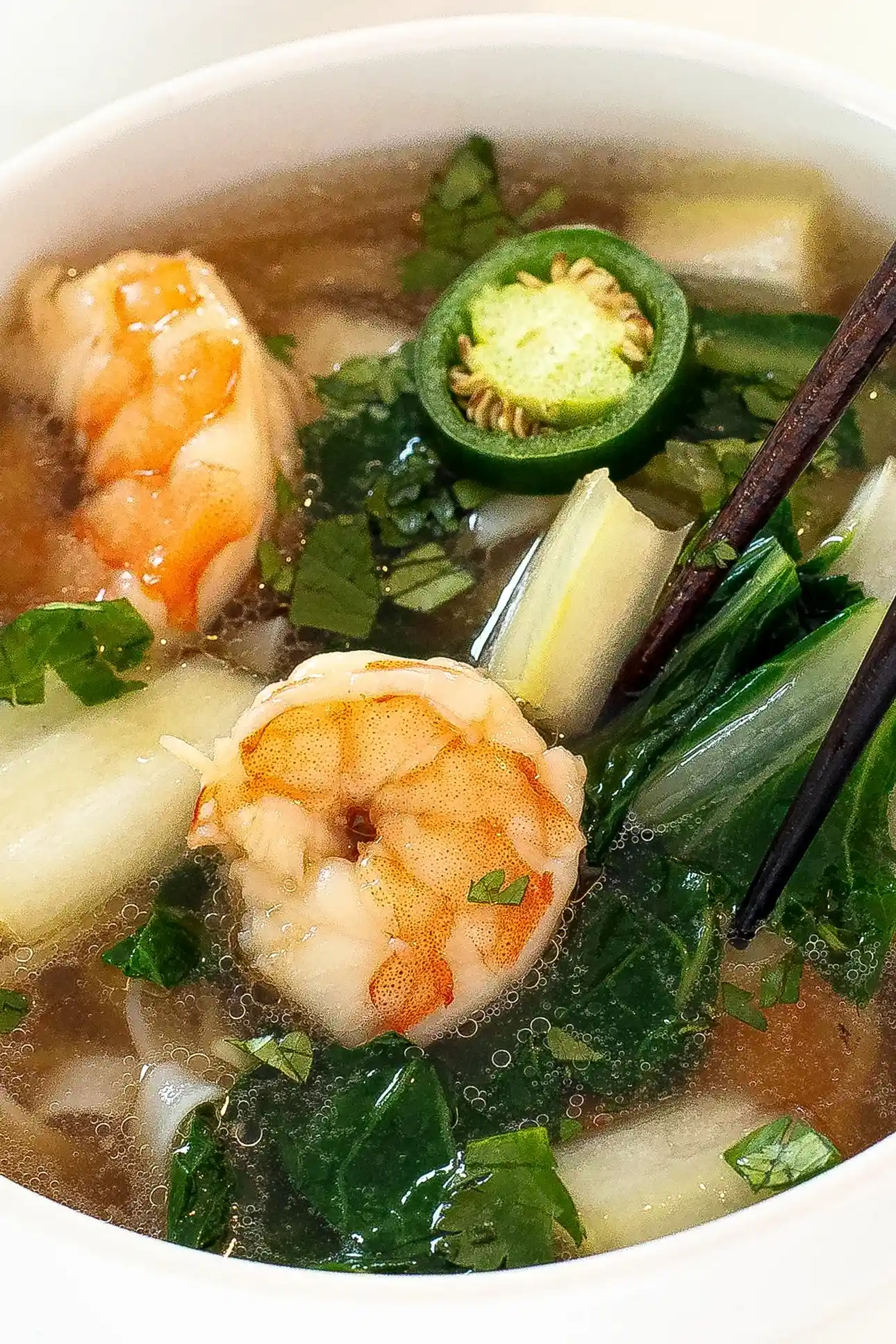
This quick shrimp pho combines a fragrant, spiced broth with fresh vegetables and tender shrimp. It is a light yet satisfying meal that can be prepared in under 30 minutes.
List of ingredients
- 8 ounces rice noodles, uncooked – follow package directions for cooking.
- 1 tbsp oil – use a neutral oil like canola or vegetable.
- 3 star anise – whole pods for aromatic depth.
- 1 cinnamon stick – adds a warm, woody note to the broth.
- 1 tsp ginger, minced – provides a fresh, zesty heat.
- 4 cloves garlic, minced – sautéed for a savory base.
- 6 cups low sodium chicken broth – allows for better control of salt levels.
- 1 tbsp fish sauce – adds essential salty, umami flavor.
- 1 tbsp low sodium soy sauce – enhances the depth of the broth.
- 1 stalks lemon grass – bruised or sliced to release citrus oils.
- 1 jalapeno, sliced and divided – used for both simmering and garnish.
- 12 ounces large shrimp, peeled and deveined – save the shells for extra flavor.
- 2-3 leaves bok choy, chopped – provides a crisp, leafy texture.
- 2 tbsp lime juice – freshly squeezed for brightness.
- 2 tbsp cilantro, plus more for serving (chopped) – fresh herbal finish.
- 1 cup button mushrooms (thinly sliced) – optional for added earthiness.
step-by-step instructions
- Prepare the noodles: Cook rice noodles according to package instructions. Drain and set aside.
- Toast the spices: Add oil to a large pot over medium high heat. Add the star anise and cinnamon stick to the pot and toast for 2 minutes or until they become fragrant.
- Sauté aromatics: Stir in the minced ginger and garlic and sauté for about 2 minutes until the garlic begins to brown slightly.
- Simmer the broth: Pour in the chicken stock, fish sauce, soy sauce, lemongrass, half of the sliced jalapeno, and the shrimp shells. Bring the mixture to a simmer and cook for 10-15 minutes to develop the flavors.
- Clarify the liquid: Strain out the whole spices and the shrimp shells using a metal sieve.
- Cook proteins and greens: Place the pot back on the heat and stir in the chopped bok choy and shrimp. Cook for approximately 2 minutes or until the shrimp turn light pink and plump up.
- Add final flavors: Remove the pot from the heat and stir in the lime juice and chopped cilantro.
- Assemble the bowls: Divide the cooked noodles among 4 bowls and pour the hot soup on top.
- Garnish and serve: Add more fresh cilantro and the remaining jalapeno slices if desired.
Broth Flavor Optimization
Utilizing Shrimp Shells for Umami
Simmering the shrimp shells directly in the chicken broth extracts deep crustacean flavors and natural sweetness. This process adds a layer of complexity that makes the soup taste like it simmered for hours. If you buy pre-peeled shrimp, you can substitute this by adding a small amount of shrimp paste.
The Importance of Blooming Spices
Toasting the star anise and cinnamon stick in oil before adding liquid is called blooming. This process releases fat-soluble aromatic compounds that would otherwise remain trapped. It creates a more intense and rounded spice profile in the final broth.
Managing Salt Levels
Because fish sauce and soy sauce both contain high amounts of sodium, using low-sodium chicken broth is highly recommended. This prevents the soup from becoming overly salty. Always taste the broth before adding any additional table salt.
Controlling the Heat Level
The jalapeno provides a crisp, fresh heat that balances the richness of the broth. For a milder soup, remove the seeds and white membranes from the pepper. For those who prefer a more intense heat, add sliced Thai bird’s eye chilies during the simmering stage.
Rice Noodle Selection and Prep
Working with Thin Rice Noodles
Thin rice noodles, often called vermicelli, cook very quickly. To prevent them from becoming mushy, soak them in warm water for 10 minutes before a very brief boil. Always drain them thoroughly to avoid diluting the spiced broth.
Using Wide Rice Noodles
Wide rice noodles offer a heartier texture and a more satisfying chew. These are best for those who prefer a filling meal. Be careful not to overcook them, as wide noodles can become sticky if left in the water too long.
Substituting with Wheat Noodles
If rice noodles are unavailable, thin wheat noodles or spaghetti can be used. While this changes the authenticity of the dish, they still pair well with the flavors. Ensure you rinse wheat noodles under cold water to remove excess starch.
Preventing Noodle Clumping
Once noodles are drained, toss them with a tiny amount of neutral oil. This creates a barrier that prevents the strands from sticking together while you finish the broth. This ensures a clean presentation in the serving bowl.
Vegetable and Protein Variations
Replacing Bok Choy
If bok choy is not available, napa cabbage or baby spinach are excellent alternatives. These greens wilt quickly in the hot broth while maintaining a pleasant texture. Add them at the same time as the shrimp to avoid overcooking.
Integrating Fresh Bean Sprouts
Bean sprouts are a traditional pho addition that provides a refreshing crunch. Add a handful of raw bean sprouts to the bottom of the bowl before pouring in the soup. The heat of the broth will slightly soften them without losing their snap.
Adding Sliced Carrots
For extra color and a hint of sweetness, add julienned carrots to the pot. Since carrots take longer to cook than shrimp, add them 2-3 minutes before the shrimp. This ensures they are tender but not mushy.
Selecting the Right Shrimp Size
Large or extra-large shrimp are ideal for this recipe because they hold their shape during the quick cook time. Smaller shrimp can overcook and shrink rapidly, becoming rubbery. Always ensure shrimp are peeled and deveined for a professional result.
Professional Cooking Tips
Avoiding Overcooked Shrimp
Shrimp cook extremely fast and can become tough if left in the pot too long. Remove the soup from the heat the moment the shrimp turn opaque and light pink. The residual heat of the broth will finish the cooking process.
Properly Prepping Lemongrass
To get the most flavor from lemongrass, remove the tough outer leaves and lightly bruise the stalk with the back of a knife. This breaks the fibers and allows the citrus oils to infuse into the chicken stock more efficiently.
Balancing Acidity with Lime
Lime juice is added at the very end to preserve its bright, zesty flavor. Heat can dull the acidity of citrus, so stir it in after the pot is off the flame. Start with a small amount and adjust to taste.
Efficiently Deveining Shrimp
Use a small paring knife to make a shallow slit along the back of the shrimp. Use the tip of the knife or a toothpick to lift out the vein. This ensures there are no gritty textures in the final dish.
Serving and Presentation
Assembling the Perfect Bowl
Place the cooked noodles in the bowl first to create a base. Arrange the shrimp and bok choy on top before pouring the boiling broth over them. This ensures the ingredients are evenly distributed and visually appealing.
Fresh Herb Garnish Ideas
Beyond cilantro, consider adding fresh Thai basil or mint leaves to the bowl. These herbs provide a cooling contrast to the spicy jalapenos. Tear the leaves by hand to release more aromatic oils just before serving.
Adding Sliced Onions
Thinly sliced raw red onions or scallions add a sharp, pungent note that complements the savory broth. Soak the sliced onions in ice water for 10 minutes first to remove the harsh bite and make them extra crisp.
Storage and Reheating
Storing Broth and Noodles Separately
Never store the noodles in the broth, as they will absorb all the liquid and turn into a thick paste. Store the spiced broth in one airtight container and the cooked noodles in another. This preserves the texture of both components.
Reheating Shrimp and Broth
Heat the broth on the stove until it reaches a simmer. Place the cold shrimp and noodles in a bowl and pour the boiling broth over them to warm them through. Avoid using a microwave for shrimp to prevent them from becoming rubbery.
Freezing the Spiced Broth
The aromatic broth freezes exceptionally well for up to three months. Pour the strained broth into freezer-safe bags or containers, leaving room for expansion. Thaw in the refrigerator overnight before reheating on the stove.
Troubleshooting and FAQs
What should I do if the broth is too salty?
If the combination of fish sauce and soy sauce makes the broth too salty, add a splash of water or a small pinch of brown sugar. The sugar helps neutralize the saltiness without altering the primary flavor profile.
Why are my noodles mushy?
Mushy noodles usually result from overcooking or not draining them properly. Try under-cooking the noodles by one minute and letting them finish softening in the boiling broth during the assembly process.
How can I balance too much lime juice?
If the soup is too tart, you can balance the acidity by adding a tiny bit more fish sauce or a pinch of sugar. Stir in small increments and taste frequently until the flavor is balanced.
Can I make this recipe dairy-free?
Yes, this recipe is naturally dairy-free. It relies on oil and broth for richness rather than butter or cream, making it suitable for those avoiding dairy products.
What is the best substitute for lemongrass?
If you cannot find lemongrass, use a combination of lemon zest and a small amount of freshly grated ginger. This mimics the citrusy, aromatic quality of lemongrass, although the flavor will be slightly different.
How long do the leftovers last in the fridge?
When stored separately in airtight containers, the broth and noodles will stay fresh for 3 to 4 days. Always ensure the broth is cooled slightly before sealing the container to prevent condensation.
Print
Quick Spicy Shrimp Pho
- Total Time: 30 minutes
- Yield: 4 servings 1x
- Diet: Dairy-Free
Description
This Spicy Shrimp Pho is a twist on the traditional Vietnamese soup made with hot steaming chicken broth, shrimp, cilantro and fresh squeezed lime juice.
Ingredients
- 8 ounces rice noodles, uncooked
- 1 tbsp oil
- 3 star anise
- 1 cinnamon stick
- 1 tsp ginger, minced
- 4 cloves garlic, minced
- 6 cups low sodium chicken broth
- 1 tbsp fish sauce
- 1 tbsp low sodium soy sauce
- 1 stalk lemongrass
- 1 jalapeno, sliced and divided
- 12 ounces large shrimp, peeled and deveined (save the shells!)
- 2–3 leaves bok choy, chopped
- 2 tbsp lime juice
- 2 tbsp cilantro, plus more for serving, chopped
- 1 cup button mushrooms, thinly sliced
Instructions
- Step 1: Cook rice noodles according to package instructions. Drain and set aside.
- Step 2: Add oil to a large pot over medium high heat. Add the star anise and cinnamon stick to a large pot. Toast the spices for 2 minutes or until they start to become fragrant.
- Step 3: Stir in the ginger and garlic and saute for 2 minutes or until the garlic starts to brown slightly.
- Step 4: Pour in chicken stock, fish sauce, soy sauce, lemongrass, half of the sliced jalapeno and the shrimp shells (if using). Bring to a simmer and cook for 10-15 minutes to allow the flavor to develop.
- Step 5: Strain out the spices and the shells using a metal sieve.
- Step 6: Place the pot back on the stock and stir in the bok choy and shrimp. Cook for about 2 minutes or until the shrimp turns a light pink and plumps up.
- Step 7: Take off of the heat and stir in the lime juice, and cilantro.
- Step 8: Divide the noodles among the 4 bowls and pour the soup on top.
- Step 9: Garnish with more cilantro and the remaining jalapeno if desired.
Notes
You can use either thin or wide rice noodles. If you cannot find them at your local grocery store, spaghetti can be used as a substitute. For extra flavor, simmer the shrimp shells in the broth.
- Prep Time: 10 minutes
- Cook Time: 20 minutes
- Category: Soup
- Method: Simmering
- Cuisine: Vietnamese
Nutrition
- Serving Size: 1 bowl
- Calories: 384 kcal
- Sugar: 2 g
- Sodium: 1195 mg
- Fat: 7 g
- Saturated Fat: 1 g
- Unsaturated Fat: 5 g
- Trans Fat: 0.02 g
- Carbohydrates: 58 g
- Fiber: 2 g
- Protein: 23 g
- Cholesterol: 107 mg
Keywords: Spicy Shrimp Pho, Vietnamese soup, shrimp pho, quick dinner, rice noodles