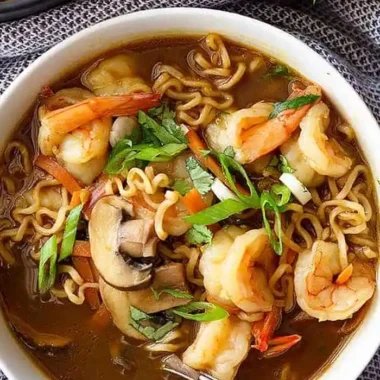
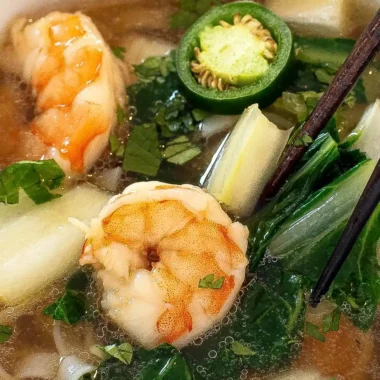
This homemade shrimp ramen soup provides a revitalizing and flavor-packed alternative to pre-packaged noodle bowls. By utilizing fresh aromatic ingredients like ginger and garlic alongside succulent shrimp and colorful vegetables, you create a wholesome meal that delivers complex umami notes in under twenty minutes.

List of ingredients
- 1-2 tablespoons olive oil
- 8 ounces (230g) sliced mushrooms
- 1 large carrot, grated
- 4 cloves garlic, minced
- 4 cups (946ml) low sodium broth/stock of choice
- 1 tablespoon freshly grated ginger
- 1 teaspoon low sodium soy sauce
- 1 teaspoon sesame oil
- 2 (3 ounce) (85g) packages ramen noodles (discard seasoning packet)
- 1 pound (450g) medium/large raw shrimp (thawed, cleaned, and peeled)
- Chopped green onions and cilantro for garnish, optional
step-by-step instructions
- Step: In a large pot saute mushrooms and carrot in olive oil for 5 minutes or until they start to soften.
- Step: Add garlic and cook stirring for 30 seconds.
- Step: Add broth, ginger, soy sauce, and sesame oil.
- Step: Cover and bring to a boil.
- Step: Once boiling add noodles and shrimp.
- Step: Cover and boil for 3 minutes.
- Step: Serve topped with chopped green onions and cilantro if desired.
Enhancing Your Ramen Broth
The secret to a truly exceptional bowl of ramen lies in the balance of the liquid base. If you find the flavor profile needs more intensity, consider adding a teaspoon of miso paste or a small splash of rice vinegar to provide a subtle tang. While this recipe uses a standard vegetable or chicken-style broth, you can also infuse it with dried kombu or shiitake mushrooms during the boiling process to deepen the natural umami profile. Monitoring your salt levels is vital, especially when using soy sauce; always taste your broth after adding the soy sauce and before adding additional salt to ensure it remains balanced.
Achieving the Perfect Broth Ratio
Many home cooks prefer a soup that has plenty of liquid to sip alongside the noodles. If you desire a larger volume of broth, feel free to double the amount of stock, grated ginger, soy sauce, and sesame oil. When doubling the liquids, you will also need to increase the cook time slightly to bring the larger volume back to a boil before adding the noodles. This adjustment allows for more hearty portions without diluting the complex flavors of the ginger and garlic.
Selecting and Preparing Your Proteins
Using raw shrimp is the primary factor in achieving a succulent texture in this dish. Pre-cooked shrimp often become tough and rubbery when boiled further, whereas raw shrimp will reach the perfect texture exactly when the noodles finish cooking. Always ensure that your shrimp are thoroughly deveined to prevent any grit from ruining the delicate texture of your broth. If you choose to use frozen shrimp, make sure to pat them dry with paper towels after thawing to remove excess surface moisture, which helps the shrimp absorb the savory broth seasoning better.
Safe Thawing Practices for Seafood
To safely thaw your shrimp, place them in a sealed bag within a bowl in the refrigerator for several hours or overnight. If you are pressed for time, place the sealed bag under cold running water for 15 to 20 minutes. Avoid using warm or hot water, as this can start the cooking process unevenly and encourage bacterial growth. Once thawed, keep the shrimp chilled until the exact moment you are ready to add them to the boiling soup.
Practical Vegetable Additions
While mushrooms and carrots form a solid foundation, this recipe is highly adaptable to whatever vegetables you have in your refrigerator. Finely sliced bok choy, snow peas, or spinach can be added at the very end of the cooking process. These leafy greens wilt within seconds, preserving their vibrant color and essential nutrients. If you want to add heartier vegetables like broccoli florets, add them at the same time as the carrots so they have enough time to soften before the noodles go in.
Texture Management for Vegetables
Vegetable texture is paramount in a soup dish. Grating the carrots is effective because it increases the surface area exposed to the heat, allowing them to release their sugars into the broth quickly. Slicing mushrooms thinly ensures they cook through alongside the carrots without becoming spongy. If you prefer a crunchier element, reserve a handful of fresh bean sprouts to sprinkle on top right before serving, providing a refreshing contrast to the hot, silky noodles.
Customizing Heat Levels
For those who enjoy a spicy kick, this ramen recipe serves as an excellent blank canvas. You can stir in a tablespoon of chili paste, a dash of your favorite hot sauce, or even a pinch of dried red pepper flakes into the broth base during the boiling stage. Adding the heat early allows the capsaicin to permeate the entire liquid, creating a consistent warmth. If you prefer to keep the base mild, provide hot sauce on the side so individual diners can customize the intensity of their own bowls.
Balancing Spice with Acid
If you find that your spicy additions make the broth feel too heavy, add a small squeeze of fresh lime juice just before serving. The acidity of the lime cuts through the richness of the sesame oil and provides a clean finish to the palate. This technique is particularly effective if you are using spicy sauces that contain fermented ingredients, as the brightness of the citrus helps highlight the aromatic notes of the ginger and garlic.
Storage and Reheating Guidelines
Proper storage is essential to maintain the quality of the noodles, which have a tendency to absorb moisture and soften if left in the broth for too long. If you anticipate having leftovers, store the noodles and the broth in separate airtight containers in the refrigerator. When you are ready to eat, reheat the broth on the stovetop until simmering, then add the noodles and heat for another minute. This method prevents the ramen from becoming mushy and ensures the dish retains its intended texture.
Extending Shelf Life for Leftovers
When stored in a sealed, food-grade container, this soup will remain fresh for up to two days. Because of the delicate nature of the shrimp, it is best consumed as soon as possible. Avoid freezing the soup, as the shrimp will lose their structural integrity and the noodles will break down during the thawing and reheating process. If you must store it for later, keep the vegetables and protein in the broth, but try to consume it within the 48-hour window for optimal safety and flavor quality.
Frequently Asked Questions
Can I add an egg to this ramen?
Adding a soft-boiled or poached egg is a classic way to elevate this dish. Boil an egg for exactly 6.5 minutes, plunge it into an ice bath, peel it, and place it gently on top of the finished ramen before serving.
What if I do not like mushrooms?
You can substitute the mushrooms with sliced zucchini or even extra grated carrots. The mushrooms are primarily used for their texture and umami, so any vegetable that holds its shape well when boiled will serve as a suitable replacement.
Can I use dried noodles instead of packets?
Yes, any dried wheat-based noodle will work perfectly in this recipe. Be sure to check the packaging for specific boiling instructions, as some artisan noodles may require longer cooking times than standard ramen noodles, which would mean adding them to the pot a few minutes before the shrimp.
Is this recipe suitable for batch cooking?
This recipe is best prepared fresh due to the short cooking time of the shrimp. However, you can prepare a larger batch of the broth base with the vegetables and ginger ahead of time, then simply bring it to a boil and add the noodles and shrimp when you are ready to eat.
Serving Suggestions
To turn this soup into a more substantial meal, serve it with sides that balance the saltiness of the broth. A light cucumber salad dressed with rice vinegar and a sprinkle of sesame seeds adds a refreshing crunch. Additionally, a side of crusty, warm bread is perfect for soaking up any remaining broth in the bowl. If you are hosting guests, offering a small array of condiments like extra chopped green onions, sesame seeds, and chili oil allows everyone to tailor their bowl to their specific preferences, making the dining experience interactive and enjoyable.
Print
Easy Shrimp Ramen Soup Recipe
- Total Time: 20 minutes
- Yield: 4 servings 1x
- Diet: Pescatarian
Description
This Easy Shrimp Ramen Soup Recipe is so much better than that packet of noodles! Packed with vegetables, shrimp, and spices, it’s full of flavor. This is one of the best shrimp ramen recipes you’ll ever taste!
Ingredients
- 1–2 tablespoons olive oil
- 8 ounces (230g) sliced mushrooms
- 1 large carrot, grated
- 4 cloves garlic, minced
- 4 cups (946ml) low sodium broth/stock of choice
- 1 tablespoon freshly grated ginger
- 1 teaspoon low sodium soy sauce
- 1 teaspoon sesame oil
- 2 (3 ounce) (85g) packages ramen noodles (discard seasoning packet)
- 1 pound (450g) medium/large raw shrimp (thawed, cleaned, and peeled)
- Chopped green onions and cilantro for garnish, optional
Instructions
- Step: In a large pot saute mushrooms and carrot in olive oil for 5 minutes or until they start to soften.
- Step: Add garlic and cook stirring for 30 seconds.
- Step: Add broth, ginger, soy sauce, and sesame oil.
- Step: Cover and bring to a boil.
- Step: Once boiling add noodles and shrimp.
- Step: Cover and boil for 3 minutes.
- Step: Serve topped with chopped green onions and cilantro if desired.
Notes
To make this a more ‘brothy’ soup, use 8 cups of broth, 2 tablespoons of ginger, 2 teaspoons of soy sauce, and 2 teaspoons of sesame oil. You can add hot sauce, red pepper flakes, or cayenne pepper for spice.
- Prep Time: 10 minutes
- Cook Time: 10 minutes
- Category: Main, Seafood, Soup
- Method: Boil, Saute
- Cuisine: Chinese
Nutrition
- Serving Size: 1 serving
- Calories: 219 kcal
- Sugar: 3 g
- Sodium: 319 mg
- Fat: 8 g
- Saturated Fat: 1 g
- Unsaturated Fat: 6 g
- Trans Fat: 0 g
- Carbohydrates: 8 g
- Fiber: 1 g
- Protein: 30 g
- Cholesterol: 286 mg
Keywords: shrimp ramen, ramen soup, healthy ramen, seafood soup