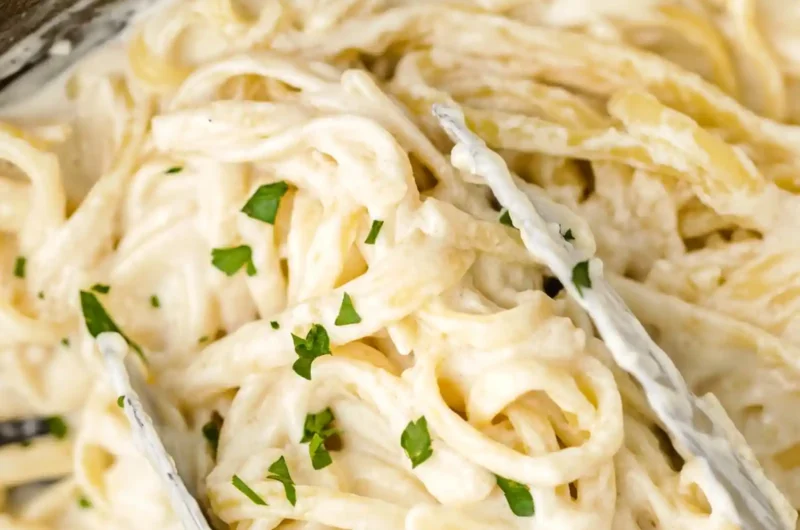
This homemade Alfredo sauce recreates the rich, velvety texture of the restaurant favorite using simple pantry staples. It is specifically formulated to stay silky and cling to your pasta without separating or breaking.
List of ingredients
- 16 ounces fettuccine or linguine pasta – use a high-quality durum wheat variety.
- 6 tablespoons salted butter (¾ stick) – provides the rich fat base.
- 1 tablespoon minced garlic – use fresh cloves for the best flavor.
- 1 teaspoon garlic powder – adds a deeper, concentrated garlic note.
- ½ teaspoon table salt – enhances all the savory elements.
- 2 tablespoons all-purpose flour – acts as a thickener for the sauce.
- 1¼ cups heavy cream – essential for a thick, creamy consistency.
- 1½ cups whole milk – balances the richness of the cream.
- 1 cup freshly grated Parmesan cheese (from a block) – melts more smoothly than pre-shredded options.
- Finely chopped fresh parsley (optional) – adds a pop of color and freshness.
step-by-step instructions
- Cook Pasta: Boil the fettuccine according to the package directions, drain, and set aside.
- Melt Butter: In a large skillet over medium heat, melt the butter until it begins bubbling.
- Sauté Aromatics: Add the minced garlic, garlic powder, and salt to the pan and whisk to combine.
- Create Roux: Sprinkle the flour over the butter and garlic mixture, whisking continuously until the mixture is smooth.
- Combine Liquids: Slowly whisk in the heavy cream and whole milk to ensure no lumps form.
- Boil: Bring the sauce mixture to a gentle boil.
- Simmer: Reduce the heat to low and simmer for 2 to 3 minutes until the sauce has slightly thickened.
- Add Cheese: Whisk in the freshly grated parmesan cheese until it is completely melted.
- Toss Pasta: Add the cooked fettuccine to the skillet.
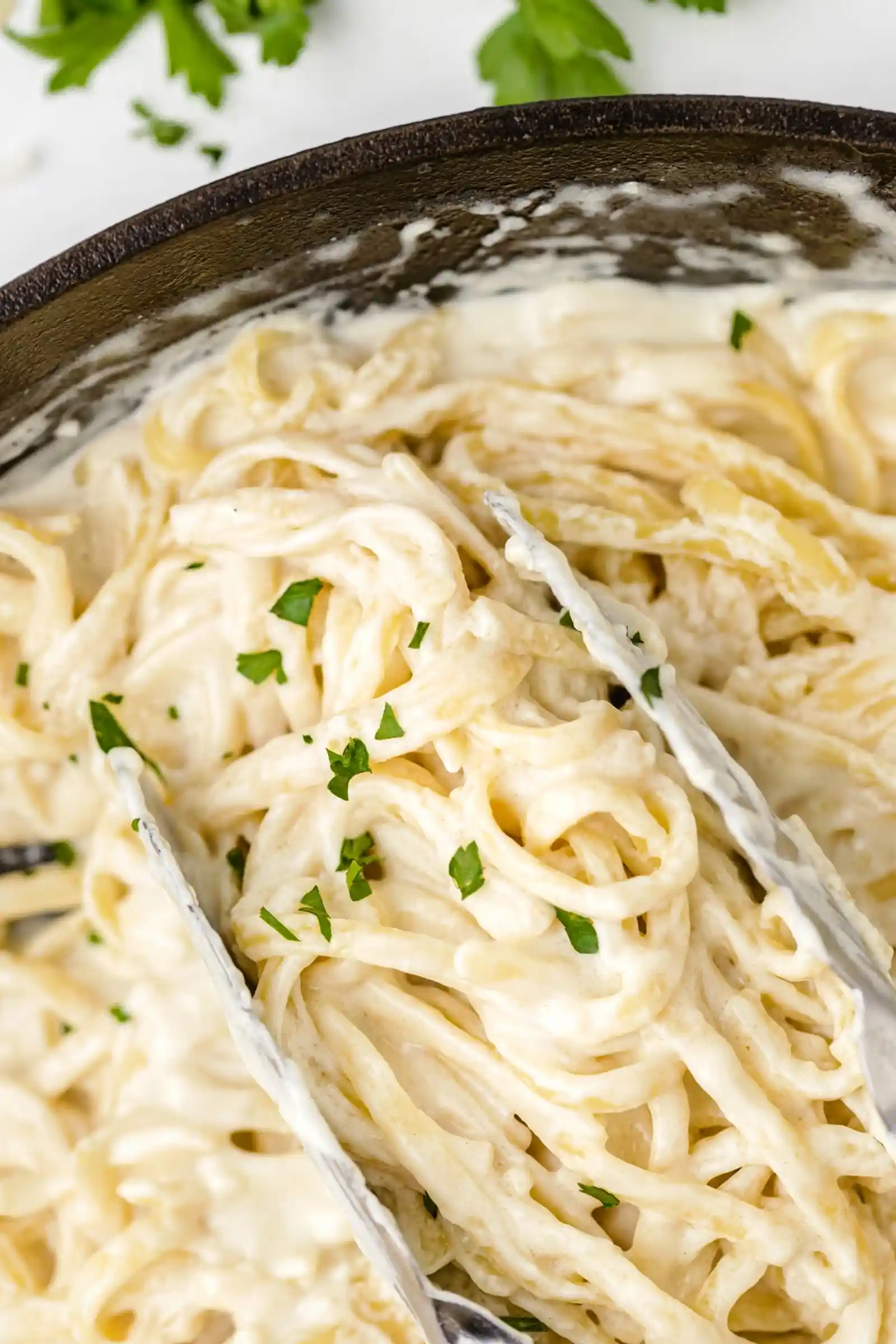
- Coat Noodles: Use tongs to toss the pasta in the sauce until every strand is evenly coated.
- Garnish: Sprinkle with fresh parsley and serve immediately.
Essential Sauce Techniques
The Importance of Room Temperature Dairy
Allow your heavy cream, whole milk, and Parmesan cheese to sit at room temperature for a short time before cooking. Adding ice-cold dairy to a hot skillet can shock the fats and increase the risk of the sauce breaking. This small step ensures a more stable emulsion and a smoother final texture.
Precise Heat Management
Maintain a low to medium-low heat throughout the entire cooking process. Garlic burns very quickly, which can introduce a bitter taste to the sauce. Furthermore, boiling the sauce too vigorously after adding the cheese can cause the proteins to seize and the fats to separate.
Proper Flour Whisking
When adding the flour to the butter and garlic, whisk constantly and thoroughly. This process cooks out the raw flour taste and creates a smooth roux. A well-incorporated roux is the foundation that prevents lumps from appearing once the cream and milk are added.
Gradual Cheese Integration
Instead of dumping the Parmesan in all at once, sprinkle it into the sauce in small handfuls. Whisk each addition completely until melted before adding more. This gradual approach prevents the cheese from clumping together into a single mass.
Ingredient Selection Guide
Choosing Freshly Grated Parmesan
Always grate your Parmesan cheese from a solid block rather than using pre-shredded bags. Pre-shredded cheeses are coated in potato starch or cellulose to prevent clumping in the package. These additives can prevent the cheese from melting fully and may leave the sauce feeling grainy.
The Necessity of Heavy Cream
Do not substitute heavy whipping cream with half-and-half or skim milk. The high fat content in heavy cream is what provides the necessary stability and thickness. Without this fat, the sauce is much more likely to break or remain too thin to coat the pasta.
Why Whole Milk is Preferred
Using whole milk instead of 2% or skim milk ensures the sauce maintains a rich, creamy mouthfeel. The combination of heavy cream and whole milk creates a specific ratio of fat and water that mimics restaurant quality. This balance prevents the sauce from becoming overly heavy while remaining silky.
Fresh Garlic vs. Jarred Garlic
Freshly minced cloves provide a sharp, aromatic flavor that is superior to jarred minced garlic. Jarred versions often contain preservatives and citric acid that can alter the flavor profile of the sauce. For the most authentic result, mince fresh cloves immediately before use.
Customization and Variations
Adding Lean Proteins
You can turn this sauce into a full meal by adding grilled chicken breast, sautéed shrimp, or seared scallops. Cook the protein separately and stir it in at the very end with the pasta. This prevents the protein from overcooking while the sauce simmers.
Incorporating Fresh Vegetables
Stir in steamed broccoli florets, sautéed mushrooms, or fresh baby spinach for added nutrition. Spinach can be added during the final tossing stage, as the residual heat will wilt the leaves perfectly. Broccoli is best added after it has been lightly steamed or roasted.
Adjusting the Garlic Intensity
If you prefer a milder flavor, reduce the garlic powder to a half teaspoon. For those who love a pungent garlic punch, feel free to increase the fresh minced garlic to two tablespoons. Always sauté the garlic slowly to avoid burning.
Using Alternative Pasta Shapes
While fettuccine is traditional, penne, bowtie, or rigatoni work equally well. These shapes have ridges or holes that capture the thick sauce efficiently. Ensure you adjust your pasta cooking time to keep the noodles al dente.
Serving and Pairing Suggestions
Complementary Side Salads
Pair the rich Alfredo pasta with a crisp garden salad or a classic Caesar salad. The acidity from a vinaigrette or lemon-based dressing helps cut through the heaviness of the cream and cheese. Use fresh romaine lettuce and cherry tomatoes for a refreshing contrast.
Warm Bread Side Options
Serve the dish with warm garlic knots or toasted ciabatta bread. These are perfect for soaking up any extra sauce remaining on the plate. Brush the bread with melted butter and garlic salt before warming in the oven.
Roasted Vegetable Accents
Oven-roasted asparagus or caramelized carrots provide a wonderful flavor balance. The slight char and natural sweetness of roasted vegetables contrast the salty, creamy notes of the Alfredo. Roast them at 400 degrees Fahrenheit until tender and browned.
Storage and Preservation
Refrigeration Methods
Store leftover sauce or pasta in an airtight glass container in the refrigerator for up to four days. Ensure the sauce has cooled slightly before sealing to prevent excessive condensation. Glass containers help maintain the flavor better than plastic over several days.
Freezing Warnings
Do not freeze this Alfredo sauce. The high dairy content causes the cream and milk to separate and grain during the freezing and thawing process. Once thawed, the sauce will likely break into a greasy pool and lose its silky texture.
Reheating Guidelines
Stovetop Reheating Technique
The best way to reheat Alfredo pasta is in a skillet over medium-low heat. Avoid the microwave, as it often heats unevenly and causes the cheese to separate. Gently toss the pasta as it warms to redistribute the heat.
Preventing Sauce Separation During Reheat
Add a splash of cold whole milk or a tablespoon of water to the skillet when reheating. This introduces moisture that helps the emulsified fats recombine. Gently whisk or toss until the sauce becomes creamy and smooth again.
Common Troubleshooting
Correcting Overly Thick Sauce
If the sauce becomes too thick after sitting, stir in a small amount of reserved pasta water. The starch in the water helps the sauce loosen up while maintaining its creamy bond. Add the water one tablespoon at a time until the desired consistency is reached.
Fixing Grainy Texture
Graininess usually occurs if the cheese was added to boiling sauce or if pre-shredded cheese was used. To fix this, keep the heat very low and whisk vigorously. In some cases, adding a tiny bit of additional heavy cream and whisking on low heat can smooth it out.
Preventing the Sauce from Breaking
A sauce breaks when the fat separates from the liquid, leaving an oily appearance. To prevent this, never let the sauce reach a rolling boil once the cheese is added. If it begins to separate, remove it from the heat immediately and whisk in a teaspoon of cold water.
Pasta Preparation Tips
Seasoning the Boiling Water
Add a generous amount of salt to your pasta water before adding the noodles. This is the only opportunity to season the interior of the pasta itself. The water should taste like the sea to ensure the final dish is balanced.
Timing for Al Dente Pasta
Drain your pasta one to two minutes before the package directions suggest. The noodles will continue to cook in the hot Alfredo sauce in the skillet. This prevents the pasta from becoming mushy and ensures a firm bite.
Utilizing Starchy Pasta Water
Always reserve about half a cup of the pasta cooking water before draining. This liquid is rich in starch, which acts as a natural binder for sauces. It is the most effective tool for adjusting the thickness of your sauce at the end.
Seasoning Enhancements
Adding a Pinch of Nutmeg
A tiny pinch of ground nutmeg can add a sophisticated depth to the cream sauce. This is a classic French technique that enhances the nuttiness of the Parmesan cheese. Use a very small amount so the flavor remains subtle.
Using Freshly Cracked Black Pepper
Adding freshly cracked black pepper at the end of the process provides a sharp contrast to the rich cream. Avoid using pre-ground pepper, as fresh peppercorns have a more vibrant aroma. Stir it in just before serving.
Managing Sodium Levels
If you are using salted butter and salted Parmesan, be cautious with the added table salt. Taste the sauce after the cheese has melted before adding any additional seasoning. You can always add more salt, but you cannot remove it.
Frequently Asked Questions
How much sauce does this recipe make?
This recipe produces approximately 3 to 3.5 cups of sauce. This quantity is sufficient to coat one pound of pasta and serve between 4 and 6 people.
Will this recipe make enough for a standard box of pasta?
Yes, this recipe is specifically designed for a standard 16-ounce box of fettuccine. It provides a generous coating for the noodles with a small amount of extra sauce pooling at the bottom of the bowl.
Can this recipe be doubled?
Yes, you can double the ingredients, but you must use a larger pot or Dutch oven. A standard skillet will overflow once two pounds of cooked pasta are added to the doubled sauce volume.
Can I make Olive Garden alfredo sauce in a crockpot?
While you can make a cream sauce in a slow cooker, it requires different timing to prevent the dairy from curdling. It is recommended to use a specific slow cooker recipe for the best results.
Can this sauce be canned?
No, this sauce cannot be home-canned. The butter and cream base does not reach the necessary acidity or temperature requirements for safe canning and would be a safety risk.
What if I only have pre-shredded Parmesan?
You can use pre-shredded cheese, but the texture will be less silky. To mitigate this, add the cheese in very small increments and whisk constantly over low heat to help it melt as smoothly as possible.
Print
Restaurant-Style Creamy Alfredo Sauce
- Total Time: 20 minutes
- Yield: 6 servings 1x
- Diet: General
Description
Ditch the store-bought jars! Our kitchen-tested Olive Garden Alfredo sauce uses a specific ratio of heavy whipping cream to whole milk to achieve the ultimate silky, restaurant-quality texture. This easy, from-scratch recipe is specifically formulated so it won’t separate or break, perfectly coating your favorite fettuccine every single time.
Ingredients
- 16 ounces fettuccine or linguine pasta
- 6 tablespoons salted butter
- 1 tablespoon minced garlic
- 1 teaspoon garlic powder
- ½ teaspoon table salt
- 2 tablespoons all-purpose flour
- 1¼ cups heavy cream
- 1½ cups whole milk
- 1 cup freshly grated Parmesan cheese
- Finely chopped fresh parsley (optional)
Instructions
- Step 1: Cook the fettuccine according to package directions. Drain and set aside.
- Step 2: In a large skillet over medium heat, melt the butter until it’s bubbling.
- Step 3: Add the minced garlic, garlic powder, and salt. Whisk to combine.
- Step 4: Sprinkle the flour over the butter and garlic mixture. Whisk until smooth.
- Step 5: Slowly whisk in the heavy cream and milk.
- Step 6: Bring the sauce to a gentle boil.
- Step 7: Reduce the heat to low and simmer for 2 to 3 minutes, until slightly thickened.
- Step 8: Whisk in the parmesan cheese until melted.
- Step 9: Add the cooked fettuccine to the skillet.
- Step 10: Use tongs to toss the pasta in the sauce until coated.
- Step 11: Garnish with fresh parsley and serve.
Notes
For the best results, use freshly grated Parmesan cheese to avoid the grainy texture found in pre-shredded versions. Let the cream simmer for a full 3 minutes before adding cheese to prevent the sauce from breaking.
- Prep Time: 5 minutes
- Cook Time: 15 minutes
- Category: Main Course
- Method: Stovetop
- Cuisine: American Italian
Nutrition
- Serving Size: 1 serving
- Calories: 677 kcal
- Sugar: 5 g
- Sodium: 622 mg
- Fat: 39 g
- Saturated Fat: 23 g
- Unsaturated Fat: 13 g
- Trans Fat: 1 g
- Carbohydrates: 61 g
- Fiber: 3 g
- Protein: 20 g
- Cholesterol: 179 mg
Keywords: Olive Garden, Alfredo sauce, copycat, creamy pasta, fettuccine alfredo