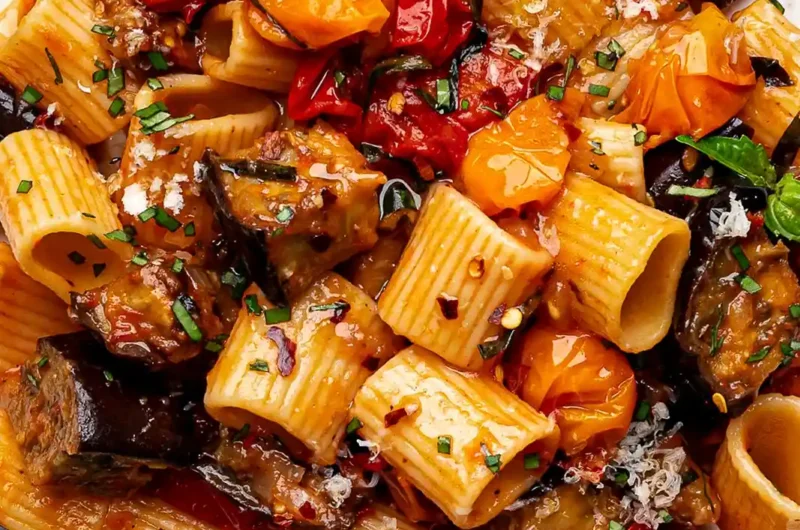
This hearty vegetarian meal combines the richness of oven-roasted eggplant with a bright, fresh tomato sauce. It is an ideal way to use late-summer produce for a light yet satisfying dinner.
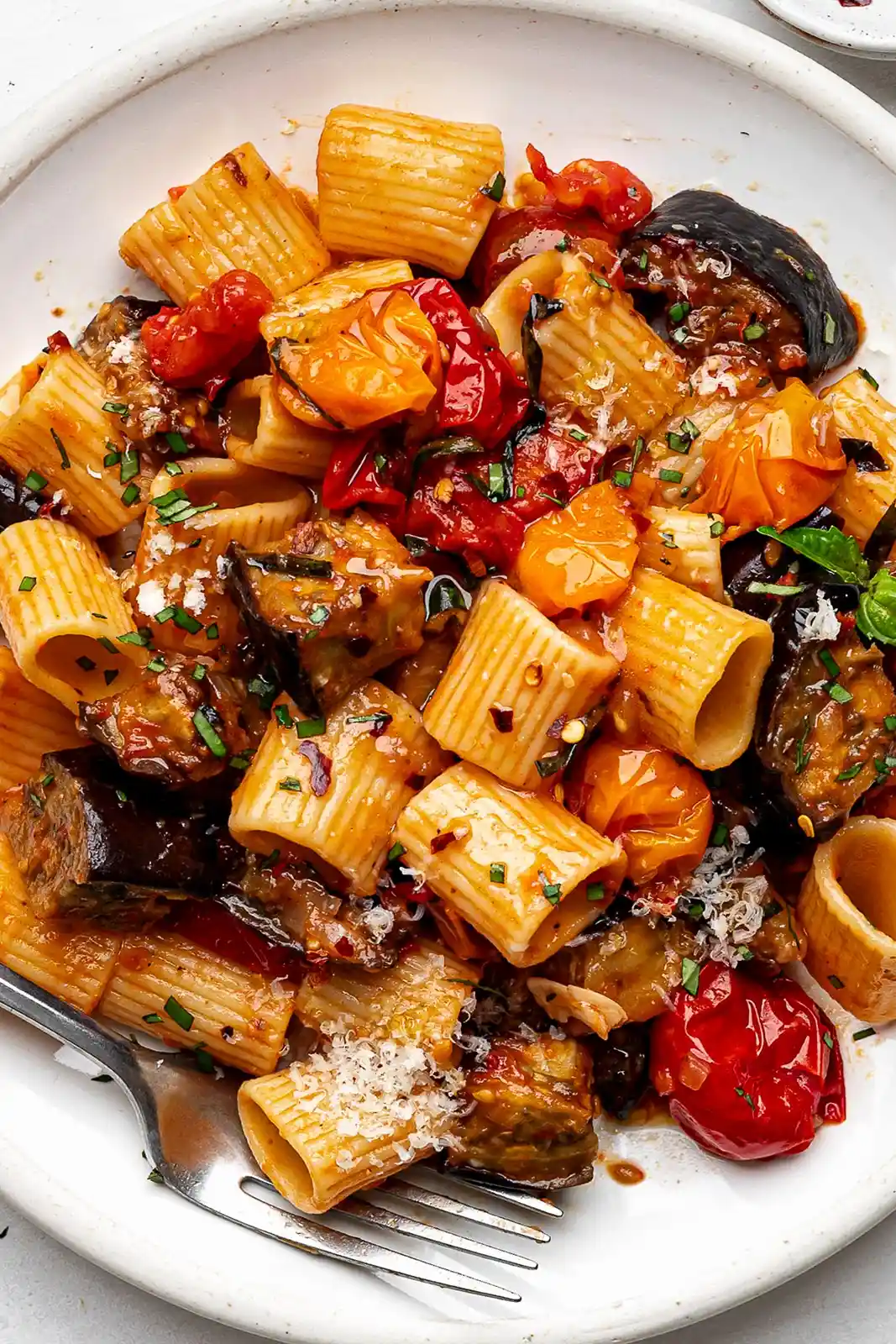
List of ingredients
- 1 3/4-2 pounds globe eggplant (about 2 medium), cut into 1-inch cubes – ensures a hearty texture.
- 6 tablespoons extra-virgin olive oil, divided – used for roasting and sautéing.
- Kosher salt and freshly cracked black pepper – to taste for seasoning.
- 1 1/2 cup cherry tomatoes, any variety – adds pops of sweetness.
- 2 very ripe large tomatoes – the base for the fresh sauce.
- 1/2 medium onion, diced – adds a subtle sweetness.
- 4 garlic cloves, thinly sliced – provides a pungent, aromatic base.
- 1/2 teaspoon crushed red pepper flakes, optional – adds a hint of heat.
- 12 ounces short tubular pasta (such as rigatoni, ziti, or paccheri) – best for catching the sauce.
- 1/4 cup chopped fresh basil leaves, plus more for serving – adds a peppery, fresh finish.
- Grated Parmesan cheese, for serving – adds a salty, umami depth.
step-by-step instructions
- Roast the eggplant: Preheat your oven to 425ºF. Spread cubed eggplant on a large rimmed sheet pan, drizzle with 3 tablespoons of olive oil, toss to coat, and season with salt and pepper. Roast for 25-30 minutes until golden, tossing halfway through.
- Roast the cherry tomatoes: About 15 minutes before the eggplant is finished, place cherry tomatoes on a small sheet pan and drizzle with 1 tablespoon of olive oil. Roast for 10-12 minutes until they just begin to burst.
- Prepare the fresh tomato puree: Cut a thin slice off the bottom of each large tomato. Use the largest holes of a box grater to grate the tomato into a bowl, stopping just before you hit the skin. Alternatively, roughly chop and blend until pulpy.
- Sauté the aromatics: Heat the remaining 2 tablespoons of olive oil in a large skillet over medium heat. Sauté the diced onion for 3-4 minutes until translucent, then add sliced garlic and red pepper flakes for another 30 seconds.
- Simmer the sauce: Stir in the grated tomatoes, adding 1 teaspoon salt and 1/2 teaspoon pepper. Simmer for 10-15 minutes until the sauce thickens slightly.
- Combine roasted vegetables: Stir the roasted eggplant and burst cherry tomatoes into the skillet with the sauce. Reduce heat to very low.
- Cook the pasta: Boil a large pot of salted water. Cook the pasta until it is very al dente (about 2 minutes less than package directions). Reserve 1 cup of pasta water before draining.
- Finish the dish: Add the drained pasta and 1/2 cup of pasta water to the skillet. Increase heat to medium and stir frequently for 2-3 minutes until the sauce thickens and coats the pasta.
- Final touch: Remove from heat and stir in the chopped basil. Taste and adjust salt and pepper if needed. Serve with extra olive oil, fresh basil, and grated Parmesan.
Selecting the Best Produce
Choosing the Right Eggplant
Look for globe eggplants with shiny, taut skin and firm stems. Smaller to medium-sized eggplants are generally preferable as they tend to have fewer seeds and a less watery texture than very large ones. Ensure the fruit feels heavy for its size and gives slightly when pressed.
Identifying Ripe Tomatoes
For the grated sauce, choose large tomatoes that are deep red and feel soft to the touch. These provide the most juice and sweetness. For the roasted component, cherry tomatoes that are plump and brightly colored will burst better in the oven and release a concentrated sweetness.
The Best Pasta Shapes
Short, tubular pasta like rigatoni or ziti is ideal because the hollow centers trap the chunks of eggplant and sauce. Ridged pasta (pasta rigate) is even better as the exterior grooves help the sauce cling to the noodle. This ensures a balanced flavor in every single bite.
Professional Cooking Tips
Perfecting the Eggplant Roast
Avoid overcrowding the sheet pan; if the eggplant cubes are too close, they will steam rather than roast. Use two pans if necessary to ensure there is enough airflow around each piece. This allows the exterior to caramelize and turn golden brown while the interior becomes creamy.
The Grating Method for Tomatoes
Grating tomatoes on a box grater is a fast way to create a pulpy sauce without needing a food processor. The skin remains in your hand, which means you don’t have to peel the tomatoes first. This method preserves the fresh texture better than a high-speed blender.
Mastering the Al Dente Finish
Cooking the pasta for 2-3 minutes less than the package instructions is critical because the pasta continues to cook inside the sauce. By finishing it in the skillet, the pasta absorbs the flavors of the tomato and eggplant directly into the noodle rather than just being coated by it.
Using Starchy Pasta Water
Pasta water contains starch that acts as an emulsifier, binding the olive oil and tomato juices together. Adding this water to the skillet creates a silky, cohesive sauce that clings to the pasta. Without it, the sauce may separate or seem too dry after a few minutes.
Customizations and Substitutions
Using Canned Tomato Alternatives
If fresh tomatoes are out of season, you can substitute the grated tomatoes with high-quality canned crushed tomatoes or a simple marinara sauce. To keep the brightness of the original recipe, add a squeeze of fresh lemon juice or a teaspoon of sugar to balance the acidity of the canned product.
Making the Dish Vegan
To make this recipe completely plant-based, simply omit the Parmesan cheese or replace it with a vegan almond-based Parmesan. You can also use nutritional yeast for a similar salty, cheesy flavor. The rest of the ingredients are naturally vegan.
Adding Briny Elements
For a saltier, more complex flavor profile, add a tablespoon of drained capers or chopped Kalamata olives when you add the pasta to the sauce. This shifts the flavor profile toward a puttanesca style, providing a sharp contrast to the sweetness of the roasted vegetables.
Integrating Additional Proteins
While this is a vegetarian dish, you can add grilled chicken breast or sautéed shrimp to increase the protein content. Cook the protein separately and stir it into the skillet along with the roasted eggplant to ensure everything is heated through without overcooking the vegetables.
Storage and Reheating
Storing Leftovers
Place leftover pasta in an airtight container and refrigerate for up to three days. The eggplant will continue to soften over time, so the dish may become slightly more integrated the next day. Keep the extra basil and cheese separate until you are ready to serve.
Reheating for Best Quality
Avoid the microwave if possible, as it can make the pasta mushy and dry. Instead, reheat the pasta in a skillet over medium heat with a small splash of water or olive oil. This restores the moisture and helps the sauce re-emulsify around the noodles.
Make-Ahead Strategies
You can roast the eggplant and cherry tomatoes a day in advance and store them in the fridge. Additionally, the tomato sauce base can be prepared ahead of time. When ready to eat, simply simmer the sauce, add the roasted vegetables, and toss with freshly cooked pasta.
Troubleshooting Common Issues
Dealing with Mushy Eggplant
If your eggplant turns out too soft, it may be due to overcrowding the pan or roasting for too long. To prevent this, ensure the oven is fully preheated to 425ºF to sear the outside quickly. Do not over-stir the eggplant once it is added to the tomato sauce.
Fixing a Thin Sauce
If the sauce is too watery after adding the tomatoes, simmer it for an extra 5-10 minutes without a lid. This allows the water to evaporate and the sugars to concentrate. If it is still too thin, adding the pasta slightly undercooked will help as the noodles absorb the excess liquid.
Correcting a Dry Pasta
If the eggplant absorbs too much liquid and the dish looks dry, add more of the reserved pasta water one tablespoon at a time. A final drizzle of high-quality extra-virgin olive oil just before serving also adds the necessary moisture and a luxurious mouthfeel.
Managing Bitter Eggplant
While modern eggplant varieties are bred to be mild, some may still have a slight bitterness. Roasting at a high temperature helps caramelize the natural sugars, which neutralizes bitterness. If the taste persists, a small pinch of sugar in the tomato sauce can balance the flavor.
Frequently Asked Questions
Do I need to salt the eggplant before roasting?
No, salting the eggplant is not necessary for this specific recipe. Because the eggplant is roasted at a high temperature and then simmered in a savory tomato sauce, the traditional step of drawing out moisture and bitterness is redundant.
Can I use a different type of cheese?
Yes, Pecorino Romano or Ricotta Salata are excellent alternatives to Parmesan. Pecorino offers a saltier, sharper punch, while Ricotta Salata provides a creamy yet salty contrast that pairs beautifully with eggplant.
Can I double this recipe for a crowd?
You can double the vegetable and sauce components easily. However, doubling the pasta in one skillet can be difficult. It is recommended to use two separate large pans to ensure the pasta cooks evenly in the sauce and doesn’t clump together.
What is the best oil for this recipe?
Extra-virgin olive oil is highly recommended for both roasting and finishing. It provides a fruity, peppery base that is characteristic of Italian vegetable dishes and complements the fresh basil and tomatoes.
Print
Roasted Eggplant and Fresh Tomato Pasta
- Total Time: 45 minutes
- Yield: 4 to 6 servings 1x
- Diet: Vegetarian
Description
This Roasted Eggplant Pasta is a celebration of late-summer produce. A light, and bright-tasting eggplant-tomato sauce cloaks al dente pasta to make the most delicious vegetarian meal.
Ingredients
- 1 3/4–2 pounds globe eggplant, cut into 1-inch cubes
- 6 tablespoons extra-virgin olive oil, divided
- Kosher salt and freshly cracked black pepper
- 1 1/2 cup cherry tomatoes
- 2 very ripe large tomatoes
- 1/2 medium onion, diced
- 4 garlic cloves, thinly sliced
- 1/2 teaspoon crushed red pepper flakes (optional)
- 12 ounces short tubular pasta (such as rigatoni or ziti)
- 1/4 cup chopped fresh basil leaves, plus more for serving
- grated microbial-rennet Parmesan cheese, for serving
Instructions
- Step: Preheat oven to 425ºF. Place cubed eggplant on a large, rimmed sheet pan and drizzle with 3 tablespoons olive oil. Toss, spread in an even layer, season with salt and pepper, and roast for 25-30 minutes until golden, tossing halfway through.
- Step: About 15 minutes before the eggplant is finished, place cherry tomatoes on a small sheet pan, drizzle with 1 tablespoon olive oil, and roast until just starting to burst, about 10-12 minutes. Set aside.
- Step: While vegetables roast, grate the large tomatoes using the largest holes of a box grater into a bowl, stopping before the skin. Alternatively, roughly chop and blend until pulpy.
- Step: In a large skillet, heat 2 tablespoons olive oil over medium heat. Cook onion until translucent (3-4 minutes), then add garlic and chili flakes; cook for 30 more seconds.
- Step: Add grated tomatoes to the skillet, season with 1 teaspoon salt and 1/2 teaspoon pepper, and simmer until thickened, about 10-15 minutes.
- Step: Once eggplant is ready, add it and the roasted cherry tomatoes to the skillet. Reduce heat to very low.
- Step: Boil a large pot of salted water. Cook pasta until very al dente (about 2 minutes less than package instructions). Save 1 cup of pasta water and drain the rest.
- Step: Add cooked pasta and 1/2 cup pasta water to the skillet. Increase heat to medium and stir often for 2-3 minutes until sauce thickens and pasta is perfectly cooked. Add more pasta water if needed.
- Step: Remove from heat and stir in chopped basil. Taste and adjust salt and pepper. Serve drizzled with olive oil and dusted with cheese.
Notes
Undercook the pasta by 2-3 minutes as it finishes cooking in the sauce. Generously salt the pasta water for flavor. Save starchy pasta water to ensure the sauce isn’t too dry. For a shortcut, store-bought marinara can replace fresh tomatoes, but keep the roasted cherry tomatoes for freshness.
- Prep Time: 15 minutes
- Cook Time: 30 minutes
- Category: Dinner
- Method: Roasting
- Cuisine: Italian
Nutrition
- Serving Size: 1 serving
- Calories: 580 kcal
- Sugar: 11 g
- Sodium: 840 mg
- Fat: 27 g
- Saturated Fat: 6 g
- Unsaturated Fat: 21 g
- Trans Fat: 0 g
- Carbohydrates: 64 g
- Fiber: 9 g
- Protein: 17 g
- Cholesterol: 22 mg
Keywords: roasted eggplant pasta, vegetarian pasta, summer recipes, Pasta alla Norma riff, fresh tomato sauce