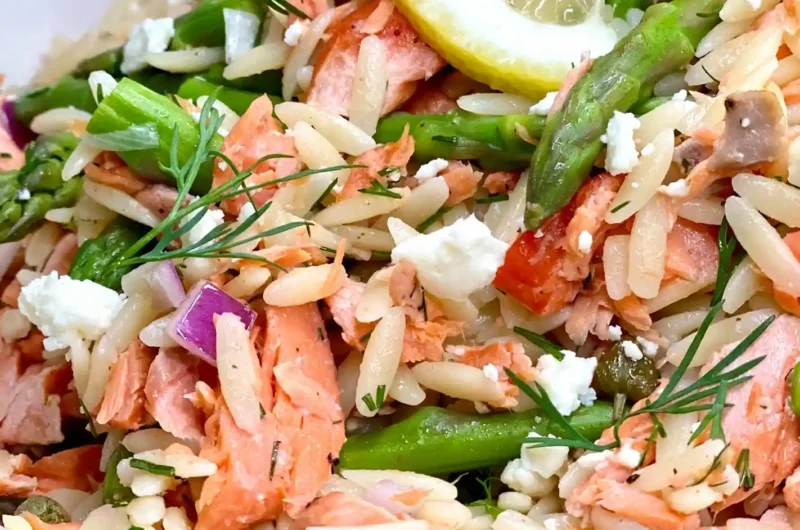
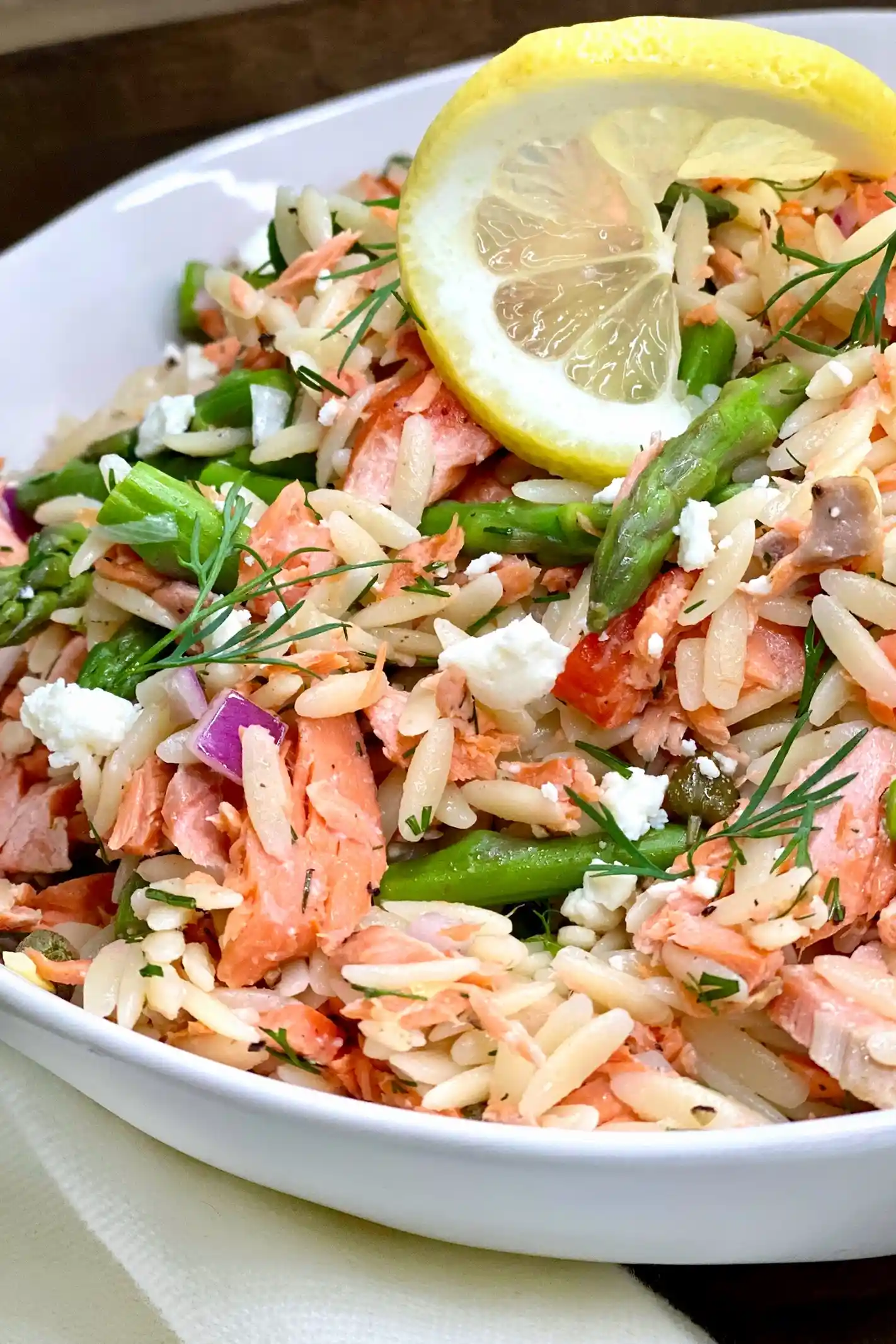
This fresh and nutrient-dense salmon and orzo salad is an ideal choice for warm-weather dining. It combines grilled protein and crisp vegetables with a zesty lemon dressing for a balanced, satisfying meal.
List of ingredients
- 6 cups water, lightly salted – for blanching and boiling
- 1 pound asparagus – trimmed and cut into 2-3 inch pieces
- 1 1/3 cup uncooked orzo – small rice-shaped pasta
- 1- 1 1/2 pounds salmon fillets, skin on – wild salmon is preferred
- 1/4 cup capers, rinsed – adds salty, briny pops of flavor
- 1/4 teaspoon salt – for seasoning salmon
- 1/4 teaspoon freshly ground black pepper – for seasoning salmon
- 1/3 cup diced red onion – for sharp, fresh contrast
- 1/4 cup chopped fresh dill – provides a classic herbal note
- 1/3 cup crumbled feta cheese – adds creamy, tangy saltiness
- 3 tablespoons fresh lemon juice – for the vinaigrette acidity
- 1 tablespoon olive oil – for the vinaigrette base
- 1/4 teaspoon salt – for the vinaigrette
- 1/2 teaspoon freshly ground black pepper – for the vinaigrette
step-by-step instructions
- Prepare Heat: Preheat your grill to medium heat. Alternatively, preheat your oven to 375 degrees Fahrenheit.
- Blanch Asparagus: Bring 6 cups of lightly salted water to a boil in a saucepan. Add the asparagus pieces and cook for 3 minutes or until crisp-tender. Remove them with tongs, reserving the water, and immediately plunge the asparagus into ice water to stop the cooking process; drain and set aside.
- Cook Orzo: Return the reserved water to a boil. Add the uncooked orzo and cook according to the package directions, making sure to omit any additional salt or fat.
- Season Fish: While the orzo is simmering, season the salmon fillets on all sides with salt and black pepper.
- Cook Salmon: Lightly oil the grill grate. Place the salmon skin side down on the preheated grill and cook for 8-10 minutes, or until the fish flakes easily with a fork. If baking, place the salmon on a foil-lined broiler pan coated with cooking spray and bake for 15-20 minutes until it flakes easily.
- Prepare Salmon: Using forks, carefully break the cooked salmon fillets into large, bite-sized chunks.
- Mix Vinaigrette: In a small bowl, whisk together the fresh lemon juice, olive oil, salt, and black pepper until the mixture is well combined.
- Assemble Salad: In a large mixing bowl, combine the salmon chunks, cooked orzo, rinsed capers, blanched asparagus, diced red onion, chopped dill, and crumbled feta cheese. Pour the Lemon Pepper Vinaigrette over the mixture and toss gently to coat all ingredients.
Protein Selection and Preparation
Choosing High-Quality Salmon
Wild-caught salmon generally provides a more robust flavor and a deeper red color than farm-raised options. It also typically contains higher concentrations of omega-3 fatty acids. Look for fillets with a firm texture and a clean, oceanic scent.
Handling Skin-On Fillets
Keeping the skin on during the cooking process protects the delicate flesh from direct heat. This helps maintain moisture and prevents the fish from drying out. The skin also provides a structural base when grilling.
Optimizing Salmon Seasoning
Season the salmon immediately before it hits the heat to prevent the salt from drawing out too much moisture. A simple combination of salt and black pepper enhances the natural flavor of the fish without overpowering it.
Grilling and Baking Techniques
Managing Grill Temperature
Maintaining a medium heat is crucial to ensure the salmon cooks evenly. If the grill is too hot, the exterior will char before the center reaches the safe internal temperature. Use a meat thermometer to check for 145 degrees Fahrenheit.
Achieving Proper Flaking
The best way to determine doneness is to test the fish with a fork. The salmon should flake easily along its natural muscle lines. Overcooking can lead to a dry, rubbery texture that affects the salad quality.
Using the Oven Method
When baking, a broiler pan with foil prevents sticking and allows for easier cleanup. Ensure the pan is lightly coated with cooking spray to prevent the salmon skin from adhering to the surface.
Vegetable Preparation Tips
Trimming Asparagus Properly
To find the natural breaking point of asparagus, hold a spear and bend it gently until it snaps. This removes the woody, fibrous ends. Cut the remaining stalks into consistent 2-3 inch pieces for uniform cooking.
The Importance of the Ice Bath
Plunging blanched asparagus into ice water is called shock cooling. This process immediately stops the cooking process and locks in the bright green color. It prevents the vegetable from becoming mushy during the assembly.
Mellowing Red Onions
If the flavor of raw red onion is too sharp, soak the diced pieces in cold water for ten minutes. Drain them thoroughly before adding them to the salad. This removes some of the sulfurous bite while keeping the crunch.
Pasta Cooking Guidelines
Perfecting Orzo Texture
Orzo is a small pasta that can overcook quickly. Follow the package instructions strictly to achieve an al dente texture. This ensures the pasta retains its shape and doesn’t become gummy when mixed with the dressing.
Avoiding Pasta Clumping
Since this recipe omits fat during the boiling process, the orzo may stick together as it cools. Gently toss the cooked pasta with a small amount of the vinaigrette if you are not assembling the salad immediately.
Managing Starch in Water
Using the same water for both the asparagus and the orzo adds a subtle depth of flavor. Ensure there is enough water in the pot to allow the orzo to move freely, preventing it from sticking to the bottom.
Vinaigrette and Flavor Balance
Emulsifying the Dressing
Whisk the olive oil and lemon juice vigorously to create a temporary emulsion. This ensures that the acidity of the lemon is evenly distributed across the oil. This prevents the salad from tasting too oily in some spots and too tart in others.
The Role of Capers
Capers provide a briny acidity that cuts through the richness of the salmon and feta. Always rinse them under cold water to remove excess brine. This prevents the final salad from becoming overly salty.
Fresh Dill Integration
Fresh dill should be chopped and added at the final stage of assembly. Heat can degrade the delicate aromatic oils of the herb. Adding it fresh ensures a bright, citrusy flavor throughout the dish.
Substitution and Variation Ideas
Alternative Protein Options
If salmon is unavailable, steelhead trout or Arctic char are excellent substitutes. These fish have similar fat contents and flavor profiles. Ensure you follow the same grilling or baking times based on the thickness of the fillet.
Replacing Asparagus
Blanched snap peas or thinly sliced zucchini can replace asparagus while maintaining a similar crunch. Broccolini is another great alternative that pairs well with lemon and dill. Ensure these are also blanched and shocked in ice water.
Dairy-Free Cheese Alternatives
For a dairy-free version, replace feta with cubed extra-firm tofu marinated in lemon juice and salt. Alternatively, a vegan almond-based feta can provide a similar tangy flavor and crumbly texture.
Swap for Capers
If you dislike capers, finely diced green olives are a suitable replacement. They offer a similar salty, fermented profile. You can also use a teaspoon of lemon zest for a cleaner, citrusy brightness.
Serving and Presentation
Temperature Versatility
This salad is unique because it can be served warm, at room temperature, or chilled. Serving it warm highlights the buttery nature of the salmon. Serving it chilled makes it a refreshing summer side or main course.
Plating for Visual Appeal
Use a wide, shallow bowl to showcase the colors of the green asparagus, red onion, and white feta. Gently fold the ingredients together to avoid breaking the salmon chunks. Garnish with an extra sprig of fresh dill on top.
Complementary Side Dishes
Pair this salad with a piece of toasted baguette or grilled garlic bread. The crunch of the bread complements the softness of the orzo. For a drink, a chilled sparkling water with a slice of lime is a refreshing accompaniment.
Storage and Food Safety
Refrigeration Guidelines
Store the assembled salad in an airtight glass container to maintain freshness. Keep it refrigerated at or below 40 degrees Fahrenheit. The salad will typically stay fresh for 3 to 4 days.
Preventing Dressing Absorption
Orzo tends to absorb liquid over time, which can leave the salad dry. If preparing in advance, reserve a small portion of the vinaigrette. Toss the salad with the remaining dressing just before serving.
Container Selection
Glass containers are preferable to plastic for this recipe. Glass does not absorb odors from the onion and dill and provides a better seal. This helps keep the salmon from picking up other flavors in the fridge.
Reheating Instructions
Gentle Microwave Reheating
To reheat, place a portion of the salad in a microwave-safe dish. Heat on medium power in 30-second intervals, stirring in between. This prevents the salmon from overcooking and becoming rubbery.
Stovetop Warming Method
Place the salad in a non-stick skillet over low heat. Stir gently until the ingredients are warmed through. This method allows you to maintain better control over the temperature than a microwave.
Avoiding Texture Loss
Avoid reheating the salad multiple times. Each heating cycle breaks down the structure of the salmon and the crispness of the asparagus. It is best to reheat only the portion you intend to eat.
Advanced Make-Ahead Planning
Prepping Component Parts
You can blanch the asparagus and cook the orzo up to two days in advance. Store them in separate containers in the refrigerator. This reduces the assembly time to just a few minutes on the day of serving.
Preparing the Vinaigrette Early
The lemon pepper vinaigrette can be made and stored in a jar for up to a week. Shake the jar vigorously before using to re-emulsify the oil and lemon juice. This is a great way to save time during meal prep.
Strategic Assembly
Combine the cold ingredients like onion, capers, and feta first. Add the cooked salmon and pasta last. This prevents the heavier ingredients from crushing the delicate vegetables during the mixing process.
Troubleshooting Common Issues
Salmon Sticking to the Grill
If the salmon sticks, it is usually because the grill was not hot enough or the fish was not oiled. Ensure the grate is well-oiled and let the salmon sear undisturbed for a few minutes to develop a crust.
Orzo Becoming Mushy
Mushy orzo occurs when it is overcooked or not drained properly. Always use a timer and drain the pasta immediately once it reaches the desired texture. Avoid rinsing the pasta with hot water.
Dressing Separation
It is normal for a homemade vinaigrette to separate after sitting. Simply whisk it again or shake the container to bring the oil and acid back together. Adding a tiny bit of Dijon mustard can help stabilize the emulsion.
Frequently Asked Questions
Can I use frozen salmon fillets?
Yes, but you must thaw them completely in the refrigerator before cooking. Cooking frozen salmon directly can lead to uneven cooking and a mushy texture. Pat the thawed fillets dry with paper towels before seasoning.
Can I use a different type of pasta?
You can use pearl couscous as a direct substitute for orzo, as they have a similar size and texture. Other small pastas like ditalini can work, but larger shapes may not incorporate as well with the small vegetables.
How do I stop the onion from overpowering the salad?
The key is the size of the dice. Ensure the red onion is finely diced so that you get a small amount in each bite rather than a large chunk. Rinsing the diced onion in cold water also helps.
Print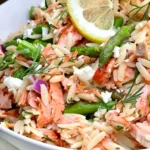
Salmon, Asparagus, and Dill Orzo Salad with Lemon Pepper Vinaigrette
- Total Time: 35 minutes
- Yield: 4 servings 1x
- Diet: Pescatarian
Description
A fresh, healthy, and delicious Salmon, Asparagus, and Dill Orzo Salad with a zesty Lemon Pepper Vinaigrette, perfect for a casual summer dinner.
Ingredients
- 6 cups water, lightly salted
- 1 pound asparagus, trimmed and cut into 2–3 inch pieces
- 1 1/3 cup uncooked orzo
- 1– 1 1/2 pounds salmon fillets, skin on
- 1/4 cup capers, rinsed
- 1/4 teaspoon salt
- 1/4 teaspoon freshly ground black pepper
- 1/3 cup diced red onion
- 1/4 cup chopped fresh dill
- 1/3 cup crumbled feta cheese (microbial rennet)
- 3 tablespoons fresh lemon juice
- 1 tablespoon olive oil
- 1/4 teaspoon salt
- 1/2 teaspoon freshly ground black pepper
Instructions
- Preheat: Preheat grill for medium heat or preheat oven to 375 degrees.
- Blanch Asparagus: Bring 6 cups of water to a boil, cook asparagus for 3 minutes or until crisp-tender, then plunge into ice water, drain and set aside.
- Cook Orzo: Return reserved water to a boil, add orzo, and cook according to package directions.
- Season Salmon: Season salmon fillets with salt and pepper.
- Cook Salmon: Grill salmon skin side down for 8-10 minutes or bake on a foil-lined broiler pan for 15-20 minutes until fish flakes easily.
- Chunk Salmon: Using forks, break the cooked salmon into large chunks.
- Make Vinaigrette: Whisk together lemon juice, olive oil, salt, and black pepper in a small bowl until combined.
- Combine: Toss salmon, orzo, capers, asparagus, onion, dill, feta cheese, and Lemon Pepper Vinaigrette in a large bowl.
Notes
This salad is best enjoyed at room temperature and pairs perfectly with grilled French bread brushed with olive oil.
- Prep Time: 15 minutes
- Cook Time: 20 minutes
- Category: Main Course
- Method: Grilling
- Cuisine: American
Nutrition
- Serving Size: 1 serving
- Calories: 540 kcal
- Sugar: 6 g
- Sodium: 620 mg
- Fat: 22 g
- Saturated Fat: 7 g
- Unsaturated Fat: 15 g
- Trans Fat: 0 g
- Carbohydrates: 42 g
- Fiber: 5 g
- Protein: 38 g
- Cholesterol: 85 mg
Keywords: salmon salad, orzo salad, asparagus, lemon pepper vinaigrette, healthy dinner, summer recipes