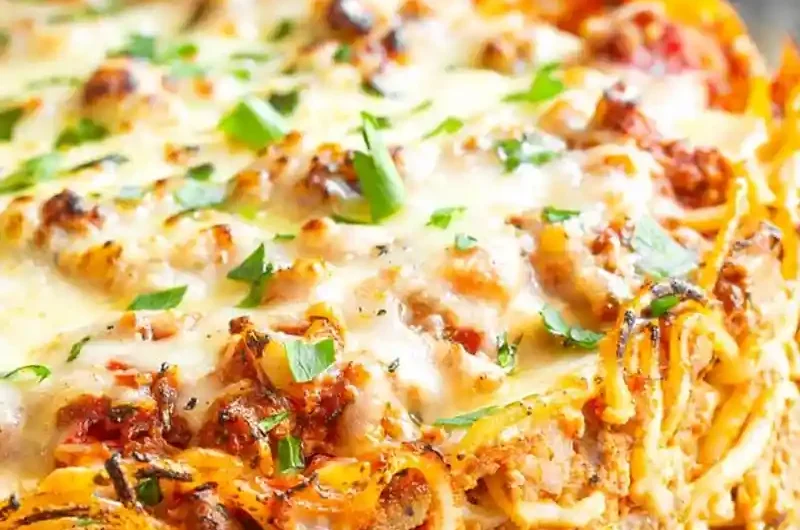
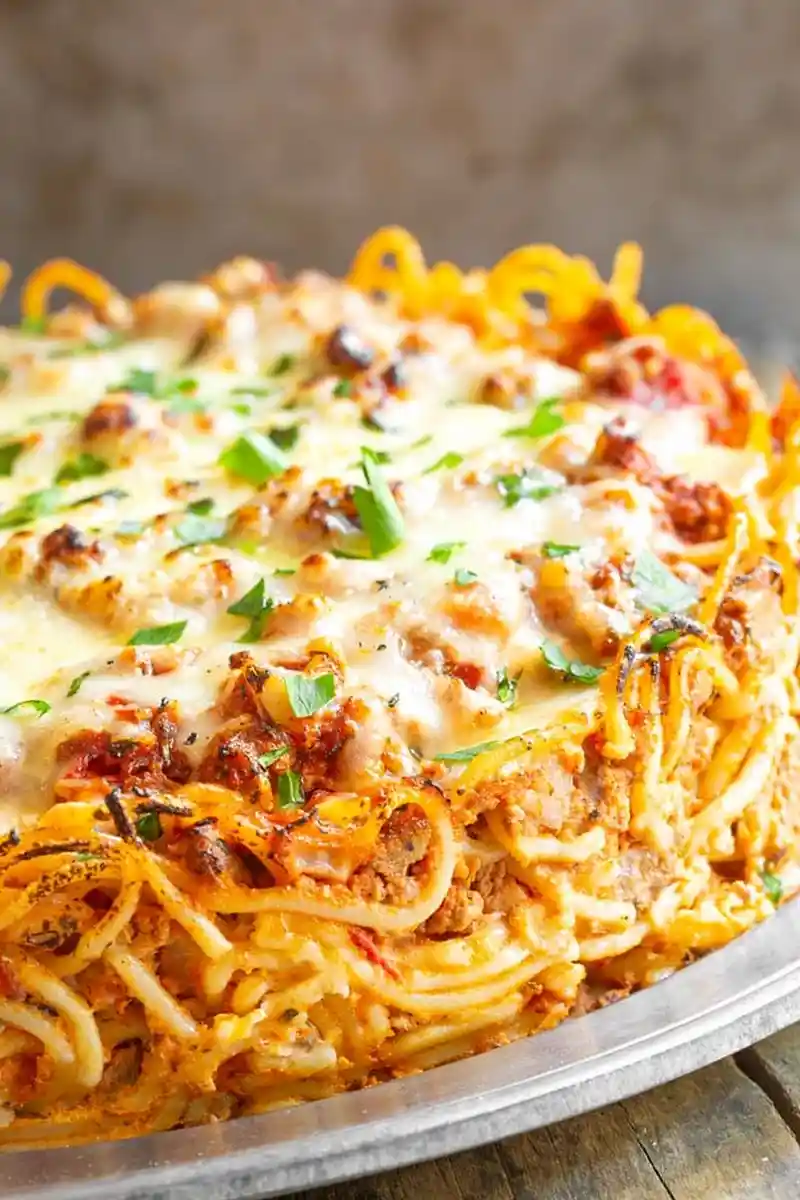
This baked spaghetti pie transforms traditional pasta into a hearty, sliceable meal perfect for family dinners. It features a rich meat sauce, a creamy center, and golden-brown edges for a satisfying texture.
List of ingredients
- 16 ounces dried spaghetti – use a standard thickness for best results.
- 16 ounces ground beef – 80/20 lean-to-fat ratio is recommended.
- 8 ounces Italian-style ground beef sausage – ensures a savory flavor profile without pork.
- 1 yellow onion – peeled and finely chopped.
- 3 cloves garlic – minced for uniform distribution.
- 28 ounces crushed tomatoes – one standard large can.
- 2 tablespoons tomato paste – used to thicken the sauce.
- 2 tablespoons dried Italian seasoning – a blend of oregano, basil, and thyme.
- 1 teaspoon salt – adjusts to taste.
- 3 large eggs – used as a binding agent for slicing.
- 4 ounces cream cheese – softened at room temperature for easy spreading.
- 1 cup shredded Italian cheese blend – a mix of mozzarella and parmesan.
step-by-step instructions
- Prepare Oven and Pan: Preheat your oven to 350 degrees F. Grease a 9-10 inch springform pan or a 9-inch deep-dish pie pan. If you use a springform pan, wrap the exterior tightly in aluminum foil to prevent sauce from leaking.
- Brown the Meat: Set a large pot of salted water to boil. In a separate saucepot, combine the ground beef, Italian-style beef sausage, chopped onion, and minced garlic. Cook over medium heat for about 5 minutes, breaking the meat into small pieces with a wooden spoon until browned and onions are soft.
- Simmer the Sauce: Stir in the crushed tomatoes, tomato paste, Italian seasoning, and salt. Reduce the heat to low and let the sauce simmer to allow the flavors to meld.
- Cook the Pasta: Add the dried spaghetti to the boiling water. Cook according to the package directions, usually for 6-9 minutes, ensuring the pasta remains al dente. Drain the pasta thoroughly.
- Combine Pasta and Binder: Measure out 2 cups of the meat sauce and set it aside for the top layer. Stir the drained spaghetti into the remaining meat sauce until fully coated. Beat the three eggs in a small bowl, then stir them into the pasta mixture.
- Layer the Pie: Pour the pasta mixture into the prepared pan. Press down firmly with a spatula to remove air gaps and pack the pasta. Cut the cream cheese into thin slices and lay them across the pasta, then spread them into an even layer.
- Final Topping and Baking: Pour the reserved 2 cups of meat sauce over the cream cheese layer. Sprinkle the shredded Italian cheese blend over the top. Bake for 25 minutes until the edges are crisp and the cheese is bubbly.
- Cool and Serve: Let the pie cool in the pan for at least 5 minutes before releasing the springform sides or slicing.
Meat Sauce Optimization
Selecting the Right Beef Blend
Using a mix of ground beef and Italian-style beef sausage provides a more complex flavor than beef alone. The 80/20 beef ratio ensures there is enough fat to keep the pasta moist during the second baking process. If using leaner meat, consider adding a tablespoon of olive oil to the browning stage.
The Role of Tomato Paste
Tomato paste serves as a thickening agent that prevents the pie from becoming too watery. By concentrating the tomato solids, it helps the sauce cling to the noodles and stabilizes the layers. This is critical for maintaining the sliceable structure of the dish.
Controlling the Simmer
Keeping the sauce on low heat prevents the sugars in the crushed tomatoes from scorching. A slow simmer allows the dried Italian seasoning to rehydrate and infuse the meat. This process creates a deeper, more cohesive flavor profile before the dish enters the oven.
Pasta Preparation Techniques
Achieving the Perfect Al Dente
Since the spaghetti is cooked twice—once on the stove and once in the oven—it must be slightly undercooked initially. Cooking the pasta for 1-2 minutes less than the package instructions prevents it from becoming mushy. The pasta will absorb moisture from the sauce and eggs during the baking phase.
Managing Pasta Starch
Rinsing the pasta is generally discouraged as the surface starch helps the meat sauce adhere to the noodles. Ensure the pasta is drained very well, however, to avoid adding excess water to the pan. Excess water can lead to a soggy bottom and prevent the edges from crisping.
Alternative Pasta Shapes
While spaghetti is traditional for this pie, linguine or fettuccine can be used. These wider noodles provide more structural integrity for the slices. If using shorter pasta like penne, the pressing stage becomes more important to ensure there are no large voids in the pie.
Assembly and Baking Tips
Preventing Springform Leaks
Springform pans are ideal for removing the pie cleanly, but they are not airtight. Wrapping the base and sides in double-layered aluminum foil catches any sauce that seeps through the bottom seal. This keeps your oven clean and prevents the bottom of the pie from drying out too quickly.
Applying the Cream Cheese Layer
Softening the cream cheese to room temperature is essential for a smooth application. Slicing the cheese into thin pats allows for more even distribution across the pasta. Avoid over-mixing the cream cheese into the pasta, as the goal is a distinct, silky layer in the center.
Ensuring Crisp Edges
The crispy edges are a signature of this dish and are achieved by pressing the pasta firmly against the sides of the pan. Using a metal spatula to pack the noodles ensures maximum contact with the heat. If the edges aren’t browning sufficiently, you can increase the oven temperature by 10 degrees for the last 5 minutes.
Ingredient Substitutions
Alternative Creamy Layers
If cream cheese is unavailable, ricotta cheese is a suitable replacement. Ricotta provides a grainier texture but offers a classic Italian flavor. For a lighter option, a thick layer of cottage cheese can be used, though it may release more moisture.
Varying the Cheese Topping
A blend of mozzarella and parmesan is standard, but sharp provolone adds a bolder taste. For a saltier crust, increase the proportion of parmesan or pecorino romano. Shredding the cheese from a block rather than buying pre-shredded ensures a better melt due to the lack of anti-clumping agents.
Adding Vegetable Components
Finely diced bell peppers, carrots, or zucchini can be sautéed with the onions. Spinach is another great addition; stir in fresh baby spinach at the end of the sauce simmering process. Ensure all vegetables are cooked down and excess liquid is evaporated to avoid a runny pie.
Dairy-Free Alternatives
Plant-based cream cheese and vegan mozzarella blends can be used for a dairy-free version. Ensure the vegan cheese is a high-melt variety to achieve the bubbly top. For the binder, a mixture of flaxseed meal and water or a commercial egg substitute can replace the chicken eggs.
Serving and Pairing Ideas
Balancing with Fresh Greens
A crisp Caesar salad or a simple arugula salad with lemon vinaigrette cuts through the richness of the pie. The acidity of the dressing helps cleanse the palate between bites of the heavy meat and cheese. Avoid creamy dressings to keep the meal from feeling too heavy.
Adding Warm Bread
Garlic bread or toasted ciabatta is a natural accompaniment. These can be used to scoop up any extra sauce that may release when slicing the pie. Brush the bread with olive oil and garlic powder for a quick, matching side.
Vegetable Side Dishes
Roasted broccoli or sautéed green beans provide a necessary nutritional balance. Steaming the vegetables lightly ensures they retain a snap that contrasts with the soft texture of the pasta. A side of glazed carrots also pairs well with the acidity of the tomato sauce.
Storage and Reheating
Refrigeration Guidelines
Store leftovers in an airtight container in the refrigerator for 3 to 5 days. To prevent the pasta from drying out, place a damp paper towel over the slice before sealing the container. Ensure the pie is completely cooled before refrigerating to avoid condensation.
Oven Reheating for Texture
To maintain the crispy edges, reheat slices in the oven at 350 degrees F. Place the slice on a baking sheet and cover it loosely with foil to prevent the top from burning. Heat for 5-10 minutes until the center is warmed through.
Microwave Reheating Tips
Microwaving is faster but will soften the crisp edges. Heat on medium power in 30-second intervals to avoid overcooking the pasta. Adding a teaspoon of water to the plate can help create steam, keeping the noodles tender.
Make-Ahead and Freezing Advice
Freezing Unbaked Pies
This dish is excellent for meal prep; assemble the pie completely but do not bake it. Wrap the pan tightly with heavy-duty aluminum foil to prevent freezer burn. Label the foil with the date and baking instructions.
Baking from Frozen
To bake a frozen pie, preheat the oven to 350 degrees F. Bake the pie covered with foil for 50-60 minutes. Remove the foil for the final 10-15 minutes to allow the cheese to brown and bubble.
Using Disposable Pans
If making multiple pies for the freezer, use 10-inch round or square foil baking pans. These are more convenient than springform pans for long-term storage. Ensure the pans are deep enough to accommodate the layers without overflowing.
Troubleshooting Common Issues
Solving Sauce Leakage
If sauce leaks through the bottom of your pan, it usually means the foil wrap was insufficient or the sauce was too thin. To fix this in future batches, simmer the sauce longer to reduce the water content. Always ensure the foil is pressed firmly against the base of the pan.
Fixing a Runny Center
A runny center is often caused by undercooked pasta or too much moisture in the vegetables. Ensure the pasta is drained thoroughly and the eggs are well-beaten and fully incorporated. If the pie is runny after baking, let it rest for an additional 10 minutes to allow the starches to set.
Preventing Burnt Cheese
If the cheese browns too quickly before the center is set, lower the oven temperature to 325 degrees F. Alternatively, cover the top loosely with a piece of foil during the first 15 minutes of baking. Remove the foil at the end to achieve the desired golden color.
Frequently Asked Questions
Can I make this with spaghetti squash?
Yes, but the texture will be different. Spaghetti squash releases significantly more moisture than grain-based pasta, which may make the pie runny. Place a rimmed baking sheet under your pan to catch any drips.
What should I do if I forget the eggs?
If you omit the eggs, the pie will still taste great, but it will not hold its shape as well. The slices may slump or fall apart when served. You can serve it as a scoopable casserole instead of a sliceable pie.
Can I make more than one pie at a time?
Yes, simply multiply the ingredients by the number of pies needed. Use separate pans for each pie and rotate them in the oven halfway through the baking time to ensure even heating across all dishes.
Print
Savory Baked Spaghetti Pie
- Total Time: 50 minutes
- Yield: 10 slices 1x
- Diet: General
Description
I love a comforting bowl of spaghetti and this Spaghetti Pie Recipe is a delicious and fun twist on an Italian classic. Every slice is packed with layers of tender pasta that crisp up on the outside, decadent meat sauce and melty cheese, that make each bite perfectly hearty and satisfying.
Ingredients
- 16 ounces dried spaghetti
- 16 ounces ground beef
- 8 ounces ground Italian-style beef sausage
- 1 yellow onion, peeled and chopped
- 3 cloves garlic, minced
- 28 ounces crushed tomatoes
- 2 tablespoons tomato paste
- 2 tablespoons dried Italian seasoning
- 1 teaspoon salt
- 3 large eggs
- 4 ounces cream cheese
- 1 cup shredded Italian cheese blend
Instructions
- Step 1: Preheat the oven to 350 degrees F. Grease a 9-10 inch springform pan, or a 9-inch deep-dish pie pan. If using a springform pan, wrap the outside in foil to avoid leakage.
- Step 2: Place a large pot of salted water over high heat to boil. In a separate saucepot, add the ground beef, sausage, onions, and garlic. Brown the meat over medium heat for about 5 minutes, breaking into small pieces with a wooden spoon. Once the meat is cooked and the onions have softened, add the crushed tomatoes, tomato paste, Italian seasoning, and 1 teaspoon salt. Stir and simmer on low.
- Step 3: Once the water is boiling, add the pasta and cook according to the package instructions, usually 6-9 minutes. Drain the cooked pasta.
- Step 4: Separate out 2 cups of meat sauce and set aside. Add the cooked pasta to the remaining pot of meat sauce. Stir well to coat the pasta. Beat the eggs, then stir them into the spaghetti.
- Step 5: Pour the spaghetti into the prepared pan. Press down to pack the pasta in the pan. Cut the cream cheese into thin slices and lay them over top of the pasta. Use a spatula to spread out the cream cheese.
- Step 6: Pour the remaining meat sauce over the top of the pie. Sprinkle shredded cheese over the top. Bake for 25 minutes until the edges are crispy. Cool for at least 5 minutes before cutting and serving.
Notes
Freezer Instructions: To freeze, assemble the pie as instructed but do not bake. Wrap the pan thoroughly with foil and place in the freezer. Bake from frozen, covered, at 350 degrees F for 50-60 minutes. Store refrigerated in an airtight container for 3 to 5 days. Reheat in the oven at 350 degrees F for a few minutes.
- Prep Time: 10 minutes
- Cook Time: 40 minutes
- Category: Main Course
- Method: Baking
- Cuisine: American, Italian
Nutrition
- Serving Size: 1 slice
- Calories: 449 kcal
- Sugar: 6 g
- Sodium: 598 mg
- Fat: 21 g
- Saturated Fat: 8 g
- Unsaturated Fat: 13 g
- Trans Fat: 0 g
- Carbohydrates: 42 g
- Fiber: 3 g
- Protein: 21 g
- Cholesterol: 116 mg
Keywords: spaghetti pie, baked pasta, meat sauce, comfort food, family dinner