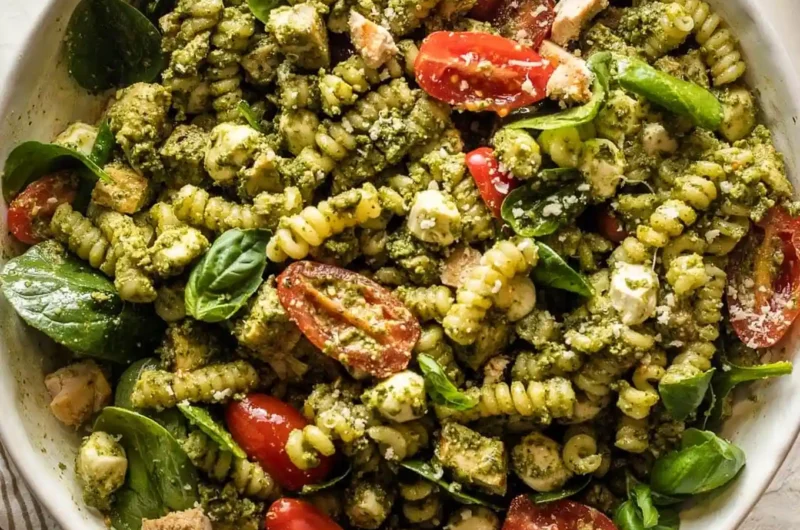
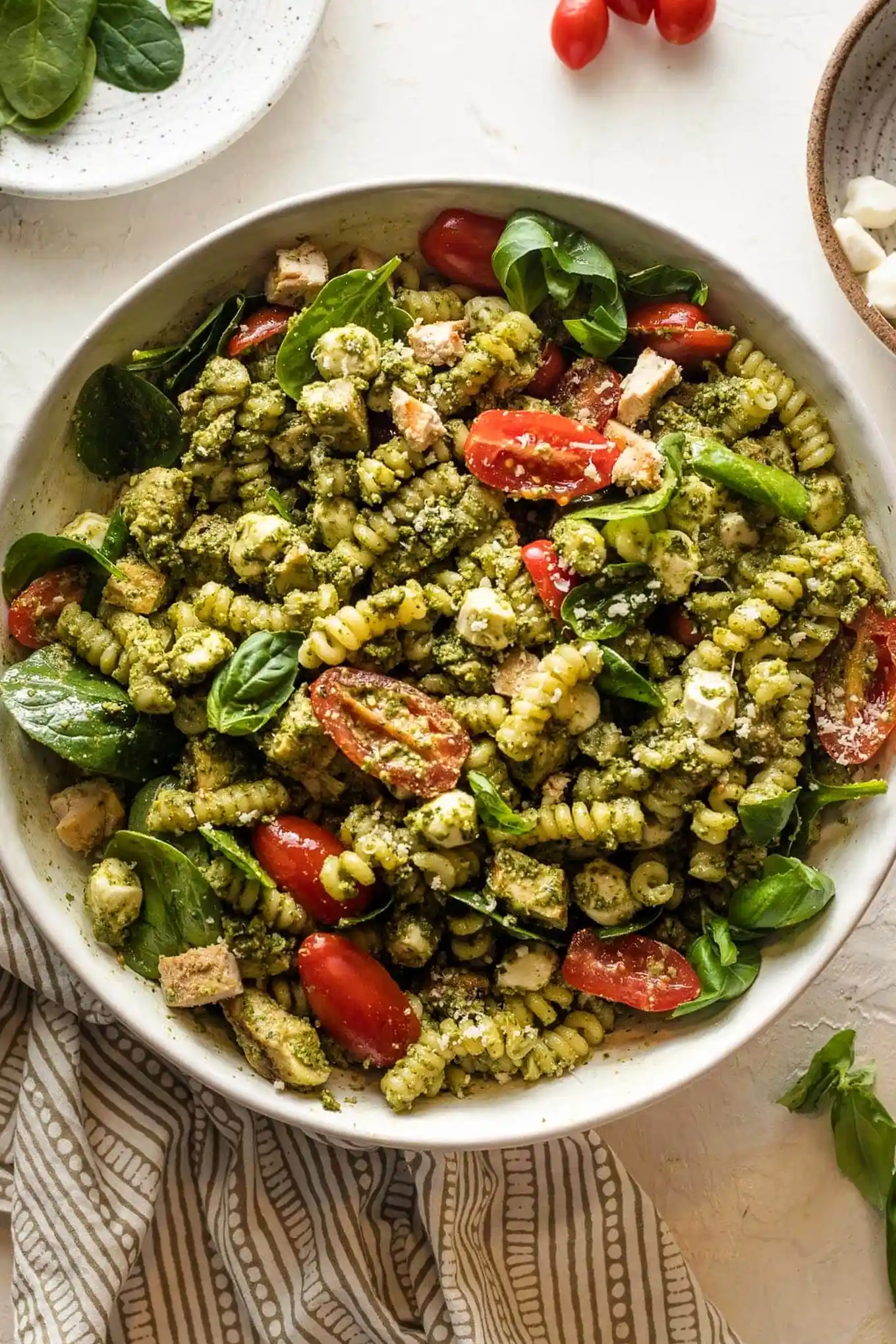
This chicken pesto pasta salad combines fresh garden vegetables and seasoned poultry for a nutrient-dense and flavorful meal. It is an ideal choice for quick weeknight dinners or chilled contributions to outdoor picnics and barbecues.
List of ingredients
- 12 ounces pasta (any shape) – cooked al dente.
- kosher salt and black pepper – for seasoning chicken and pasta.
- 2-3 thinly-sliced chicken breasts – cooked to an internal temperature of 165 degrees F.
- 1 teaspoon garlic powder – for chicken seasoning.
- 1 cup basil pesto – store-bought or homemade.
- 1 tablespoon red wine vinegar – to provide a tangy balance to the pesto.
- 1 and 1/2 cups cherry or grape tomatoes (halved) – for freshness.
- 8 ounces fresh mozzarella balls or pieces – for a creamy texture.
- 1 cup baby spinach – for added color and nutrition.
- 1/2 cup grated Parmesan cheese – for salty depth.
step-by-step instructions
- Cook the pasta: Bring a large pot of water to a rapid boil and add a generous pinch of salt. Cook the pasta until al dente according to the package instructions, then drain and set aside to cool.
- Season the chicken: Sprinkle both sides of the thinly-sliced chicken breasts lightly with garlic powder, kosher salt, and black pepper.
- Cook the chicken: Grill the chicken or cook it in a lightly-oiled skillet over medium-high heat for 2-3 minutes per side. Ensure the meat is browned on the outside and reaches an internal temperature of 165 degrees F.
- Prepare chicken pieces: Remove the chicken to a cutting board and allow it to cool slightly. Cut the meat into bite-sized pieces.
- Assemble the salad: In a large bowl, stir together the basil pesto and red wine vinegar. Add the drained pasta, cut chicken, halved tomatoes, mozzarella balls, baby spinach, and grated Parmesan cheese.
- Final toss and serve: Toss all ingredients well to combine. Sample the salad and add more salt and pepper if needed. Serve immediately or refrigerate for up to 24 hours.
Optimal Pasta Selection
Use Rotini for Maximum Sauce Adherence
Rotini pasta is a top choice for pesto salads because the spirals trap the thick sauce in their grooves. This ensures that every bite is saturated with flavor rather than the sauce pooling at the bottom of the bowl.
Farfalle for a Balanced Texture
Farfalle, or bow-tie pasta, provides a firmer bite and a pleasing aesthetic for potluck presentations. The center of the bow-tie remains slightly denser, providing a nice contrast to the soft mozzarella and tender chicken.
Cavatappi for Hearty Portions
Cavatappi is a corkscrew-shaped pasta that is larger and sturdier than rotini. It is particularly effective if you are adding larger chunks of chicken or oversized mozzarella pieces, as it maintains a consistent ratio of pasta to mix-ins.
Fusilli for Efficient Mixing
Fusilli is similar to rotini but typically has a tighter twist. This shape is excellent for smaller-scale salads where you want the spinach and grated Parmesan to cling tightly to the noodle.
Chicken Cooking Techniques
Pan-Searing for a Savory Crust
Using a stainless steel or cast-iron skillet over medium-high heat creates a golden-brown crust on the chicken. This Maillard reaction adds a deep, savory dimension that complements the bright, herby notes of the basil pesto.
Grilling for a Smoky Profile
Grilling the chicken breasts on an outdoor grill adds a subtle charred flavor to the dish. This approach is particularly suited for summer barbecues and pairs well with the acidity of the red wine vinegar.
Using Rotisserie Chicken for Efficiency
For a faster preparation, replace the raw breasts with shredded or diced rotisserie chicken. Ensure the chicken is skinless and chopped into uniform pieces to maintain the consistency of the salad.
Poaching for Leaner Results
If you prefer a more tender and moist texture without using oil, poaching the chicken in simmering water or vegetable broth is an option. Once cooked through, chill the meat before dicing to keep the pesto from melting upon contact.
Pesto Selection and Adjustments
Evaluating Store-Bought Pesto Quality
When purchasing jarred pesto, check the label for extra virgin olive oil and fresh basil as the primary ingredients. Avoid brands that use excessive fillers or artificial flavorings to ensure a clean, authentic Italian taste.
Preparing Fresh Homemade Basil Pesto
For maximum flavor, blend fresh basil leaves, toasted pine nuts, garlic, Parmesan, and olive oil in a food processor. Freshly made pesto has a more vibrant green color and a punchier aroma than store-bought versions.
Trying Zucchini Pesto Variations
Substituting some of the basil with blanched zucchini can add a nutritional boost and a slightly creamier consistency. This variation remains rich in flavor while introducing a different vegetable profile to the salad.
Thinning the Pesto for Better Coverage
If the pesto is too thick to coat the pasta evenly, stir in a teaspoon of water or extra olive oil. Thinning the sauce prevents the pasta from appearing dry and helps the dressing penetrate the center of the noodles.
Vegetable and Cheese Variations
Sun-Dried Tomatoes for Concentrated Flavor
Replacing fresh cherry tomatoes with oil-packed sun-dried tomatoes provides a more intense, tart flavor. This swap is especially useful during winter months when fresh tomatoes lack their peak summer sweetness.
Fresh Baby Spinach for Nutrient Density
Baby spinach adds a mild earthy flavor and a boost of iron and vitamins to the meal. To prevent the leaves from wilting too quickly, toss them in at the very end of the assembly process.
Mozzarella Pearl Selection
Using small mozzarella pearls ensures that every forkful contains a piece of creamy cheese. If using larger balls, dice them into quarter-inch cubes to match the size of the chicken and tomatoes.
Integrating Different Parmesan Types
While pre-grated Parmesan is convenient, using a block of Parmesan Reggiano and grating it fresh provides a sharper, saltier flavor. The larger flakes of fresh cheese create small pockets of intense saltiness throughout the dish.
Flavor Enhancement Ideas
Adding Toasted Pine Nuts for Crunch
Toasted pine nuts introduce a buttery flavor and a contrasting crunch to the soft pasta and chicken. Lightly toast them in a dry pan over medium heat for 3-5 minutes until they turn golden brown.
Including Kalamata Olives for Brine
Pitted Kalamata olives add a salty, briny element that cuts through the richness of the pesto and cheese. This addition shifts the flavor profile toward a more traditional Mediterranean style.
Adding Roasted Red Peppers for Sweetness
Jarred roasted red peppers provide a smoky sweetness and a bright red color. Slice them into thin strips to match the visual profile of the other vegetables in the bowl.
Integrating Artichoke Hearts for Texture
Quartered marinated artichoke hearts add a sophisticated tang and a meaty texture. These pair exceptionally well with the mozzarella and red wine vinegar, enhancing the overall complexity of the salad.
Dietary Adaptations
Substituting Gluten-Free Pasta
Brown rice or corn-based pasta varieties work well as gluten-free alternatives. To avoid mushiness, cook the gluten-free pasta for one minute less than the package directions, as it continues to soften as it absorbs the pesto.
Making the Salad Vegetarian
Omit the chicken entirely to make this a vegetarian-friendly dish. The combination of mozzarella and Parmesan provides enough savory depth to satisfy without the need for meat.
Adding Legumes for Extra Protein
For a plant-based protein boost, toss in a cup of rinsed chickpeas or cannellini beans. These legumes absorb the pesto flavor and add a creamy texture that mimics the heartiness of the chicken.
Reducing Sodium in the Dish
To lower the sodium content, use unsalted butter or oil in your pesto and omit the added salt in the pasta water. Rely on the natural saltiness of the Parmesan and the tang of the vinegar for flavor.
Preservation and Storage
Refrigeration Timeframes
This salad can be stored in the refrigerator for 3 to 4 days. Because the flavors meld over time, the salad often tastes better on the second day as the pasta absorbs the pesto and vinegar.
Air-Tight Container Selection
Store the salad in a glass or BPA-free plastic container with a tight-sealing lid. This prevents the pasta from absorbing odors from other foods in the fridge and keeps the spinach from oxidizing.
Preventing Pasta from Drying Out
Pasta tends to soak up moisture as it sits in the fridge. If the salad looks dry when you remove it from storage, stir in a tablespoon of olive oil or a splash of water to restore the creaminess.
Freezing Considerations
This dish is not recommended for freezing due to the fresh mozzarella and spinach. Freezing these ingredients alters their texture, making the cheese rubbery and the spinach watery upon thawing.
Serving and Reheating Guidelines
Microwaving in Small Intervals
If you prefer the salad warm, reheat it in the microwave using 30-45 second intervals. Stir the salad between each interval to ensure the pesto is heated evenly without separating the oil.
Room Temperature Serving
For the best flavor balance, let the chilled salad sit at room temperature for 15-20 minutes before serving. This allows the fats in the pesto and cheese to soften, releasing more aromatic flavors.
Garnishing with Fresh Basil
Add a few torn leaves of fresh basil just before serving to provide a burst of aromatic freshness. This enhances the visual appeal and reinforces the primary flavor of the pesto.
Adding Final Seasoning
Always perform a final taste test before serving. The flavors can shift during refrigeration, so a final pinch of black pepper or a squeeze of lemon can brighten the overall taste.
Recipe Troubleshooting
Fixing a Dry Pasta Salad
If the salad feels too thick or dry, avoid adding plain water. Instead, mix a small amount of additional pesto with a teaspoon of red wine vinegar or olive oil and stir it into the mixture.
Preventing Sogginess
To avoid a soggy salad, ensure the cooked pasta is fully cooled before mixing it with the pesto. Adding hot pasta to the spinach and mozzarella will cause the greens to wilt and the cheese to soften prematurely.
Balancing Excessive Acidity
If the red wine vinegar makes the salad too tart, stir in an extra tablespoon of pesto or a sprinkle of grated Parmesan. The fats in the cheese and oil neutralize the sharp acid of the vinegar.
Avoiding Overcooked Pasta
Cooking pasta past the al dente stage can lead to a mushy salad, especially after refrigeration. Aim for a slight resistance in the center of the noodle to ensure it holds its shape when tossed.
Frequently Asked Questions
Can I eat pesto pasta cold?
Yes, pesto pasta is designed to be versatile and is delicious whether served warm or chilled. Its stability makes it an excellent option for meal prep or cold lunchboxes.
Can I use pesto straight from a jar?
Absolutely, high-quality store-bought pestos are ready for immediate use. They provide a convenient way to assemble this dish quickly without sacrificing the core flavor profile.
How long does it last in the fridge?
The salad remains fresh and safe to eat for up to 4 days when kept in an airtight container. Always keep it refrigerated to preserve the freshness of the dairy and chicken.
What is the best vinegar to use?
Red wine vinegar is recommended for its bold tang, but apple cider vinegar or white wine vinegar are suitable substitutes. The goal is to add a light acidity to cut through the richness of the pesto.
Print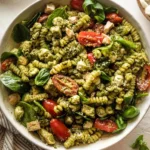
Savory Chicken Pesto Pasta Salad
- Total Time: 25 minutes
- Yield: 6 servings 1x
- Diet: General
Description
A lovely quick lunch or dinner, and a terrific go-to for any warm-weather BBQ, potluck, or picnic. Easy to make ahead, and it only gets better with a day in the fridge.
Ingredients
- 12 ounces pasta (any shape)
- kosher salt and black pepper
- 2–3 thinly-sliced chicken breasts
- 1 teaspoon garlic powder
- 1 cup basil pesto
- 1 tablespoon apple cider vinegar
- 1 and 1/2 cups cherry or grape tomatoes (halved)
- 8 ounces fresh mozzarella balls or pieces
- 1 cup baby spinach
- 1/2 cup grated Parmesan cheese
Instructions
- Cook the pasta: Bring a large pot of water to a rapid boil, add a generous pinch of salt, and cook pasta just to al dente, according to package instructions. Drain and set aside to cool.
- Prepare the chicken: Sprinkle both sides of the chicken lightly with garlic powder, kosher salt, and a few cracks of black pepper.
- Cook the chicken: Either grill chicken or cook in a lightly-oiled skillet over medium-high heat for 2-3 minutes per side, just until browned on the outside and cooked through to an internal temperature of 165 degrees F.
- Cut the chicken: Remove chicken to a cutting board and set aside. When slightly cooled, cut into bite-sized pieces.
- Assemble: In a large bowl, stir together the pesto and apple cider vinegar. Add drained pasta, cut chicken, halved tomatoes, mozzarella balls, baby spinach, and Parmesan cheese. Toss well to combine, sample, and add more salt and pepper to taste.
- Serve: Serve right away, or keep in the fridge for up to 24 hours. Serve with a few extra leaves of fresh basil, a dollop of pesto, or an extra sprinkle of Parmesan, if desired.
Notes
Rotisserie Chicken: You can use 1-2 cups of shredded rotisserie chicken or other leftover chicken in place of the grilled and cut chicken breasts.
- Prep Time: 15 minutes
- Cook Time: 10 minutes
- Category: Pasta, Side
- Method: Stovetop
- Cuisine: American
Nutrition
- Serving Size: 1 serving
- Calories: 458 kcal
- Sugar: 4 g
- Sodium: 588 mg
- Fat: 20 g
- Saturated Fat: 4 g
- Unsaturated Fat: 15 g
- Trans Fat: 1 g
- Carbohydrates: 49 g
- Fiber: 3 g
- Protein: 20 g
- Cholesterol: 35 mg
Keywords: chicken pesto pasta salad