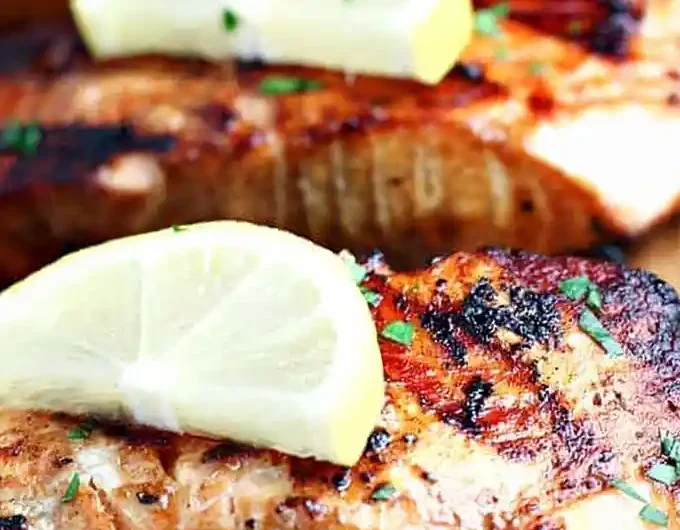
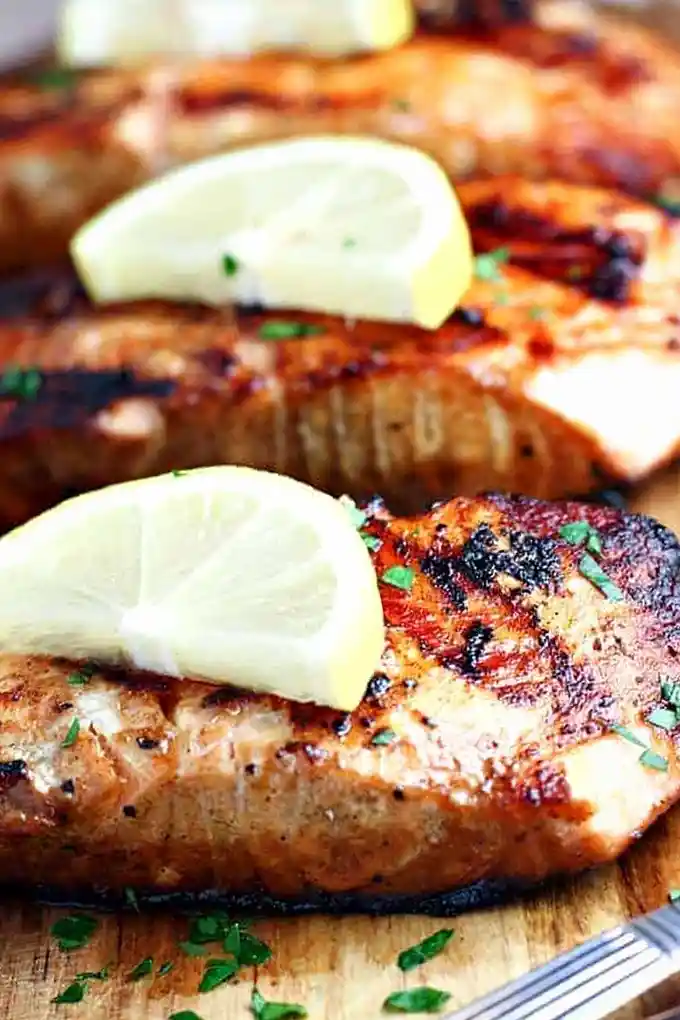
This recipe features salmon fillets marinated in a balanced blend of sweet and savory flavors before being grilled. It is a practical way to achieve a restaurant-style seafood dinner at home with minimal effort.
List of ingredients
- 1 1/2 pounds salmon fillets – use center-cut for even cooking.
- 1 teaspoon lemon pepper – adds a zesty, spicy note.
- 2 cloves garlic, minced – provide a pungent aromatic base.
- 1/4 teaspoon salt – enhances all existing flavors.
- 1/3 cup soy sauce – provides saltiness and deep color.
- 1/3 cup brown sugar – creates a sweet, caramelized glaze.
- 1/3 cup water – thins the marinade for better penetration.
- 1/4 cup olive oil – helps prevent sticking and adds moisture.
step-by-step instructions
- Prepare the marinade: In a small bowl, stir together 1 teaspoon lemon pepper, 2 cloves garlic, 1/4 teaspoon salt, 1/3 cup soy sauce, 1/3 cup brown sugar, 1/3 cup water, and 1/4 cup olive oil until the sugar is completely dissolved.
- Bag the fish: Place 1 1/2 pounds salmon fillets in a large resealable plastic bag.
- Marinate: Pour the soy sauce mixture over the fish and seal the bag tightly. Refrigerate for at least 2 hours to allow flavors to penetrate.
- Heat the grill: Lightly oil the grill grate and preheat the grill to medium heat.
- Sear the salmon: Place the salmon on the preheated grill and discard the remaining marinade.
- Cook: Cook the salmon for 6 to 8 minutes per side, or until the fish flakes easily with a fork.
Grilling Technique Mastery
Properly Preheating the Grate
Preheating the grill to medium heat is essential for a successful sear. A hot grate prevents the fish proteins from bonding to the metal, which reduces sticking. Ensure the grill has reached a consistent temperature before adding the fillets.
Using a Specialized Fish Spatula
A fish spatula is thinner and more flexible than a standard kitchen spatula. This design allows you to slide the tool under the delicate fillets without breaking the meat. It is the best tool for flipping salmon without ruining the presentation.
Identifying the Perfect Doneness
Salmon is cooked through when it reaches an internal temperature of 145°F (63°C). You can also use the fork test by gently pressing a fork into the thickest part of the fillet. If the meat flakes apart easily along the natural lines, it is ready.
Allowing the Salmon to Rest
Remove the salmon from the grill and let it rest on a platter for about 5 minutes. This allows the internal juices to redistribute throughout the fillet. Resting prevents the moisture from running out immediately upon slicing.
Ingredient Substitutions and Flavor Tweaks
Substituting Brown Sugar with Honey
You can replace the brown sugar with an equal amount of honey for a different sweetness profile. Honey creates a stickier, thicker glaze that adheres well to the fish. This change results in a more glossy finish on the grilled surface.
Incorporating Fresh Citrus Juices
Replacing the water in the marinade with fresh orange or lime juice adds a bright acidity. This cuts through the richness of the salmon and the sweetness of the sugar. Adding a teaspoon of fresh zest can further enhance the citrus aroma.
Converting Fillets into Salmon Skewers
Cut the salmon into uniform 1-inch cubes instead of keeping the fillets whole. Thread them onto skewers, alternating with pieces of red onion and bell pepper. Reduce the grilling time to 3-4 minutes per side due to the smaller size of the meat.
Assembling a Nutrient-Dense Grain Bowl
Serve the grilled salmon atop a base of quinoa or farro for a healthier meal. Add steamed edamame, shredded raw carrots, and sliced avocado for texture. Drizzle with a bit of extra soy sauce or a sesame-based dressing to tie the bowl together.
Complementary Side Dish Pairings
Selecting the Right Rice Accompaniment
Steamed jasmine or basmati rice works well to absorb the excess marinade from the salmon. For more flavor, cook the rice in a vegetable broth instead of water. Brown rice is a great alternative for those seeking more fiber and a nuttier taste.
Adding Roasted Green Vegetables
Pair this dish with roasted broccoli, asparagus, or green beans. Toss the vegetables in olive oil, salt, and pepper, then roast them at 400°F until tender. The charred edges of the vegetables complement the caramelized glaze of the fish.
Using Creamy Pasta Options
A lemon-herb orzo or a light garlic butter pasta provides a creamy contrast to the soy-based salmon. Use fresh parsley and a squeeze of lemon juice in the pasta to brighten the plate. This creates a more filling, restaurant-style meal.
Preservation and Reheating Guidelines
Using Airtight Storage Containers
Store leftover salmon in a glass airtight container to keep the meat moist. Glass is preferable to plastic as it does not absorb the strong scent of the soy marinade. Ensure the container is sealed tightly to prevent the fish from drying out in the fridge.
Maximum Refrigeration Duration
Cooked salmon should be refrigerated within 2 hours of cooking. For the best quality and safety, consume the leftovers within 3 days. Beyond this window, the texture of the fish may become too dry or the flavor may degrade.
Gentle Oven Reheating Method
Preheat your oven to 275°F to warm the salmon slowly. Place the fillets in a baking dish and add a small splash of water or vegetable broth to create steam. Cover the dish with foil and heat for 10 to 15 minutes until warmed through.
Stovetop Warming Technique
Heat a small amount of oil in a skillet over low heat. Place the salmon in the pan and cover it with a lid to trap the moisture. Warm gently for 5 to 7 minutes, turning once, to avoid overcooking the fish.
Safe Microwave Reheating
Place the salmon on a microwave-safe plate and cover it loosely with a damp paper towel. This prevents the fish from becoming rubbery by adding localized humidity. Heat in 30-second intervals at 50% power until the fish is warm.
Creative Ways to Use Leftovers
Cold Salmon Salad Integration
Flake cold leftover salmon into a large Caesar salad or a mixed green salad. The savory soy glaze pairs well with creamy dressings and crisp romaine lettuce. Add toasted almonds or sunflower seeds for additional crunch.
Converting Salmon into Tacos
Warm the leftover salmon and place it in charred corn tortillas. Top with a cabbage slaw, sliced jalapeños, and a dollop of Greek yogurt or sour cream. The sweetness of the brown sugar marinade works perfectly with spicy taco toppings.
Grilling Troubleshooting and FAQs
Managing Grill Flare-ups
Flare-ups occur when fat from the salmon or oil from the marinade drips onto the heat source. If a flame jumps up, move the salmon to a cooler part of the grill immediately. Keep a spray bottle of water nearby to dampen the coals or burners if necessary.
Correcting Overcooked Salmon
If the salmon is overcooked and dry, avoid reheating it further. Instead, flake the fish and mix it with mayonnaise, lemon, and celery to create a salmon salad. The addition of fats will compensate for the lost moisture in the meat.
Preventing Skin Attachment
If your salmon has skin, start the grilling process with the skin side down. This protects the delicate meat from the direct heat and helps the skin crisp up. Once the skin releases naturally from the grate, it is time to flip the fillet.
How long can salmon marinate?
For the best results, marinate for at least 2 hours. Do not exceed 24 hours, as the salt and acid in the soy sauce can begin to break down the protein structure, making the fish too soft or mushy.
Can I use a different type of fish?
Yes, this marinade works well with other firm fish like steelhead trout or mahi-mahi. Adjust the cooking time based on the thickness of the fillet. Thicker cuts will require more time per side than thin fillets.
Should the skin be removed before grilling?
It is better to keep the skin on during the grilling process. The skin acts as a barrier that prevents the meat from overcooking and sticking to the grate. You can easily slide the skin off after the fish has rested if you prefer not to eat it.
What is the best alternative to a grill?
If you do not have an outdoor grill, a cast-iron grill pan on the stove is the best substitute. Heat the pan over medium-high heat until it smokes slightly. Use the same cooking times and oiling techniques to achieve similar sear marks.
Print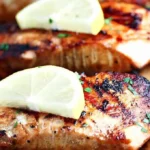
Soy Sauce and Brown Sugar Grilled Salmon
- Total Time: 20 minutes
- Yield: 4–6 servings 1x
- Diet: General
Description
Salmon fillets are marinated in a sweet soy sauce mixture, then grilled to perfection in this easy, restaurant quality seafood dinner.
Ingredients
- 1 1/2 pounds salmon fillets
- 1 teaspoon lemon pepper
- 2 cloves garlic (minced)
- 1/4 teaspoon salt
- 1/3 cup soy sauce
- 1/3 cup brown sugar
- 1/3 cup water
- 1/4 cup olive oil
Instructions
- Step: In a small bowl, stir together 1 teaspoon lemon pepper, 2 cloves garlic, 1/4 teaspoon salt, 1/3 cup soy sauce, 1/3 cup brown sugar, 1/3 cup water, and 1/4 cup olive oil until sugar is dissolved.
- Step: Place 1 1/2 pounds salmon fillets in a large resealable plastic bag.
- Step: Pour soy sauce mixture over fish and seal bag. Refrigerate for at least 2 hours.
- Step: Lightly oil grill grate and preheat grill for medium heat.
- Step: Place salmon on the preheated grill; discard marinade.
- Step: Cook salmon for 6 to 8 minutes per side, or until the fish flakes easily with a fork.
Notes
Total time does not include marinading.
- Prep Time: 10 minutes
- Cook Time: 10 minutes
- Category: Main Dishes
- Method: Grilling
- Cuisine: American
Nutrition
- Serving Size: 1 serving
- Calories: 361 kcal
- Sugar: 10 g
- Sodium: 1081 mg
- Fat: 23 g
- Saturated Fat: 4 g
- Unsaturated Fat: 19 g
- Trans Fat: 0 g
- Carbohydrates: 11 g
- Fiber: 0 g
- Protein: 26 g
- Cholesterol: 71 mg
Keywords: grilled salmon, soy sauce marinade, brown sugar salmon, seafood dinner