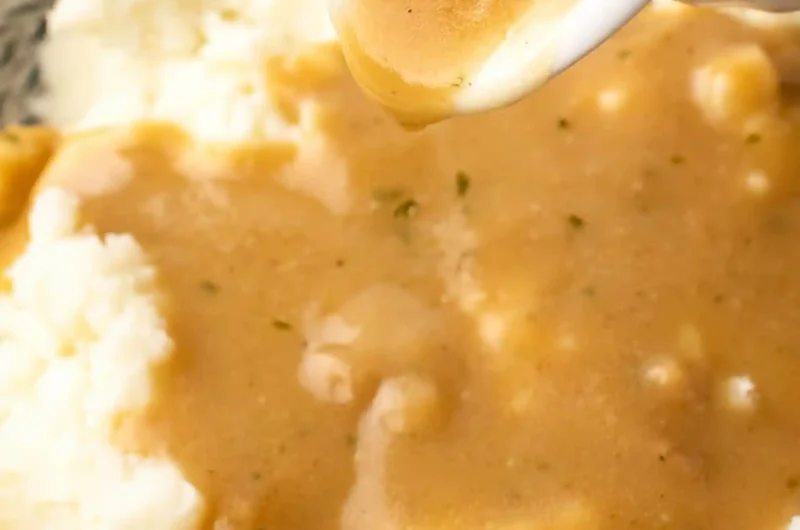
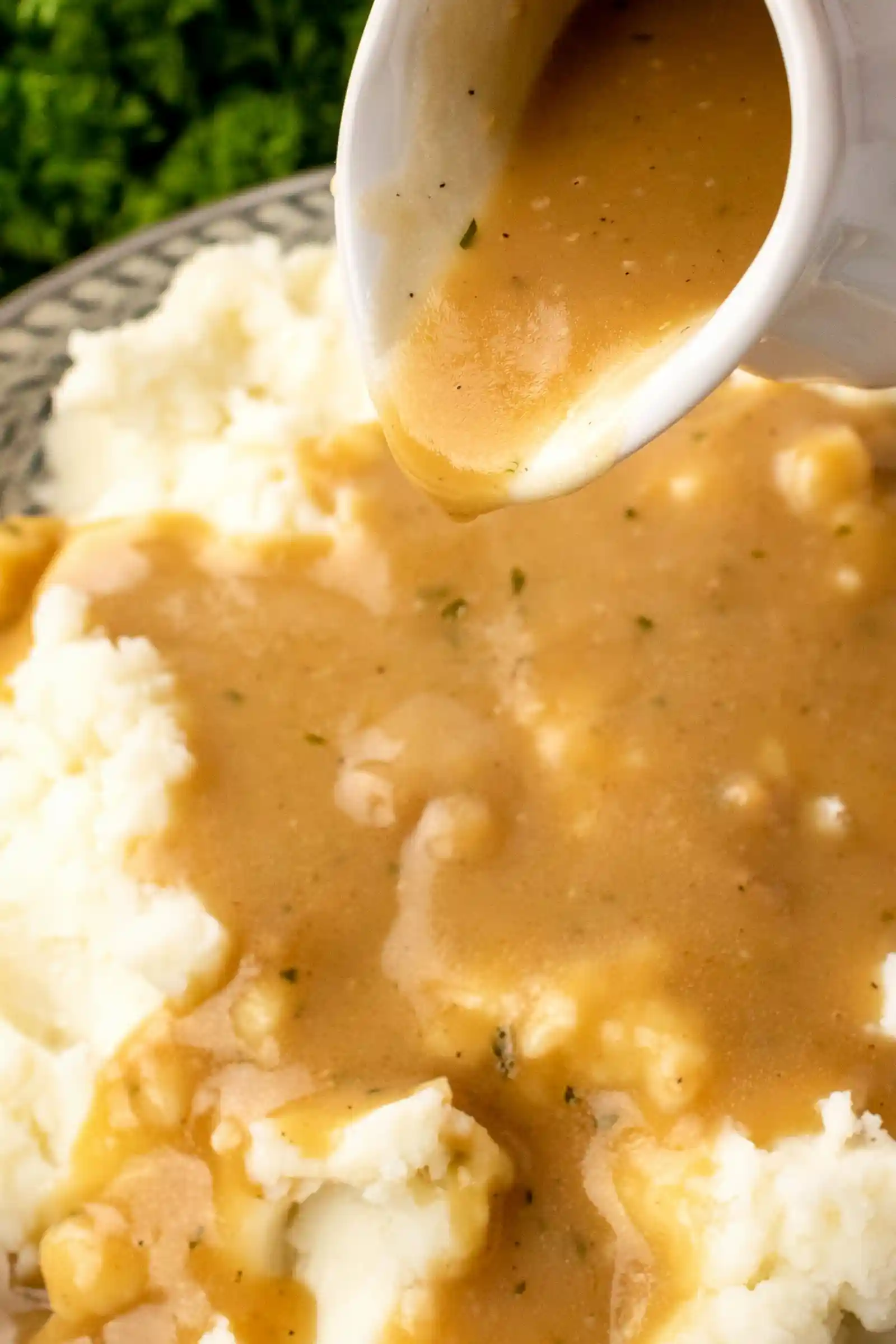
This rich and velvety brown gravy is a versatile addition to any meal, providing a deep savory flavor. It is a quick-cooking sauce that pairs exceptionally well with roasted meats and potato dishes.
List of ingredients
- 1/4 cup butter – unsalted butter allows for better control over the final sodium level.
- 1/4 cup flour – all-purpose flour serves as the thickening agent for the roux.
- 1 tablespoon chicken bouillon powder (2 packets) – provides a concentrated savory base.
- 1/2 teaspoon garlic powder – adds a subtle aromatic pungency.
- 1/2 teaspoon dried parsley – introduces a mild herbal note and visual flecks.
- 1/4 teaspoon black pepper – adds a slight heat and classic seasoning.
- 2 cups beef broth – creates the signature brown color and rich beef flavor.
step-by-step instructions
- Prepare the Roux: In a large pot over medium heat, melt butter then whisk in the flour and allow to cook 2-3 minutes until it forms a smooth paste.
- Combine Seasonings: Stir in the bouillon powder, garlic powder, parsley, and pepper until the spices are evenly distributed throughout the butter mixture.
- Integrate the Liquid: Slowly pour in the beef broth a little at a time, and mix well after each addition to prevent clumps.
- Thicken the Sauce: Bring the mixture to a simmer and allow to cook until the desired thickness is reached, which typically takes 5-10 minutes.
- Final Step: Serve the gravy warm immediately over your chosen dish.
Mastering the Roux Process
Achieving a Smooth Paste
Use a wire whisk to blend the butter and flour thoroughly. This ensures that no dry pockets of flour remain, which prevents the final gravy from having small white lumps.
Cooking Time for Flavor
Cook the butter and flour mixture for at least two to three minutes. This toasts the flour, removing the raw cereal taste and developing a nuttier flavor profile.
Managing Heat Levels
Keep the burner on medium heat to avoid scorching the butter. If the roux browns too quickly or smells burnt, start over to avoid a bitter taste in the gravy.
Identifying the Correct Consistency
The roux should look like a thick, golden paste before adding any liquid. This consistency indicates that the flour is properly saturated with fat and ready to thicken the broth.
Optimizing the Flavor Profile
Using Beef Broth for Color
Beef broth is essential for achieving the dark brown hue associated with traditional brown gravy. Substituting with chicken broth will result in a lighter, tan-colored sauce.
Balancing Sodium Levels
Since bouillon and beef broth both contain salt, taste the gravy before adding extra table salt. Adjust the seasoning only after the sauce has simmered and thickened.
Enhancing Umami with Soy Sauce
Adding a teaspoon of soy sauce can deepen the brown color and increase the savory depth. This provides an additional layer of umami that complements the beef broth.
Using Fresh Parsley for Brightness
While dried parsley is convenient, stirring in fresh chopped parsley at the very end adds a pop of color. This provides a fresher, more vibrant herbal finish to the rich sauce.
Serving and Pairing Ideas
Pairing with Mashed Potatoes
Pour the hot gravy over creamy mashed potatoes for a classic comfort meal. The thickness of the gravy prevents it from soaking too quickly into the potatoes.
Serving with Roasted Chicken
This gravy works well as a topping for roasted or fried chicken breasts. The beefy notes contrast well with the lighter flavor of the poultry.
Using as a Topping for Stuffing
Drizzle the gravy over corn-based or bread-based stuffing. This adds moisture to the stuffing and ties the side dish together with the main protein.
Creating a Poutine Base
Use this gravy as the sauce for homemade poutine. Pour it over hot french fries and cheese curds for a rich, savory snack.
Storage and Preservation
Refrigerating the Gravy
Store leftover gravy in an airtight container in the refrigerator for up to two days. The sauce will thicken significantly as it cools down.
Preventing Surface Skin
Press a piece of plastic wrap directly onto the surface of the gravy before sealing the container. This prevents a tough skin from forming on the top of the sauce.
Freezing for Long-Term Use
Transfer the gravy to a freezer-safe container or freezer bag for up to one month. Ensure there is a small amount of head-space to allow for expansion during freezing.
Thawing Procedures
Thaw frozen gravy in the refrigerator overnight before reheating. This ensures the sauce warms evenly and maintains its emulsion.
Reheating Guidelines
Stovetop Reheating Method
Place the chilled gravy in a small saucepan over low to medium heat. Stir constantly to ensure the butter does not separate from the broth.
Adding Liquid to Adjust Thickness
Add a tablespoon of water or beef broth during reheating if the sauce is too thick. Stir well until the gravy reaches your preferred consistency again.
Microwave Reheating Tips
Heat the gravy in 30-second intervals, stirring between each session. This prevents hot spots and ensures the sauce is heated uniformly throughout.
Avoiding Overheating
Do not let the gravy reach a rolling boil during the reheating process. Excessive heat can cause the sauce to break, resulting in an oily appearance.
Advance Preparation Strategies
Preparing the Roux Ahead
You can make the butter and flour roux in advance and store it in the fridge. Simply whisk it into simmering broth when you are ready to serve the meal.
Batch Cooking for Large Groups
This recipe is easily doubled or tripled for holiday gatherings. Use a larger pot to ensure you have enough room to whisk the broth in slowly.
Cooling Before Storage
Allow the gravy to cool slightly before placing it in the refrigerator. This prevents condensation from building up inside the lid, which can dilute the flavor.
Troubleshooting Texture Issues
Removing Lumps After Cooking
If the gravy is lumpy, pour it through a fine-mesh strainer into a clean bowl. This quickly removes any flour clumps and results in a professional finish.
Fixing a Too-Thin Sauce
Simmer the gravy for an additional five minutes to allow more moisture to evaporate. Alternatively, whisk in a small slurry of cornstarch and water to thicken it instantly.
Correcting a Too-Thick Consistency
Whisk in small amounts of beef broth or water until the desired flow is achieved. Do this slowly to avoid over-thinning the sauce.
Preventing Oil Separation
Ensure you whisk the broth in gradually and keep the heat consistent. Rapid temperature changes can cause the fat to separate from the flour base.
Addressing Flavor Imbalances
Reducing Excessive Saltiness
If the gravy is too salty, stir in a small amount of unsalted butter or a splash of heavy cream. This helps mellow out the salt concentration.
Masking a Burnt Taste
If the roux was slightly overcooked, adding a pinch of sugar can help balance the bitterness. However, if the burnt taste is strong, it is best to start over.
Enhancing a Bland Sauce
Increase the amount of black pepper or garlic powder if the flavor is too mild. A small drop of Worcestershire sauce can also add missing complexity.
Adjusting the Color
If the gravy is too light, simmer it longer to darken the roux or add a small amount of beef bouillon. This deepens the brown tone without changing the texture.
Frequently Asked Questions
Can I make this dairy-free?
Replace the butter with an equal amount of vegan butter or a neutral oil. The flour and broth will still provide the necessary thickening and flavor.
Is there a gluten-free alternative?
Use a 1:1 gluten-free all-purpose flour blend in place of the regular flour. Ensure the blend contains a thickening agent like xanthan gum for the best results.
Why did my gravy separate?
Separation usually happens if the heat was too high or if the broth was added too quickly. Slow integration and steady heat are key to a stable emulsion.
What is the best bouillon to use?
Use a high-quality powder or granulated bouillon for the most consistent flavor. Ensure it dissolves completely into the roux before adding the broth.
Print
Savory Homemade Brown Gravy
- Total Time: 20 minutes
- Yield: 8 servings 1x
- Diet: General
Description
Easy homemade gravy from scratch tastes just like KFC brown gravy. You’ll want to serve this on top of mashed potatoes, roast chicken, or turkey- really anything you could put gravy on!
Ingredients
- ¼ cup butter
- ¼ cup flour
- 1 tablespoon chicken bouillon powder (2 packets)
- ½ teaspoon garlic powder
- ½ teaspoon dried parsley
- ¼ teaspoon black pepper
- 2 cups beef broth
Instructions
- Step 1: In a large pot over medium heat, melt butter then whisk in the flour and allow to cook 2-3 minutes
- Step 2: Stir in the bouillon powder, garlic powder, parsley, and pepper until evenly distributed
- Step 3: Slowly pour in the beef broth a little at a time, and mix well after each addition
- Step 4: Bring to a simmer and allow to cook until desired thickness is reached (about 5-10 minutes)
- Step 5: Serve warm.
Notes
Make sure to whisk the flour and the butter into a smooth paste and get all the lumps of flour out in the process. If you don’t the gravy will be lumpy. This recipe is easy to double if you are serving a crowd. The gravy will thicken more as it cools.
- Prep Time: 5 minutes
- Cook Time: 15 minutes
- Category: Sauce
- Method: Stovetop
- Cuisine: American
Nutrition
- Serving Size: 1 serving
- Calories: 58 kcal
- Sugar: 1 g
- Sodium: 423 mg
- Fat: 6 g
- Saturated Fat: 4 g
- Unsaturated Fat: 3 g
- Trans Fat: 1 g
- Carbohydrates: 1 g
- Fiber: 1 g
- Protein: 1 g
- Cholesterol: 15 mg
Keywords: copycat KFC gravy, brown gravy, homemade gravy, easy gravy recipe