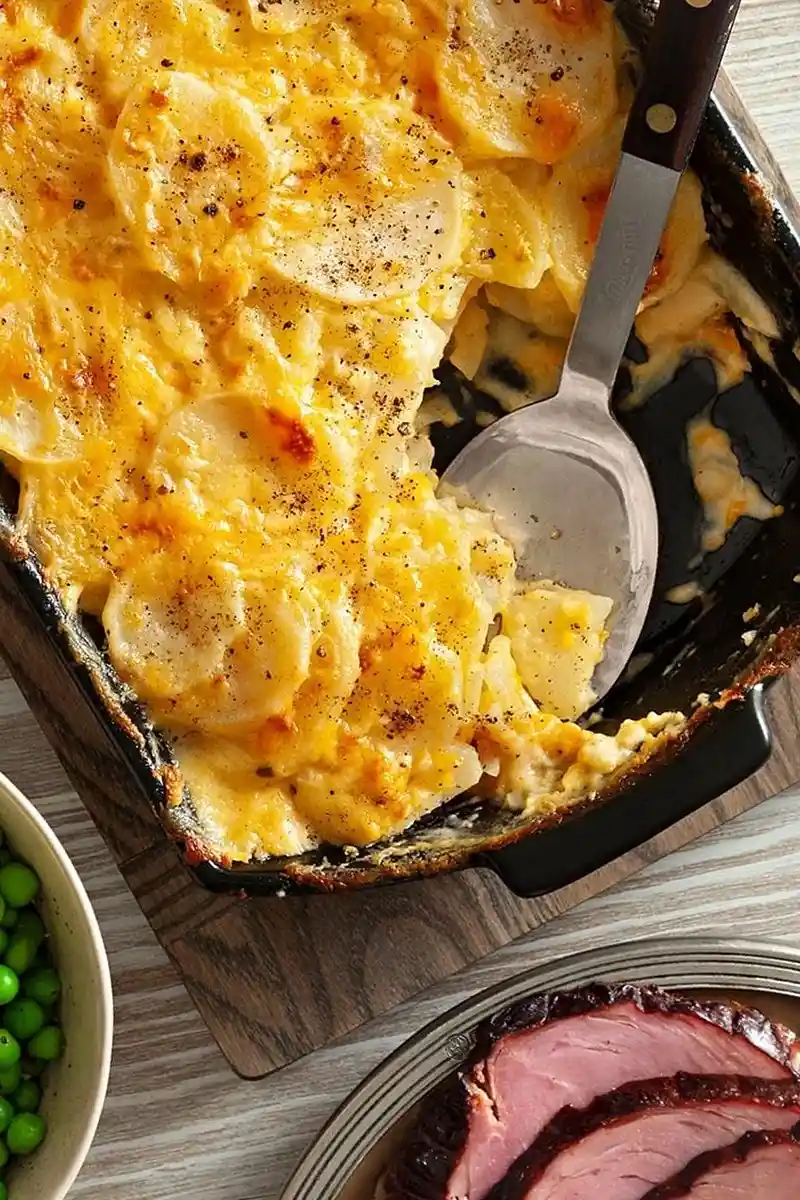
These homemade au gratin potatoes provide a rich, cheesy alternative to processed boxed versions. This side dish is baked until the potatoes are tender and the topping is golden brown.
List of ingredients
- 3 tablespoons butter – used for the roux base.
- 3 tablespoons all-purpose flour – thickens the sauce.
- 1-1/2 teaspoons salt – enhances the natural potato flavor.
- 1/8 teaspoon pepper – adds a subtle heat.
- 2 cups 2% milk – creates the creamy liquid base.
- 1 cup shredded cheddar cheese – provides the classic cheesy flavor.
- 5 cups thinly sliced peeled potatoes (about 6 medium) – use Russet or Yukon Gold.
- 1/2 cup chopped onion – adds aromatic depth to the dish.
- Additional pepper – optional for finishing.
step-by-step instructions
- Prepare Oven: Preheat your oven to 350°F to ensure it is hot before the casserole goes in.
- Start the Roux: Melt the butter in a large saucepan over low heat, then stir in the flour, salt, and pepper until the mixture is smooth.
- Thicken the Sauce: Gradually whisk in the milk to avoid lumps, bring the mixture to a boil, and cook for 2 minutes while stirring until it thickens.
- Melt the Cheese: Remove the saucepan from the heat and stir in the shredded cheddar cheese until it is completely melted and smooth.
- Combine Ingredients: Fold the sliced potatoes and chopped onions into the cheese sauce until every slice is well coated.
- First Bake: Transfer the mixture into a greased 2-quart baking dish, cover it tightly, and bake for one hour.
- Final Brown: Uncover the dish and bake for another 30 to 40 minutes until the potatoes are tender and the top is browned.
- Finish: Remove from the oven and top with additional pepper if desired before serving.
Optimizing Your Ingredient Selection
Choosing the Best Potato Variety
Russet potatoes are the ideal choice because their high starch content allows them to absorb the cheese sauce efficiently. They maintain their structure during the long baking process without becoming mushy. Yukon Golds are a great second choice for a slightly creamier, more buttery texture.
Using Freshly Grated Cheese
Grating cheddar cheese from a block is highly recommended over using pre-shredded bags. Pre-shredded cheeses are coated in potato starch or cellulose to prevent clumping, which can hinder smooth melting. Freshly grated cheese creates a silkier, more cohesive sauce.
Selecting the Right Dairy
While 2% milk is the standard for this recipe, you can use whole milk for a richer taste. For maximum decadence, replace the milk with half-and-half or heavy cream. Higher fat content in the dairy helps stabilize the sauce and prevents it from breaking during the bake.
Choosing the Right Onion
Yellow or white onions provide the best balance of sweetness and sharpness for this savory dish. Ensure the onion is chopped into small, uniform pieces so they cook through evenly. This prevents large chunks of onion from interrupting the creamy texture of the potatoes.
Advanced Cooking Techniques
Perfecting the Roux Base
The roux is the foundation of the sauce and must be cooked just enough to remove the raw flour taste. Stir the flour into the melted butter until it looks bubbly and foamy, forming a thick paste. Use a rubber spatula to scrape the corners of the pan and prevent the flour from burning.
Achieving Uniform Potato Slices
Consistency in slice thickness is critical for ensuring all potatoes cook at the same rate. Using a mandoline slicer is the most efficient way to get consistent 1/8-inch slices. If slicing by hand, use a sharp chef’s knife and keep the slices as even as possible.
Preventing Sauce Lumps
Add the milk to the roux very slowly, stirring constantly with a whisk. Adding the liquid in small increments allows the flour to incorporate smoothly. If lumps persist, you can briefly strain the sauce through a fine-mesh sieve before adding the cheese.
Managing Heat to Avoid Curdling
Keep the heat low when melting the butter and stirring in the flour. High heat can cause the dairy to separate or curdle once the milk is added. Always remove the sauce from the heat before stirring in the cheese to keep the emulsion stable.
Customizing Your Dish
Adding a Crispy Breadcrumb Topping
For added texture, sprinkle Panko or seasoned breadcrumbs over the potatoes after the first hour of baking. This creates a crunchy contrast to the creamy interior. Mix the crumbs with a small amount of melted butter first for a deeper golden color.
Integrating Fresh Garden Herbs
Adding two teaspoons of fresh herbs can elevate the flavor profile of the cheese sauce. Thyme, rosemary, parsley, and sage are all excellent pairings for potatoes and cheddar. Chop the herbs finely and stir them into the sauce before combining with the potatoes.
Creating a Two-Tone Potato Mix
Replace half of the Russet potatoes with thinly sliced sweet potatoes for a visually striking dish. Sweet potatoes add a hint of natural sweetness that complements the salty cheddar cheese. This variation also increases the nutritional value of the side dish.
Experimenting with Cheese Blends
While cheddar is the classic choice, you can blend it with other melting cheeses. Gruyère adds a nutty depth, while Swiss provides a milder, creamy flavor. Provolone can be used for a stretchier, more gooey consistency in the final bake.
Serving and Pairing Recommendations
Pairing with Roasted Beef
Au gratin potatoes are a traditional companion to roast beef, prime rib, or steak. The richness of the cheese sauce balances the savory, charred flavors of the meat. Serve them in a shallow bowl to keep the sauce contained on the plate.
Complementing Grilled Chicken
These potatoes pair well with lemon-thyme chicken or roasted chicken breasts. The acidity of the lemon in the chicken cuts through the heaviness of the potato casserole. Both can often be baked at the same temperature for coordinated timing.
Serving as a Vegetarian Main
This dish is hearty enough to serve as a main course for vegetarians. Pair it with a crisp green salad or steamed asparagus to provide a fresh contrast to the rich cheese. Adding extra vegetables like cauliflower or carrots into the bake increases its heartiness.
Plating for Holiday Gatherings
For a professional presentation, transfer the potatoes from the baking dish to a ceramic platter. Garnish with a sprinkle of fresh parsley or chives for a pop of color. Serve immediately while the cheese is bubbling to ensure the best sensory experience.
Storage and Preservation
Refrigeration Best Practices
Store leftover au gratin potatoes in an airtight container in the refrigerator for up to five days. Ensure the dish has cooled slightly before sealing to prevent excessive condensation. The sauce may thicken significantly during refrigeration, which is normal.
Freezing for Long Term Storage
Allow the potatoes to cool completely before transferring them to a freezer-safe container. They can be stored in the freezer for up to three months without significant quality loss. Ensure there is a layer of parchment paper between the potatoes and the lid to prevent sticking.
Thawing for Quality Retention
Thaw frozen potatoes overnight in the refrigerator to ensure they warm evenly. Avoid thawing them at room temperature to keep the dairy stable. This slow thawing process helps maintain the original texture of the sliced potatoes.
Reheating and Refreshing
Oven Reheating for Best Texture
The best way to reheat au gratin potatoes is in a 350°F oven for about 30 minutes. Cover the dish with foil for the first 20 minutes to keep the moisture in. Remove the foil for the final 10 minutes to crisp up the cheese topping.
Microwave Tips for Quick Warming
For smaller portions, use a microwave on medium power to avoid overheating the cheese. Stir the potatoes gently halfway through the heating process to distribute the heat. Add a teaspoon of milk or water to the dish to loosen the thickened sauce.
Adding Moisture During Reheating
If the potatoes seem dry after storage, splash a small amount of milk or cream over the top before reheating. This reconstitutes the sauce and restores the creamy consistency. Avoid over-adding liquid, as this can make the potatoes soggy.
Make-Ahead Strategies
Prepping the Potatoes in Advance
You can peel and slice the potatoes up to one day in advance. Store them in a bowl of cold water in the refrigerator to prevent oxidation and browning. Drain and pat them completely dry before adding them to the cheese sauce.
Storing the Cheese Sauce Separately
Prepare the roux and cheese sauce a day early and store it in a sealed jar. When ready to cook, gently warm the sauce on the stove before folding in the potatoes. This reduces the active prep time on the day of the meal.
Assembling the Casserole Overnight
The entire dish can be assembled in the baking dish and refrigerated overnight. Remove the casserole from the fridge while the oven preheats to take the chill off. You may need to add 5 to 10 minutes to the initial covered baking time.
Troubleshooting Common Issues
How to Fix a Watery Sauce
Watery results usually occur from using low-starch potatoes or undercooking the roux. To fix a watery bake, you can stir in a small amount of instant potato flakes to act as a thickener. Ensure the sauce is fully thickened on the stove before adding the potatoes.
What to do if Potatoes Remain Hard
If the potatoes are still firm after the designated time, cover them back up with foil and bake for another 15 minutes. This traps the steam and forces the potatoes to soften. Check for doneness by piercing the center with a knife; it should slide in without resistance.
Fixing a Broken or Separated Sauce
A separated sauce happens when the dairy is overheated or the emulsion breaks. You can often fix this by whisking in a tablespoon of cold milk or cream over very low heat. Stirring vigorously can help bring the fat and liquid back together.
Frequently Asked Questions
Can I use a mandoline for slicing?
Yes, a mandoline is the best tool for ensuring all slices are an identical thickness, which leads to even cooking.
Should I peel the potatoes?
Peeling is recommended for a traditional smooth texture, although you can leave the skins on if you prefer a more rustic style.
Can I use low-fat milk?
You can use low-fat milk, but the sauce will be less rich and more prone to separating than it would be with 2% or whole milk.
What is the best baking dish material?
Glass or ceramic baking dishes are ideal because they distribute heat evenly and are easy to grease.
Print
Simple Au Gratin Potatoes
- Total Time: 1 hour 50 minutes
- Yield: 8 servings 1x
- Diet: General
Description
Once you’ve tried homemade au gratin potatoes, you’ll never reach for the boxed stuff again.
Ingredients
- 3 tablespoons butter
- 3 tablespoons all-purpose flour
- 1–1/2 teaspoons salt
- 1/8 teaspoon pepper
- 2 cups 2% milk
- 1 cup shredded cheddar cheese
- 5 cups thinly sliced peeled potatoes (about 6 medium)
- 1/2 cup chopped onion
- Additional pepper, optional
Instructions
- Step 1: Preheat oven to 350°F. In a large saucepan, melt the butter over low heat. Stir in flour, salt and pepper until smooth. Gradually add the milk, stirring to ensure there are no lumps. Bring to a boil. Cook and stir for 2 minutes or until thickened. Remove from the heat. Stir in the cheese until melted.
- Step 2: Add the potatoes and onion to the sauce; transfer to a greased 2-quart baking dish. Cover and bake for one hour.
- Step 3: Uncover and bake the potatoes for another 30 to 40 minutes or until the potatoes are tender. If desired, top with additional pepper.
Notes
Russet potatoes are ideal for this recipe as they soak up the sauce well. For a richer sauce, you can replace the milk with heavy cream.
- Prep Time: 20 minutes
- Cook Time: 1 hour 30 minutes
- Category: Side Dishes
- Method: Baking
- Cuisine: American
Nutrition
- Serving Size: 3/4 cup
- Calories: 225 kcal
- Sugar: 4 g
- Sodium: 602 mg
- Fat: 10 g
- Saturated Fat: 6 g
- Unsaturated Fat: 4 g
- Trans Fat: 0 g
- Carbohydrates: 26 g
- Fiber: 2 g
- Protein: 8 g
- Cholesterol: 30 mg
Keywords: au gratin potatoes, cheesy potatoes, potato casserole, side dish