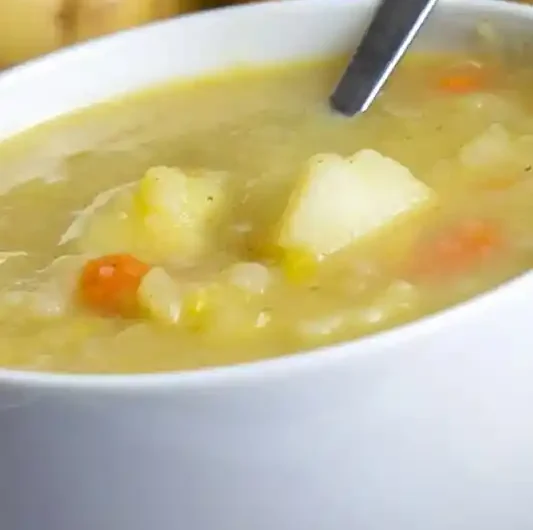
This hearty Scottish Tattie Soup is a budget-friendly, warming dish designed for cold weather. It relies on basic root vegetables and stock to create a filling meal with a naturally thick consistency.
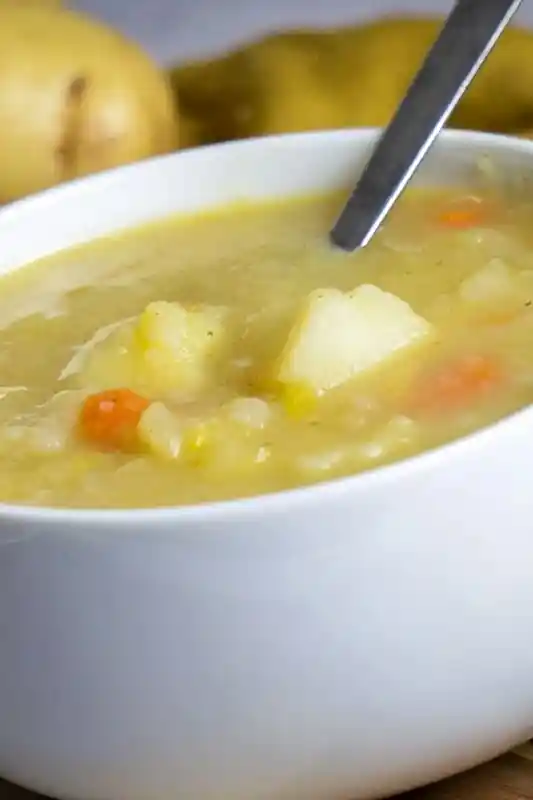
List of ingredients
- 1kg (2lb) potatoes – peeled and cut into large cubes.
- 1 medium onion – finely chopped.
- 1 large leek – white part only, finely diced.
- 2 medium carrots – diced into 1cm pieces.
- 25g (2tbsp) butter or oil – for sautéing the aromatics.
- 1.5 litres vegetable or chicken stock – used as the simmering base.
- Salt and white pepper – used for seasoning throughout.
- 1 celery stick – optional, finely chopped for extra depth.
step-by-step instructions
- Prepare vegetables: Peel and chop the potatoes into large, uniform cubes. Finely chop the onion and the optional celery stick.
- Process the leek: Remove and discard the green tops of the leek, then finely dice the white section.
- Dice the carrots: Cut the carrots into small cubes, approximately 1cm in size.
- Heat the fat: Place the butter or oil in a large pot and heat until melted.
- Sweat aromatics: Add the onion, diced leek, and celery to the pot. Cook for 5 minutes over medium-low heat until translucent, ensuring they do not brown.
- Combine main ingredients: Add the diced carrots and potato cubes to the pot. Pour in the stock until the vegetables are fully covered.
- Initial seasoning: Add a pinch of salt and white pepper to the liquid.
- Boil and skim: Bring the mixture to a boil. Use a wooden spoon to skim off any foam or scum that rises to the surface to ensure a cleaner flavor.
- Simmer: Reduce the heat to low and let the soup simmer for 1 hour.
- Adjust texture: Use a potato masher or a wooden spoon to crush some of the potatoes. Leave some chunks intact to maintain a rustic texture.
- Final taste: Season with additional salt and white pepper according to your preference and serve immediately.
Optimizing Vegetable Selection
Choosing the Right Potato Variety
For the best texture, use a starchy potato like a Russet or a King Edward. These varieties break down more easily during the simmering process, which naturally thickens the soup without needing additional flour or cream.
Preparing Leeks for Cleanliness
Leeks often trap grit and soil between their layers. Slice the leeks first, then soak the diced white parts in a bowl of cold water to let the dirt sink to the bottom before rinsing and adding them to the pot.
Uniformity in Carrot Dicing
Cutting carrots into consistent 1cm cubes ensures they cook at the same rate as the other aromatics. If the pieces are too large, they may remain hard even after the potatoes have softened.
Enhancing the Flavor Base
Using Homemade Vegetable Stock
Homemade stock provides a deeper flavor than store-bought cubes. Simmer onion skins, carrot ends, celery trimmings, and parsley roots in water for two hours to create a nutrient-rich base for this soup.
Incorporating Root Vegetable Variations
You can replace a small portion of the potatoes with diced swede or turnip. This adds a slightly peppery, earthy note that is traditional in many regional variations of Scottish potato soup.
Adding Aromatic Herbs
While the recipe is simple, adding a sprig of fresh thyme or a bay leaf during the simmering stage adds a subtle herbal layer. Remove the whole sprigs or leaf before mashing the potatoes for serving.
Technical Cooking Tips
The Importance of Sweating Vegetables
Sweating refers to cooking vegetables over low heat so they release moisture without browning. This process preserves the delicate flavor of the leeks and onions, preventing the bitter taste associated with searing.
Managing the Boiling Process
When the soup reaches a boil, proteins and starches from the vegetables create a foam on top. Skimming this off prevents the soup from having a cloudy appearance and results in a smoother mouthfeel.
Achieving the Perfect Consistency
The thickness of Tattie Soup comes from the released potato starch. By mashing only a portion of the vegetables, you create a hybrid texture that is creamy yet contains satisfying chunks of potato.
Serving and Pairing Ideas
Accompaniments for Texture
Serve this soup with a side of toasted soda bread or a crusty sourdough baguette. The crunch of the bread provides a necessary contrast to the soft, creamy consistency of the mashed vegetables.
Fresh Toppings for Contrast
Garnish each bowl with a sprinkle of freshly chopped parsley or chives. These greens add a bright, fresh flavor that cuts through the richness of the potato and butter.
Serving as a Full Meal
To make the soup more filling, serve it with a side of steamed greens or a simple garden salad. The addition of fiber from fresh vegetables balances the carbohydrate-heavy nature of the potatoes.
Storage and Preservation
Refrigeration Guidelines
Store leftover soup in an airtight container in the refrigerator for up to 3 to 4 days. Ensure the soup has cooled down completely before sealing the lid to prevent condensation and spoilage.
Freezing Potato-Based Soups
Because this recipe contains no dairy, it freezes better than creamy soups. Store in freezer-safe bags or containers for up to 3 months, though be aware that the potato texture may become slightly grainier after thawing.
Thawing Process
Thaw frozen soup in the refrigerator overnight before reheating. This gradual process helps maintain the structural integrity of the potato chunks and prevents the soup from separating.
Reheating and Texture Recovery
Stovetop Reheating Method
Reheat the soup slowly over medium-low heat in a pot. Stir occasionally to ensure the potatoes at the bottom do not stick or burn as the soup thickens.
Adjusting Liquid Levels
Potato starch continues to absorb liquid as the soup cools. When reheating, you will likely notice the soup is much thicker; add a small amount of water or stock to return it to its original consistency.
Microwave Reheating Tips
If using a microwave, heat the soup in short bursts of 60 seconds. Stir between each interval to distribute the heat evenly and prevent hot spots within the dense potato mixture.
Troubleshooting Common Issues
Why is my soup too thin?
If the soup remains watery after simmering, use the masher to crush more of the potato chunks. The released starch will act as a natural thickening agent, increasing the viscosity of the broth.
Why are the potatoes still hard?
This usually happens if the heat was too low or the potatoes were cut into excessively large chunks. Continue simmering for another 15 to 20 minutes or ensure the pot is fully covered with stock.
How to fix an over-salted soup?
If the stock was too salty, add a peeled, halved potato to the pot and simmer for 10 minutes. The potato will absorb some of the excess salt before you remove it prior to serving.
Frequently Asked Questions
Can I use a blender instead of a masher?
Using a blender or immersion blender will result in a completely smooth, creamy puree. While this is a valid option, it removes the traditional rustic texture associated with Scottish Tattie Soup.
Is this soup suitable for vegetarians?
Yes, as long as you use vegetable stock instead of chicken stock. The remaining ingredients are all plant-based, making it a naturally vegetarian-friendly dish.
Can I make this in a slow cooker?
Yes, you can combine all ingredients in a slow cooker, but reduce the stock by about one-third to prevent it from becoming too watery. Cook on high for 3-4 hours or on low for 6-8 hours.
What can I use instead of butter?
Any neutral cooking oil, such as sunflower or canola oil, can be used for the initial sautéing. For a more buttery flavor without using dairy, a small amount of vegan butter or olive oil is a suitable substitute.
Can I add other vegetables?
Yes, adding diced parsnips, turnips, or cauliflower is a great way to increase the nutritional value. Simply add them at the same time as the carrots and potatoes.
How do I prevent the potatoes from dissolving entirely?
Avoid over-stirring the soup during the simmering phase. Keeping the heat at a gentle simmer rather than a rolling boil also prevents the potato cubes from breaking down too quickly.
Print
Simple Scottish Tattie Soup
- Total Time: 1 hour 25 minutes
- Yield: 4 servings 1x
- Diet: General
Description
Scottish Potato Soup, otherwise known as Tattie Soup, is a heart-warmingly delicious but simple recipe that is perfect for a winters day!
Ingredients
- 1kg (2lb) potatoes
- 1 medium onion
- 1 large leek
- 2 medium carrots
- 25g (2tbsp) butter/oil
- 1.5 litres vegetable or chicken stock
- Salt and white pepper
- 1 celery stick (optional)
Instructions
- Step 1: Peel and chop potatoes into large cubes
- Step 2: Finely chop onion and celery if using
- Step 3: Discard the green part of the leek (or save for making stock another time) and finely dice the white part
- Step 4: Dice the carrots into small pieces about 1cm each
- Step 5: Add the butter/oil to a large pot and allow to melt
- Step 6: Add in the onion, leek, and celery if using and cook for 5 minutes, allowing them to “sweat” but not brown.
- Step 7: Put the carrots and potato in the pot and cover with the stock
- Step 8: Add a dash of salt and white pepper
- Step 9: Bring to the boil, skimming off any sort of foam/scum with a wooden spoon to get rid of as it does so.
- Step 10: Turn down to a simmer for 1 hour
- Step 11: Use a masher or wooden spoon to break up some of the potatoes, but leave some large chunks as well
- Step 12: Season more to taste and serve!
Notes
The soup will last for 3-4 days in the fridge, but you may need to add a little water when reheating as it will thicken. It will last for up to 3 months in the freezer.
- Prep Time: 15 minutes
- Cook Time: 1 hour 10 minutes
- Category: Savoury Recipes
- Method: Simmering
- Cuisine: Scottish
Nutrition
- Serving Size: 1 serving
- Calories: 271 kcal
- Sugar: 13 g
- Sodium: 357 mg
- Fat: 5 g
- Saturated Fat: 1 g
- Unsaturated Fat: 4 g
- Trans Fat: 0 g
- Carbohydrates: 47 g
- Fiber: 14 g
- Protein: 11 g
- Cholesterol: 2 mg
Keywords: Scottish Potato Soup, Tattie Soup, Scottish cuisine, potato soup, savoury soup