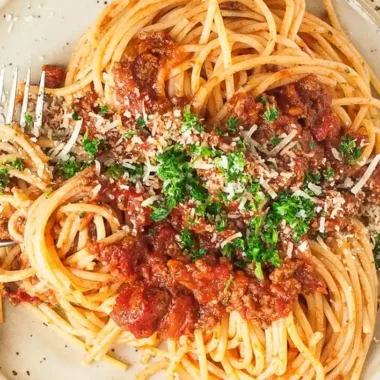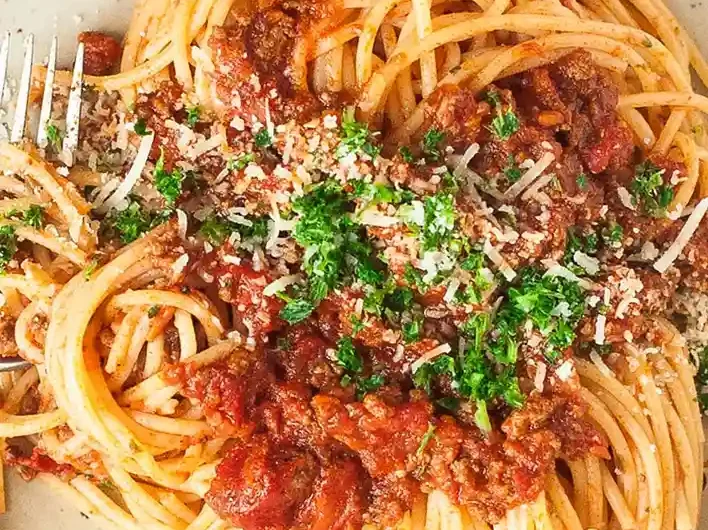
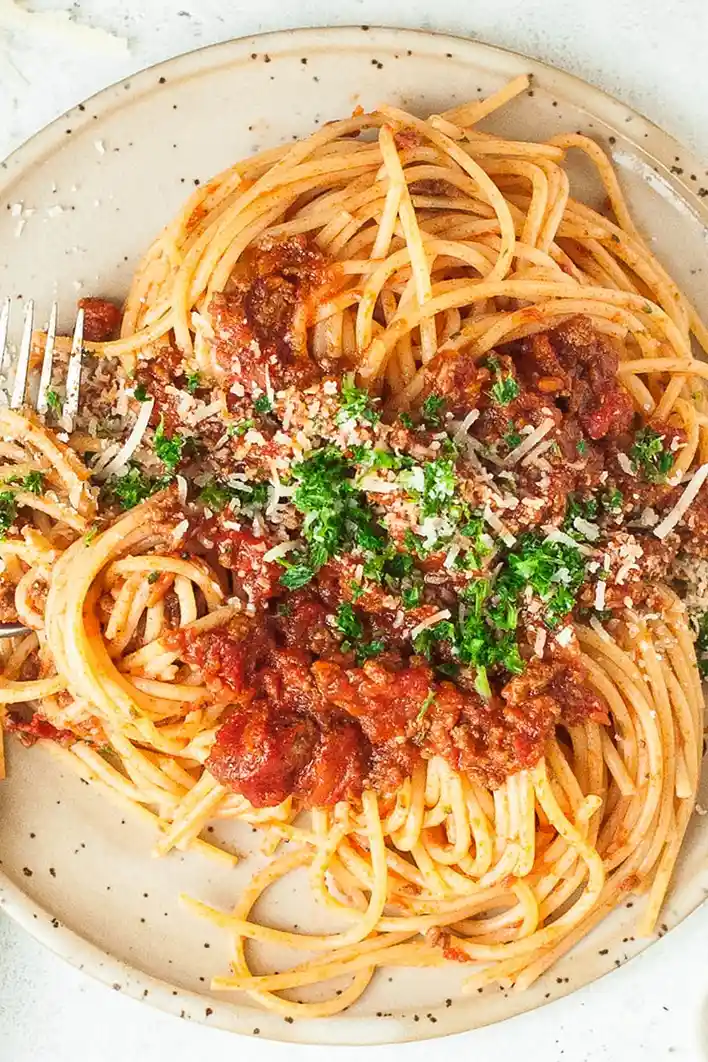
This rich and meaty beef sauce is developed through slow cooking to ensure deep, authentic flavors. It pairs perfectly with al dente spaghetti and a sprinkle of fresh parmesan cheese.
List of ingredients
- 1-2 tablespoons olive oil – used for browning the meat.
- 500 g minced beef (ground beef) – preferably a high-quality cut.
- 1 tablespoon unsalted butter – for sautéing vegetables.
- 1 large carrot, peeled – finely chopped.
- 1 celery stick – finely chopped.
- 1 brown onion – finely chopped.
- 2 garlic cloves – minced.
- 4 tablespoons tomato paste – adds concentrated tomato flavor.
- 1.6 kg canned diced tomatoes – provides the bulk of the sauce.
- 4-5 sprigs fresh oregano (or marjoram) – left whole for infusion.
- 2 sprigs basil – left whole for infusion.
- 2 bay leaves – adds aromatic depth.
- 1-2 teaspoons sugar – to balance the acidity of the tomatoes.
- Sea salt – to taste.
- Black pepper, freshly cracked – to taste.
- Dried spaghetti – approximately 100 g (3.5 oz) per person.
- Fresh parsley, finely chopped – for final garnish.
- Fresh oregano or marjoram, finely chopped – for final garnish.
- Basil, finely chopped – for final garnish.
- Parmesan, finely grated – for serving.
step-by-step instructions
- Brown the beef: Heat olive oil in a large cast-iron pan or saucepan over medium-high heat. Add the beef and cook until well-browned, working in batches if necessary to avoid steaming. Spread the meat flat to allow caramelization, then break it up with a wooden spoon and transfer to a bowl using a slotted spoon.
- Sauté the vegetables: Finely chop the carrot, celery, onion, and garlic in a food processor. Turn the heat to medium, add butter and extra olive oil if needed, and cook the vegetable mixture with 1 teaspoon of sea salt for about 10 minutes until softened.
- Add tomato base: Stir in the tomato paste and cook for a few minutes to remove the raw metallic taste.
- Simmer with aromatics: Add the canned diced tomatoes, whole herb sprigs, and sugar. Allow the mixture to begin cooking down.
- Combine and slow cook: Return the browned meat to the pan and mix thoroughly. Season with salt and pepper. Cover with a lid and cook over very low heat for about 1.5 hours, stirring occasionally to prevent sticking.
- Thicken the sauce: Remove the lid and increase the heat to medium for about 30 minutes. This allows excess liquid to evaporate and the sauce to thicken. Stir in the chopped parsley just before serving.
- Prepare the pasta: Boil a large pot of salted water. Cook the spaghetti for 2 minutes less than the packet instructions. Do not drain the water.
- Combine pasta and sauce: Transfer the pasta directly from the boiling water to the sauce using tongs. Stir to coat the noodles evenly. Use reserved pasta water to adjust the consistency if the sauce is too thick.
- Final touch: Serve immediately with grated parmesan and a sprinkle of fresh chopped herbs.
Choosing the Right Meat for Bolognese
Using Rib-eye or Sirloin
For a premium taste, use a cut like rib-eye or sirloin for grinding. These cuts offer a higher fat content and marbling, which translates to a richer, more robust flavor in the final sauce.
Selecting Beef Brisket or Stewing Beef
Beef brisket or stewing beef are excellent alternatives for a hearty ragu. These cuts contain connective tissues that break down during the slow-simmering process, creating a tender, melt-in-the-mouth texture.
The Benefit of Freshly Ground Meat
Grinding your own meat allows you to control the fat-to-lean ratio. Using a meat grinder or asking a butcher for a specific cut prevents the sauce from becoming too lean or too greasy.
Alternative Cooking Methods
Slow Cooker Instructions
Follow the initial browning and sautéing steps on the stove to ensure caramelization. Transfer the mixture to a slow cooker and cook on low at 95°C (203°F) for 4-5 hours, or on high at 105°C (221°F) for 3-4 hours.
Oven-Braised Method
Use an oven-proof pan with a tight-fitting lid, such as cast iron. After the initial stove steps, place the pan in the oven at 160°C (320°F) for 2 hours, then finish on the stove for 15-20 minutes without the lid to thicken.
Sauce Consistency and Texture
How to Thicken the Sauce
The most effective way to thicken the sauce is through evaporation. Simmering without a lid on medium heat for the final 30 minutes concentrates the flavors and reduces the liquid content.
Using Pasta Water for Emulsion
Reserved pasta water contains starch that helps the sauce cling to the noodles. If the sauce seems too thick after combining, add a splash of this water to create a silky, cohesive emulsion.
Managing Excess Liquid
If the sauce remains too watery despite simmering, increase the heat slightly or simmer for an additional 15 minutes. Avoid adding flour or cornstarch, as this can alter the authentic flavor profile.
Ingredient Substitutions and Variations
Substituting Diced Tomatoes with Passata
Canned diced tomatoes provide a chunky, rustic texture. For a smoother, more refined sauce, you can use tomato passata, which is pureed tomatoes.
Choosing Different Pasta Shapes
While spaghetti is traditional, short and ribbed pastas are highly effective. Penne rigata or rigatoni are excellent choices because their ridges and hollow centers trap the meaty sauce.
Adjusting the Herb Blend
If fresh oregano is unavailable, marjoram is a suitable substitute. You can also increase the amount of basil for a sweeter, more aromatic profile.
Storage and Preservation
Refrigeration Guidelines
Store leftover Bolognese sauce in an airtight container in the refrigerator. It will remain fresh and safe to eat for 3 to 4 days.
Freezing for Long-Term Storage
Portion the cooled sauce into vacuum-sealed bags or ziplock freezer bags. Freeze the bags flat to save space and ensure faster, more even defrosting; they will keep for 3 to 6 months.
Reheating Tips
Reheat the sauce in a saucepan over medium-low heat, adding a small amount of water or beef broth to loosen the consistency. Avoid overheating to prevent the sauce from separating.
Cooking Troubleshooting
Balancing an Overly Sweet Sauce
The sweetness of canned tomatoes varies by brand. If the sauce tastes too sweet, balance the flavor with a small dash of red wine vinegar or a squeeze of lemon juice.
Preventing Meat from Steaming
Avoid overcrowding the pan when browning the beef. Cooking in small batches ensures the meat sears and browns properly, which is essential for developing the deep umami flavor.
Preventing Vegetable Burning
When sautéing the finely chopped vegetables, use a medium heat and a pinch of salt. Salt draws out moisture, which helps the vegetables soften without browning or burning.
Frequently Asked Questions
How long should the sauce simmer?
A minimum of 2 hours is recommended. This allows the meat to tenderize and the complex flavors of the tomatoes and aromatics to meld together.
How much sauce is needed per person?
As a general rule, estimate approximately 1 cup (250 ml) or one large ladle of sauce per adult serving.
Can this sauce be made ahead of time?
Yes, Bolognese sauce often tastes better the next day as the flavors continue to develop. It can be made 24 hours in advance and reheated before serving.
Why cook the pasta in the sauce?
Finishing the pasta in the pan allows the noodles to absorb the sauce’s flavor directly. It also ensures the sauce adheres better to the spaghetti than simply pouring it on top.
What if I don’t have a food processor for the vegetables?
You can finely dice the vegetables by hand using a sharp knife. The goal is to have very small pieces so they integrate smoothly into the sauce.
Print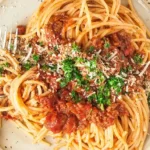
Slow-Cooked Spaghetti Bolognese
- Total Time: 165 minutes
- Yield: 4 to 6 servings 1x
- Diet: General
Description
A traditional Spaghetti Bolognese recipe which is rich, meaty and full of flavour. This traditional bolognese sauce requires slow cooking to develop the rich and meaty flavours, and uses fresh and good quality ingredients for an authentic taste.
Ingredients
- 1–2 tablespoons olive oil
- 500 g minced beef
- 1 tablespoon unsalted butter
- 1 large carrot, peeled
- 1 celery stick
- 1 brown onion
- 2 garlic cloves
- 4 tablespoons tomato paste
- 1.6 kg canned diced tomatoes
- 4–5 sprigs fresh oregano (or marjoram)
- 2 sprigs basil
- 2 bay leaves
- 1–2 teaspoons sugar
- sea salt, to taste
- black pepper, freshly cracked
- dried spaghetti (about 100 g per person)
- fresh parsley, finely chopped
- fresh oregano (or marjoram), finely chopped
- basil, finely chopped
- parmesan, finely grated
Instructions
- Brown the meat: Heat the oil in a large cast-iron pan or saucepan over medium-high heat. Add the beef and cook until well-browned, breaking it up with a wooden spoon. Transfer the cooked beef to a large bowl using a slotted spoon.
- Prepare vegetables: Finely chop the carrot, celery stick, brown onion and garlic cloves in a food processor.
- Sauté vegetables: Turn the stove down to medium heat. Add the butter (and more olive oil if needed) and cook the vegetable mixture with about 1 teaspoon of sea salt for about 10 minutes, or until softened.
- Add paste: Add the tomato paste and cook for a few minutes to remove the raw flavour.
- Simmer base: Add the canned diced tomatoes, whole herb sprigs, and sugar.
- Combine: Add the browned meat back into the sauce and mix well. Season with salt and pepper.
- Slow cook: Cook over very low heat with the lid on for about 1 ½ hours, stirring occasionally.
- Thicken: Remove the lid and cook over medium heat for about 30 minutes to allow the sauce to evaporate and thicken.
- Final touch: Stir through the chopped parsley just before serving.
- Cook pasta: Boil a large pot of salted water and cook spaghetti for 2 minutes less than the packet instructions. Do not drain.
- Finish: Transfer the spaghetti directly from the water to the pan with the Bolognese Sauce. Stir to coat, adding pasta water if needed for consistency.
- Serve: Serve with freshly grated parmesan cheese and a sprinkle of fresh herbs.
Notes
Slow Cooker: Follow stove-top instructions then cook on low (95°C/203°F) for 4-5 hours or high (105°C/221°F) for 3-4 hours. Oven: Use an oven-proof pan at 160°C/320°F for 2 hours, then finish on the stove for 15-20 minutes without a lid.
- Prep Time: 15 minutes
- Cook Time: 150 minutes
- Category: Pasta
- Method: Slow Cooking
- Cuisine: Italian
Nutrition
- Serving Size: 100 g
- Calories: 178 kcal
- Sugar: 10.1 g
- Sodium: 375.7 mg
- Fat: 4.9 g
- Saturated Fat: 2.1 g
- Unsaturated Fat: 2.8 g
- Trans Fat: 0 g
- Carbohydrates: 17.8 g
- Fiber: 4.6 g
- Protein: 17.9 g
- Cholesterol: 39.6 mg
Keywords: Spaghetti Bolognese, Italian pasta, Beef Ragu, Slow Cooked Sauce