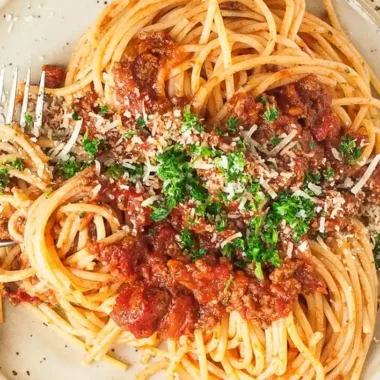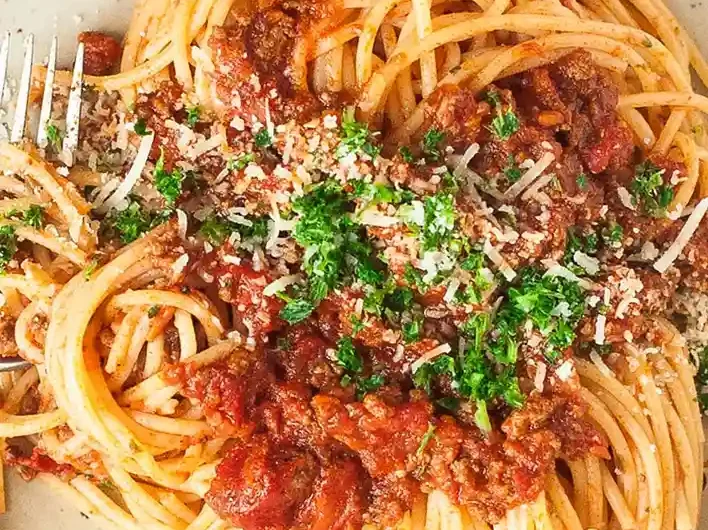
This traditional spaghetti bolognese is a masterclass in patient cooking, resulting in a deeply savory and rich sauce that clings perfectly to every strand of pasta. By skipping complex additives and focusing on high-quality beef and slow-simmered aromatics, you can achieve an authentic depth of flavor right in your own kitchen. This reliable method ensures a robust, meaty texture that feels both comforting and sophisticated.
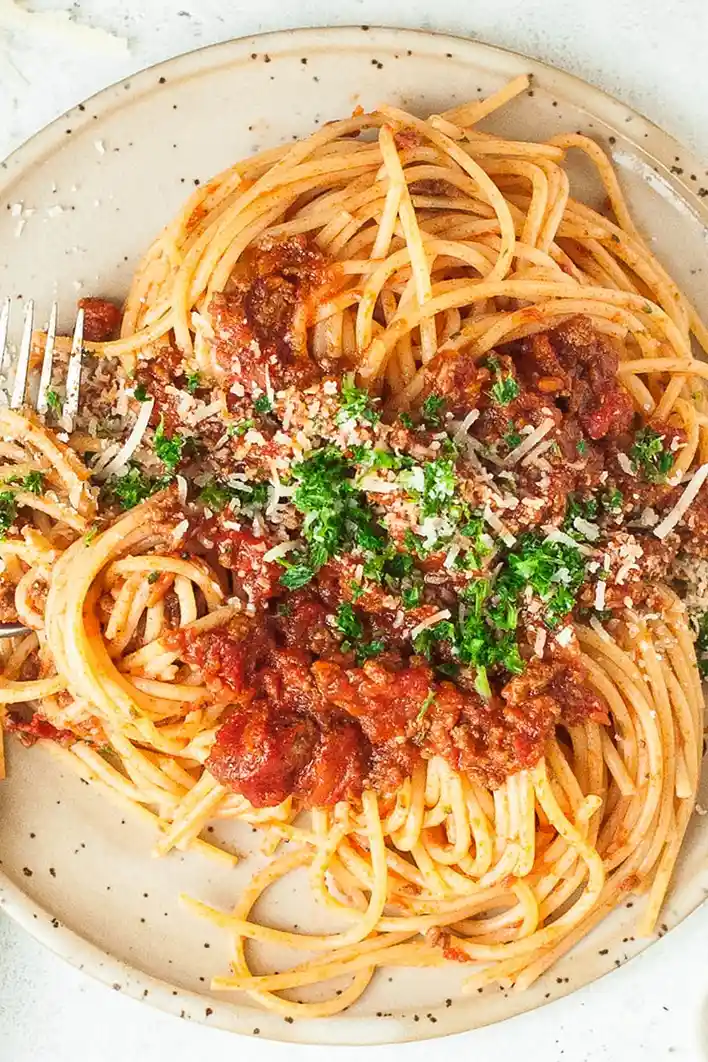
List of ingredients
- 1-2 tablespoons olive oil
- 500 g minced beef (ground beef)
- 1 tablespoon unsalted butter
- 1 large carrot, peeled
- 1 celery stick
- 1 brown onion
- 2 garlic cloves
- 4 tablespoons tomato paste
- 1.6 kg canned diced tomatoes
- 4-5 sprigs fresh oregano (or marjoram)
- 2 sprigs basil
- 2 bay leaves
- 1-2 teaspoons sugar (or to taste)
- Sea salt to taste
- Black pepper to taste
- 400 g dried spaghetti
- Fresh parsley, finely chopped
- Fresh oregano or marjoram, finely chopped
- Basil, finely chopped
- Parmesan, finely grated
step-by-step instructions
- Step: Heat the oil in a large cast-iron pan or saucepan over medium-high heat and brown the beef, breaking it up into pieces, then set aside.
- Step: Finely chop the carrot, celery, onion, and garlic in a food processor.
- Step: Melt butter with oil in the pan, add the vegetable mixture with a pinch of salt, and cook until softened.
- Step: Stir in the tomato paste and cook for a few minutes.
- Step: Add the canned diced tomatoes, fresh herb sprigs, and sugar to the pan.
- Step: Return the browned beef to the sauce, season with salt and pepper, and simmer on very low heat with the lid on for 1.5 hours.
- Step: Remove the lid and simmer for another 30 minutes until thickened, then stir in the fresh parsley.
- Step: Boil the spaghetti until nearly al dente, reserve some water, then toss the pasta directly into the sauce with a splash of pasta water.
- Step: Serve with freshly grated parmesan and fresh herbs.
Refining Your Technique
Searing the Meat for Maximum Flavor
The most important step for a deep flavor profile is properly browning the ground beef. Do not crowd the pan, as this causes the meat to steam in its own juices rather than browning. Working in smaller batches creates a better crust, which develops complex, savory flavors that eventually dissolve into the tomato base.
The Role of Slow Simmering
Patience is the defining factor in this recipe. While it might be tempting to crank up the heat to finish faster, low and slow cooking allows the connective tissues in the beef to break down completely. This creates that characteristic melting texture where the meat becomes indistinguishable from the rich, thick tomato sauce.
Choosing the Right Produce
Preparing Vegetables for Even Cooking
Processing your aromatics into a uniform, fine texture is essential. When the onion, carrot, and celery are minced finely enough, they essentially disintegrate into the sauce as it cooks. This technique produces a smooth, thick consistency without the need for additional starches or thickeners.
Balancing Tomato Acidity
The sugar in this recipe is not meant to make the sauce sweet, but rather to counteract the sharp acidity of canned tomatoes. Always taste your sauce after the first hour of cooking before adding any sugar, as the flavor balance changes significantly as the tomatoes break down and the sauce reduces. Start with a half teaspoon and adjust incrementally to reach your preferred balance.
Serving and Storage Recommendations
Handling Leftovers Properly
If you anticipate leftovers, keep the pasta and sauce separate. Pasta stored directly in the sauce will continue to absorb liquid and become mushy over time. Store the sauce in airtight containers in the refrigerator for up to four days or freeze it for up to three months to maintain the best quality.
Efficient Freezing Methods
For long-term storage, cool the sauce completely before portioning it into freezer-safe bags. Laying the bags flat in the freezer not only saves significant space but also allows for much faster thawing when you are ready to prepare dinner. Vacuum sealing the sauce is the superior method, as it prevents freezer burn and extends the shelf life to six months.
Variations and Substitutions
Exploring Different Herb Combinations
If you do not have access to fresh oregano or marjoram, you can experiment with fresh thyme or rosemary. Keep in mind that woody herbs like rosemary are much more potent than soft herbs, so use them sparingly. Always add fresh herbs at the start of the simmer to ensure they fully infuse the sauce.
Pasta Pairing Alternatives
While spaghetti is the classic choice, this robust meat sauce is incredibly versatile. It pairs exceptionally well with structural shapes like rigatoni or pappardelle, which have plenty of surface area to hold the chunky meat sauce. For a lighter option, you can even serve the sauce over roasted zucchini ribbons or steamed spaghetti squash.
Common Kitchen Queries
How can I make the sauce even thicker?
If your sauce remains too thin after the final reduction stage, you can cook it on a slightly higher heat while stirring constantly to encourage further evaporation. Alternatively, ensure your pan lid is completely removed during the final 30 minutes of cooking, as the steam needs an escape route to effectively concentrate the sauce.
Can I add other vegetables to the mix?
While carrot, celery, and onion form the traditional base, you can certainly add finely diced mushrooms to introduce an extra layer of earthiness. Simply sauté the mushrooms along with your mirepoix until they are browned and dry. Avoid high-water-content vegetables like zucchini, as they can make the final sauce feel watery and dilute the rich meat flavor.
What is the best way to reheat frozen sauce?
The safest way to reheat is to move the frozen sauce to the refrigerator the night before use. Once thawed, heat it gently in a saucepan over medium-low heat, stirring occasionally. If the sauce has thickened too much during storage, add a splash of plain water or broth to restore the desired consistency.
Why does the sauce taste better the next day?
The flavor improvement overnight is due to the continued integration of the ingredients. As the sauce cools, the aromatic compounds from the herbs and the savory proteins from the beef continue to break down and distribute evenly through the tomato base. A gentle, brief reheating the next day brings all these intensified flavors together into a cohesive whole.
Print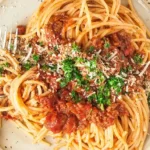
Classic Spaghetti Bolognese
- Total Time: 165 minutes
- Yield: 4 servings 1x
- Diet: High protein
Description
A traditional Spaghetti Bolognese recipe which is rich, meaty and full of flavour. This traditional bolognese sauce requires slow cooking to develop the rich and meaty flavours, and uses fresh and good quality ingredients for an authentic taste.
Ingredients
- 1–2 tablespoons olive oil
- 500 g minced beef (ground beef)
- 1 tablespoon unsalted butter
- 1 large carrot, peeled
- 1 celery stick
- 1 brown onion
- 2 garlic cloves
- 4 tablespoons tomato paste
- 1.6 kg canned diced tomatoes
- 4–5 sprigs fresh oregano (or marjoram)
- 2 sprigs basil
- 2 bay leaves
- 1–2 teaspoons sugar (or to taste)
- Sea salt to taste
- Black pepper to taste
- 400 g dried spaghetti
- Fresh parsley, finely chopped
- Fresh oregano or marjoram, finely chopped
- Basil, finely chopped
- Parmesan, finely grated
Instructions
- Step: Heat the oil in a large cast-iron pan or saucepan over medium-high heat and brown the beef, breaking it up into pieces, then set aside.
- Step: Finely chop the carrot, celery, onion, and garlic in a food processor.
- Step: Melt butter with oil in the pan, add the vegetable mixture with a pinch of salt, and cook until softened.
- Step: Stir in the tomato paste and cook for a few minutes.
- Step: Add the canned diced tomatoes, fresh herb sprigs, and sugar to the pan.
- Step: Return the browned beef to the sauce, season with salt and pepper, and simmer on very low heat with the lid on for 1.5 hours.
- Step: Remove the lid and simmer for another 30 minutes until thickened, then stir in the fresh parsley.
- Step: Boil the spaghetti until nearly al dente, reserve some water, then toss the pasta directly into the sauce with a splash of pasta water.
- Step: Serve with freshly grated parmesan and fresh herbs.
Notes
Instructions are provided for stovetop, slow cooker, or oven cooking. Leftovers can be frozen in flat bags for up to 6 months.
- Prep Time: 15 minutes
- Cook Time: 150 minutes
- Category: Pasta
- Method: Slow cooking
- Cuisine: Italian
Nutrition
- Serving Size: 1 serving
- Calories: 650 kcal
- Sugar: 10 g
- Sodium: 850 mg
- Fat: 22 g
- Saturated Fat: 9 g
- Unsaturated Fat: 11 g
- Trans Fat: 0 g
- Carbohydrates: 85 g
- Fiber: 8 g
- Protein: 35 g
- Cholesterol: 80 mg
Keywords: pasta, bolognese, beef, dinner, italian, main course