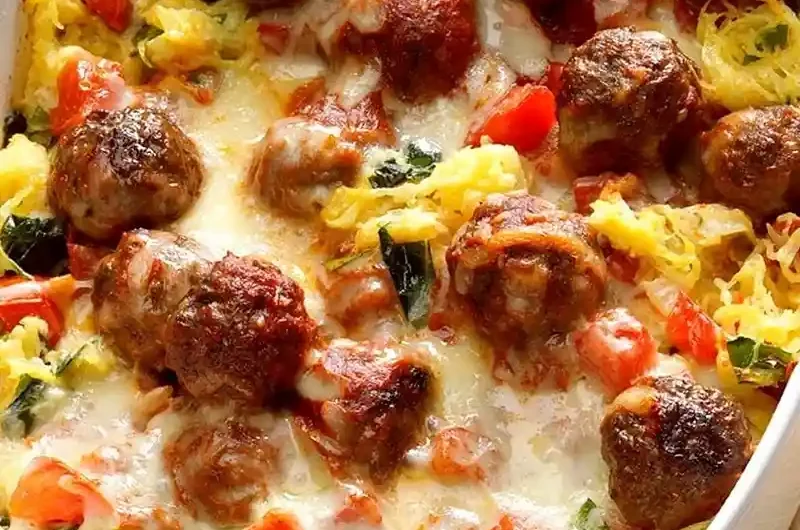
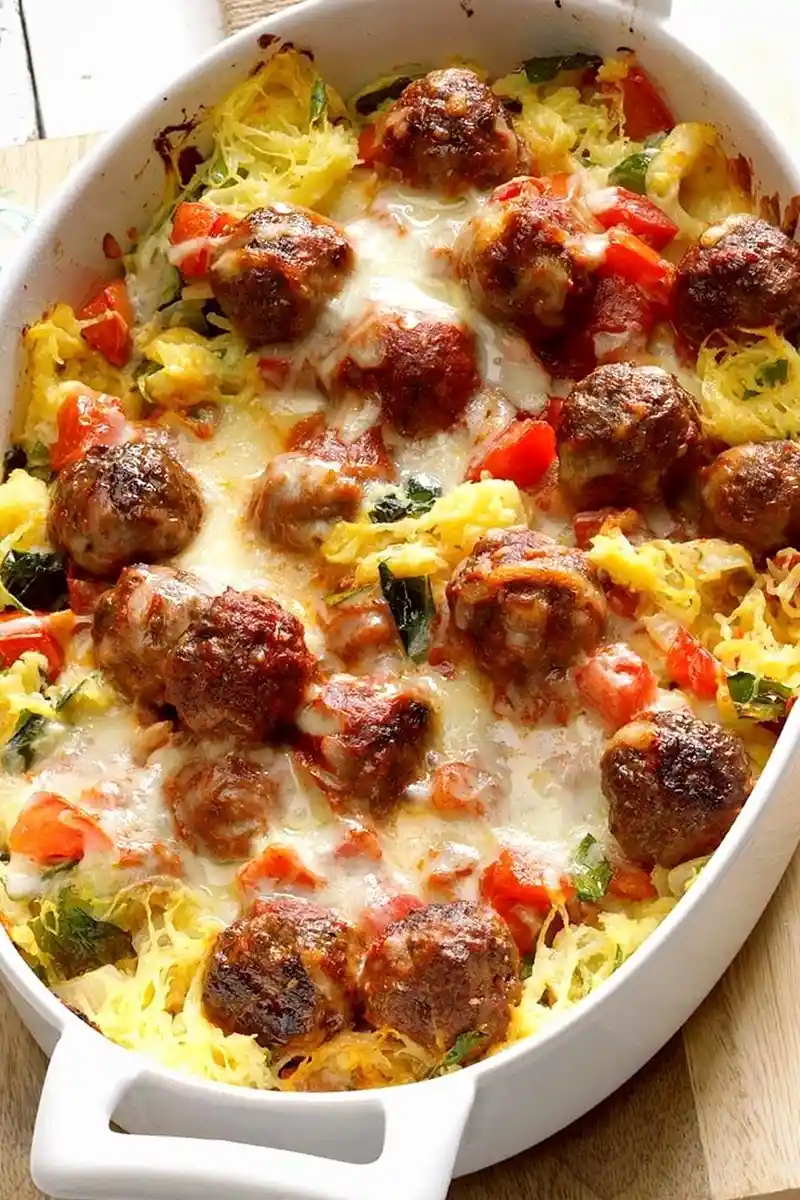
This vegetable-forward casserole combines the flavors of classic spaghetti and meatballs with the nutrition of spaghetti squash. It is a hearty, low-carb alternative that is perfect for family dinners.
List of ingredients
- 1 medium spaghetti squash (about 4 pounds) – provides the base texture.
- 1/2 teaspoon salt, divided – for seasoning the beef and greens.
- 1/2 teaspoon fennel seed – adds a traditional Italian sausage flavor.
- 1/4 teaspoon ground coriander – provides a subtle earthy note.
- 1/4 teaspoon dried basil – adds herbal sweetness.
- 1/4 teaspoon dried oregano – provides a savory aromatic quality.
- 1 pound lean ground beef (90% lean) – the main protein source.
- 2 teaspoons olive oil – used for sautéing vegetables.
- 1 medium onion, chopped – adds sweetness and depth.
- 1 garlic clove, minced – for pungent flavor.
- 2 cups chopped collard greens – adds nutrient-dense bulk.
- 1 cup chopped fresh spinach – blends into the squash mixture.
- 1 cup reduced-fat ricotta cheese – adds creaminess.
- 2 plum tomatoes, chopped – provides fresh acidity.
- 1 cup pasta sauce – binds the ingredients together.
- 1 cup shredded part-skim mozzarella cheese – creates a melted topping.
step-by-step instructions
- Cook the squash: Cut the squash lengthwise in half and discard seeds. Place halves on a microwave-safe plate, cut side down, and microwave on high for 15-20 minutes until tender. Let it cool slightly before handling.
- Prepare meatballs: Preheat oven to 350°. Mix 1/4 teaspoon salt with fennel, coriander, basil, and oregano; mix these into the ground beef. Shape into 1-1/2-inch balls and brown them in a large skillet over medium heat, then remove from the pan.
- Sauté aromatics and greens: In the same skillet, heat olive oil over medium heat and sauté onion for 3-4 minutes. Add garlic and cook for 1 minute, then stir in collard greens, spinach, ricotta, and the remaining salt before removing from heat.
- Assemble and bake: Use a fork to separate the cooked spaghetti squash into strands and stir them into the greens mixture. Transfer the mixture to a greased 13×9-inch or 3-quart baking dish. Top with plum tomatoes, meatballs, sauce, and cheese, then bake uncovered for 30-35 minutes until meatballs are cooked through.
Squash Preparation Guide
Selecting the Best Spaghetti Squash
Look for a squash that feels heavy for its size and has a firm, uniform yellow skin. Avoid any specimens with soft spots or bruising, as these indicate decay. A medium-sized squash around 4 pounds ensures you have enough strands to fill the casserole dish.
Managing Squash Water Content
Spaghetti squash can release a significant amount of moisture during the cooking process. After microwaving, let the squash sit for a few minutes and drain any excess liquid from the cavity. This prevents the final casserole from becoming watery or soupy.
Microwave vs Oven Methods
While this recipe uses the microwave for speed, you can roast the squash at 400°F for 40-50 minutes. Roasting tends to caramelize the edges of the squash more than microwaving does. Ensure the squash is tender enough to be easily scraped with a fork regardless of the method used.
Optimizing Your Meatballs
Achieving a Proper Brown
To get a good sear on the meatballs, ensure the skillet is hot before adding the meat. Do not crowd the pan, as this will cause the meat to steam rather than brown. Work in batches if necessary to maintain a high surface temperature.
Preventing Meatball Shrinkage
Using 90% lean beef helps reduce the amount of fat that renders out, which keeps the meatballs more consistent in size. Avoid over-mixing the beef, as overworking the meat can lead to a dense, rubbery texture. Mix the seasonings lightly but thoroughly.
The Role of Fennel and Coriander
Fennel seed is the key to mimicking the taste of Italian sausage without using pork. Coriander adds a floral, citrusy undertone that balances the richness of the beef. These two spices distinguish these meatballs from standard beef meatballs.
Leafy Green Alternatives
Using Kale instead of Collards
If collard greens are unavailable, Lacinato or curly kale is an excellent substitute. Kale has a slightly tougher texture, so you may want to sauté it for an extra minute to soften. It provides a similar nutritional profile and earthy flavor.
Swapping Spinach for Swiss Chard
Swiss chard is a great alternative to spinach and holds its structure better during the baking process. Ensure you chop the stems finely so they cook at the same rate as the leaves. Chard adds a slightly saltier, more mineral taste to the dish.
Incorporating Frozen Greens
You can use frozen spinach or collards if fresh options are not available. Thaw the greens completely and squeeze out all excess water using a clean kitchen towel. Adding watery frozen greens will dilute the ricotta mixture and make the casserole unstable.
Cheese and Sauce Modifications
Low-Fat Cheese Options
For a lower-calorie version, you can use fat-free ricotta and part-skim mozzarella. While the flavor is slightly milder, the structural integrity of the casserole remains the same. Ensure the mozzarella is shredded finely to promote even melting.
Enhancing the Pasta Sauce
If your store-bought pasta sauce is bland, stir in a pinch of red pepper flakes or extra dried oregano. Adding a teaspoon of balsamic vinegar can also enhance the acidity. This complements the sweetness of the roasted squash.
Ricotta Substitutes
If you do not have ricotta, blended cottage cheese is a practical substitute. Pulse full-fat or low-fat cottage cheese in a food processor until smooth. This provides a similar creamy consistency and a slight tang.
Serving and Presentation
Adding Fresh Herb Garnishes
Freshly chopped parsley or basil added after baking brightens the visual appeal. These herbs provide a fresh contrast to the baked cheese and savory beef. Sprinkle them over the top just before serving.
Pairing with Whole Grain Garlic Bread
To make the meal more filling, serve the casserole with toasted whole grain garlic bread. Brush the bread with olive oil and minced garlic, then toast until golden. This adds a satisfying crunch to the soft texture of the squash.
Balancing with a Side Salad
A crisp green salad with a lemon-vinaigrette dressing balances the richness of the cheese and beef. Use mixed greens, cucumber, and radish for a refreshing contrast. The acidity of the vinegar cuts through the creaminess of the ricotta.
Storage and Freshness
Refrigerating Leftovers
Store leftover casserole in an airtight container in the refrigerator for up to four days. Ensure the dish is cooled to room temperature before sealing to prevent condensation. This prevents the squash from becoming overly mushy.
Freezing Instructions
This casserole can be frozen, though the texture of the spaghetti squash may soften slightly. Portion the leftovers into freezer-safe containers and freeze for up to three months. Thaw in the refrigerator overnight before reheating.
The Best Reheating Method
For the best results, reheat the casserole in the oven at 325°F until heated through. This maintains the consistency of the cheese and prevents the meatballs from becoming rubbery. Avoid the microwave if you want to preserve the texture of the mozzarella topping.
Common Troubleshooting
Fixing a Watery Casserole
If the casserole appears too liquid, it is likely due to excess moisture from the squash or greens. You can drain the excess liquid from the baking dish halfway through the cooking process. Adding a bit more shredded cheese can also help absorb moisture.
Preventing Burnt Cheese
If the mozzarella is browning too quickly before the meatballs are cooked, cover the dish loosely with aluminum foil. This protects the top while allowing the heat to penetrate the center. Remove the foil for the last five minutes to re-brown the cheese.
Ensuring Meatballs are Fully Cooked
Use a meat thermometer to ensure the meatballs reach an internal temperature of 160°F. If the meatballs are still pink in the center, return the dish to the oven for another 5-10 minutes. The initial browning step helps reduce the final bake time.
Frequently Asked Questions
Can I use frozen meatballs?
Yes, you can use frozen pre-cooked meatballs. Thaw them first and brown them in a skillet to ensure they have a good crust. Follow the rest of the assembly steps as written.
How long does the squash last in the fridge?
Cooked spaghetti squash lasts about 3 to 5 days in an airtight container. It is best used within the first three days for the best texture.
Can I make this dish vegan?
You can substitute ground beef with plant-based crumbles and ricotta with almond-based ricotta. Use vegan mozzarella and a vegan-certified pasta sauce to make the entire dish plant-based.
What is the best way to cut the squash?
Use a sharp chef’s knife to cut the squash lengthwise. If the skin is too hard, you can microwave the whole squash for 2-3 minutes to soften the skin before slicing.
Do I need to grease the baking dish?
Yes, greasing the 13×9-inch dish prevents the ricotta and squash mixture from sticking to the sides. Use olive oil or a non-stick cooking spray for the best results.
Print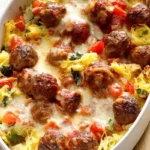
Spaghetti Squash Meatball Casserole
- Total Time: 65 minutes
- Yield: 6 servings 1x
- Diet: Low Carb
Description
One of our favorite comfort-food dinners is spaghetti and meatballs. We’re crazy about this lighter, healthier version that features so many veggies. It has the same beloved flavors with more nutritious ingredients!
Ingredients
- 1 medium spaghetti squash (about 4 pounds)
- 1/2 teaspoon salt, divided
- 1/2 teaspoon fennel seed
- 1/4 teaspoon ground coriander
- 1/4 teaspoon dried basil
- 1/4 teaspoon dried oregano
- 1 pound lean ground beef (90% lean)
- 2 teaspoons olive oil
- 1 medium onion, chopped
- 1 garlic clove, minced
- 2 cups chopped collard greens
- 1 cup chopped fresh spinach
- 1 cup reduced-fat ricotta cheese
- 2 plum tomatoes, chopped
- 1 cup pasta sauce
- 1 cup shredded part-skim mozzarella cheese
Instructions
- Step: Cut the squash lengthwise in half; discard seeds. Place halves on a microwave-safe plate, cut side down. Microwave, uncovered, on high until tender, for 15-20 minutes. Cool slightly.
- Step: Preheat oven to 350°. Mix 1/4 teaspoon salt with remaining seasonings; add to beef, mixing lightly but thoroughly. Shape into 1-1/2-in. balls. In a large skillet, brown meatballs over medium heat; remove from pan.
- Step: In same pan, heat oil over medium heat; saute onion until tender, 3-4 minutes. Add garlic; cook and stir 1 minute. Stir in collard greens, spinach, ricotta and remaining salt; remove from heat.
- Step: Using a fork, separate strands of spaghetti squash; stir into greens mixture. Transfer to a greased 13×9-in. or 3-qt. baking dish. Top with the plum tomatoes, meatballs, sauce and cheese. Bake, uncovered, until meatballs are cooked through, 30-35 minutes.
- Prep Time: 35 minutes
- Cook Time: 30 minutes
- Category: Dinner
- Method: Baking
- Cuisine: American
Nutrition
- Serving Size: 1 serving
- Calories: 304 kcal
- Sugar: 10 g
- Sodium: 590 mg
- Fat: 14 g
- Saturated Fat: 6 g
- Unsaturated Fat: 8 g
- Trans Fat: 0 g
- Carbohydrates: 19 g
- Fiber: 4 g
- Protein: 25 g
- Cholesterol: 69 mg
Keywords: spaghetti squash, meatball casserole, healthy dinner, low carb, vegetable-packed