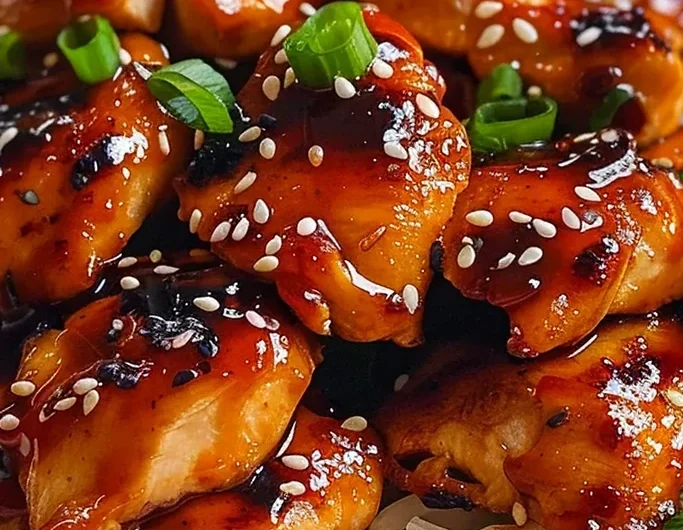
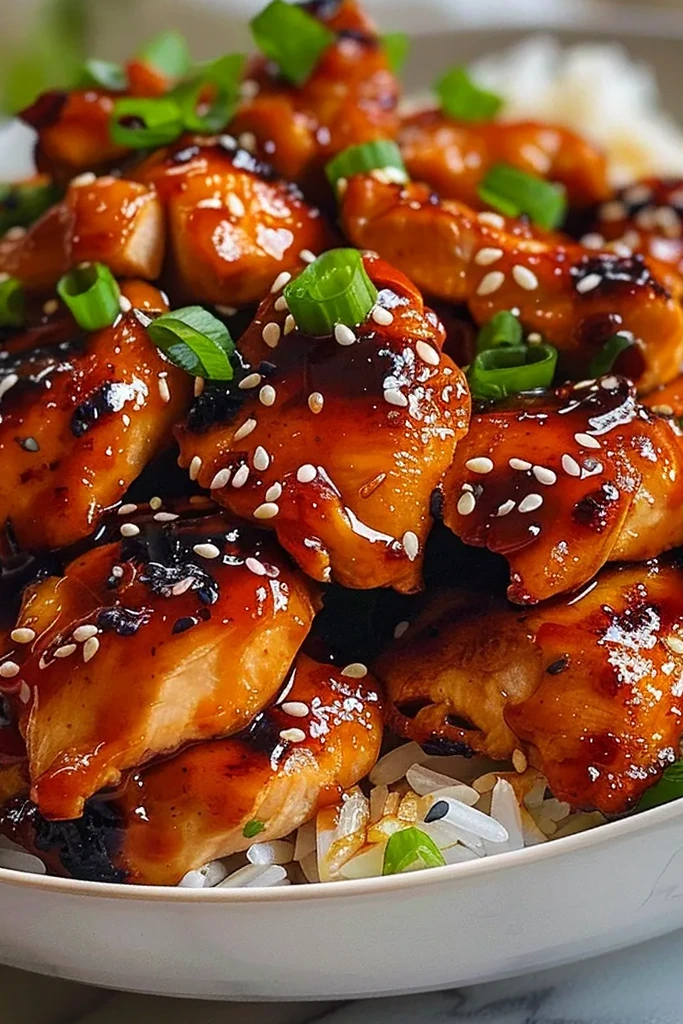
This recipe provides a balanced blend of spicy gochujang and sweet honey to create a thick glaze on tender chicken thighs. It is a practical choice for a weeknight dinner that requires minimal active cooking time. Follow these steps for a consistent, sticky result every time.
List of ingredients
- 2 pounds Chicken thighs – use boneless, skinless for faster cooking and better marinade absorption.
- 1/4 cup Gochujang – a fermented Korean chili paste that provides the base heat and umami.
- 1/4 cup Honey – adds sweetness and creates the sticky glaze during baking.
- 4 cloves Garlic, minced – provides a sharp, aromatic depth to the sauce.
- 1/4 cup Soy sauce – adds the necessary salt and savory notes.
- 2 tablespoons Rice vinegar – provides acidity to balance the sweetness of the honey.
- 1 tablespoon Sesame oil – adds a nutty aroma and richness to the finish.
- Green onions – chopped thinly for a fresh, mild garnish.
- Sesame seeds – toasted lightly for added texture and visual appeal.
step-by-step instructions
- Prepare the marinade: In a mixing bowl, combine the gochujang, honey, soy sauce, rice vinegar, sesame oil, and minced garlic. Whisk the mixture thoroughly until the honey and gochujang are fully integrated into a smooth sauce.
- Marinate the chicken: Place the chicken thighs in a large resealable plastic bag or a shallow glass dish. Pour the marinade over the chicken, ensuring every piece is completely coated, then refrigerate for at least 30 minutes.
- Prepare the oven: Preheat your oven to 400°F (200°C). Line a large baking sheet with parchment paper to prevent the sticky sauce from clinging to the pan.
- Arrange the meat: Remove the chicken thighs from the marinade, letting the excess drip off to avoid too much liquid on the pan. Space the pieces out on the parchment-lined baking sheet so they are not touching.
- Bake the chicken: Cook in the preheated oven for 25-30 minutes. Ensure the internal temperature reaches 165°F (74°C) using a meat thermometer for safety and juiciness.
- Broil for glaze: Switch the oven to the broiler setting for the final 3-5 minutes of cooking. Watch the chicken closely to ensure the sugars in the honey caramelize without burning.
- Garnish and serve: Remove the pan from the oven and let the chicken rest for 5 minutes. Top with chopped green onions and sesame seeds before serving.
Cooking Process Optimization
Extend Marination for Deeper Flavor
While 30 minutes is the minimum requirement, marinating the chicken for 4 to 24 hours significantly improves the results. The salt in the soy sauce helps break down the muscle fibers, allowing the flavors to penetrate deeper into the meat. Store the chicken in the refrigerator in a sealed container or bag during this time.
Use a Digital Meat Thermometer
Chicken thighs can vary in thickness, making timing unreliable for determining doneness. A digital thermometer ensures the chicken reaches the safe internal temperature of 165°F (74°C) without overcooking. Overcooking thighs can lead to a rubbery texture, while undercooking is a safety risk.
Manage the Broiler Temperature
The honey and gochujang contain high sugar levels that burn quickly under direct high heat. Stay by the oven during the final 3-5 minutes of broiling to monitor the color. The goal is a deep reddish-brown glaze, not black charred spots.
Protein Substitutions and Adaptations
Using Boneless Skinless Chicken Breasts
If you prefer a leaner protein, chicken breasts can be used with the same marinade. Reduce the baking time by 5-10 minutes, as breasts cook faster than thighs. Be careful not to overbake them, as they lack the fat of thighs and can dry out quickly.
Substituting with Extra Firm Tofu
For a plant-based version, use extra-firm tofu that has been pressed to remove excess water. Cut the tofu into thick cubes or slabs and marinate for at least 2 hours for maximum flavor. Bake at 400°F for 20-25 minutes, flipping halfway through to ensure all sides are glazed.
Preparing the Dish with Shrimp
Shrimp can be used as a seafood alternative but require a much shorter cooking time. Toss the shrimp in the marinade and bake for only 6-8 minutes. Avoid the long marination process, as the acid in the rice vinegar can change the texture of the shrimp if left too long.
Making a Vegan Version with Cauliflower
Cauliflower florets can be roasted using this same sticky glaze for a vegetable-forward meal. Toss uniform-sized florets in the sauce and roast for 20-25 minutes. Ensure the florets are spread out on the pan to allow for roasting rather than steaming.
Flavor Enhancements and Variations
Adding Fresh Ginger for Zest
To add a brighter, sharper note to the marinade, mix in one tablespoon of freshly grated ginger. Ginger complements the gochujang and adds a traditional aromatic layer found in many Korean dishes. Use a microplane for a fine consistency that blends into the sauce.
Increasing the Heat Level
For those who prefer a spicier profile, add a teaspoon of red pepper flakes or two finely chopped bird’s eye chilies. You can also increase the gochujang quantity by two tablespoons. Balance the extra heat by adding a small amount of extra honey to maintain the glaze consistency.
Incorporating Citrus Notes
Squeeze fresh lime or lemon wedges over the chicken immediately after it comes out of the oven. The fresh acidity cuts through the richness of the sesame oil and the sweetness of the honey. You can also replace half of the rice vinegar with orange juice for a citrusy twist.
Alternative Sweeteners
If honey is unavailable, maple syrup or brown rice syrup can be used as a 1:1 replacement. Maple syrup provides a slightly different, earthy sweetness, while brown rice syrup creates an even thicker, stickier texture. Both maintain the necessary sugar content for caramelization.
Serving and Pairing Suggestions
Optimal Grain Pairings
Steamed jasmine or short-grain sushi rice is the best accompaniment to soak up the extra sticky sauce. Quinoa or brown rice are healthier alternatives that provide a nutty contrast to the spicy glaze. For a low-carb option, serve the chicken over cauliflower rice.
Fresh Vegetable Sides
Pair this dish with steamed bok choy or sautéed spinach seasoned with garlic. A chilled cucumber salad with rice vinegar and sesame oil provides a refreshing contrast to the heat of the gochujang. Blanched broccoli or snap peas also add a necessary crunch to the meal.
Salads and Greens
A simple mixed green salad with a light ginger-soy dressing complements the flavors of the chicken. Avoid heavy creamy dressings, as they can clash with the bold Korean spices. Use shredded carrots and cabbage for added texture and color.
Storage and Reheating Guide
Refrigeration and Shelf Life
Store leftover chicken in an airtight container in the refrigerator for up to three days. Allow the chicken to cool slightly before sealing the lid to prevent excess condensation from making the glaze watery. Keep the garnish separate and add it fresh when serving.
Freezing Instructions
The cooked chicken can be frozen for up to two months in a freezer-safe bag or container. Ensure the chicken is completely cooled before freezing to maintain the quality of the sauce. Thaw the chicken in the refrigerator overnight before reheating.
Best Reheating Methods
To maintain the sticky texture, reheat the chicken in the oven at 350°F (175°C) for 10 minutes. If using a microwave, add a teaspoon of water to the dish and cover it with a damp paper towel to prevent the meat from drying out. Heat in short intervals until warmed through.
Common Questions and Troubleshooting
How can I make this recipe gluten-free?
Replace the standard soy sauce with tamari or coconut aminos. Ensure the gochujang brand you purchase is certified gluten-free, as some contain wheat flour as a thickener. All other ingredients in this recipe are naturally gluten-free.
Can I prepare the chicken the day before?
Yes, you can marinate the chicken up to 24 hours in advance. This is actually recommended for the best flavor penetration. Keep the chicken in a sealed bag in the coldest part of your refrigerator until you are ready to bake.
What if the sauce is too spicy?
If the gochujang is too intense for your palate, whisk in an extra tablespoon of honey or a splash of water to dilute the heat. Serving the chicken with a side of plain steamed rice or a dollop of Greek yogurt can also help neutralize the spice.
Why isn’t my chicken getting sticky?
The stickiness comes from the caramelization of sugars under high heat. Ensure you are using honey and that you use the broiler for the final few minutes of cooking. If the sauce seems too thin, you may have used too much rice vinegar or added too much water.
Can I use a different cut of meat?
While thighs are recommended for juiciness, you can use pork tenderloin or shrimp. Adjust the cooking time based on the protein’s thickness. Pork will require a longer bake time, while shrimp only needs a few minutes per side.
Print
Sticky Honey Gochujang Chicken Guide
- Total Time: 60 minutes
- Yield: 4 servings 1x
- Diet: General
Description
Savor this Irresistible Sticky Honey Gochujang Chicken, a mouthwatering dish that blends sweet, savory, and spicy flavors to delight your taste buds.
Ingredients
- 2 pounds chicken thighs
- 1/4 cup gochujang
- 1/4 cup honey
- 4 cloves garlic, minced
- 1/4 cup soy sauce
- 2 tablespoons rice vinegar
- 1 tablespoon sesame oil
- green onions for garnish
- sesame seeds for garnish
Instructions
- Prepare the marinade: In a bowl, mix the gochujang, honey, soy sauce, rice vinegar, sesame oil, and minced garlic. Whisk until fully combined.
- Marinate the chicken: Place the chicken thighs into a large resealable bag or a shallow dish. Pour the marinade over the chicken and refrigerate for at least 30 minutes.
- Preheat the oven: Preheat your oven to 400°F (200°C) and line a baking sheet with parchment paper.
- Arrange the chicken: Remove the chicken from the marinade, allowing excess marinade to drip off, and place chicken on the baking sheet.
- Bake: Bake the chicken for 25-30 minutes, or until cooked through with internal temperature of 165°F (74°C).
- Broil: Switch on broiler for the last 3-5 minutes for an even stickier finish.
- Garnish: Garnish with chopped green onions and sesame seeds before serving.
Notes
For the best results, marinate the chicken overnight. You can substitute chicken thighs with chicken breasts or tofu for a different protein option.
- Prep Time: 30 minutes
- Cook Time: 30 minutes
- Category: Dinner
- Method: Baking
- Cuisine: Korean
Nutrition
- Serving Size: 1 serving
- Calories: 350 kcal
- Sugar: 15 g
- Sodium: 850 mg
- Fat: 15 g
- Saturated Fat: 4 g
- Unsaturated Fat: 11 g
- Trans Fat: 0 g
- Carbohydrates: 35 g
- Fiber: 1 g
- Protein: 23 g
- Cholesterol: 95 mg
Keywords: sticky honey gochujang chicken, Korean chicken, spicy honey chicken, baked chicken, dinner recipes