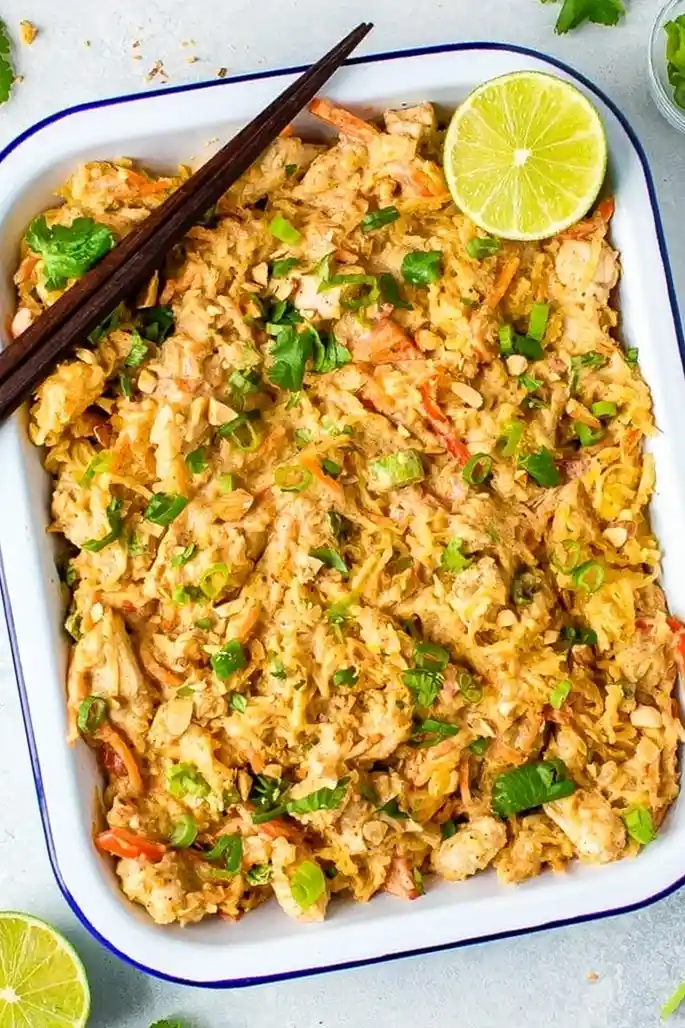
This nutrient-dense meal replaces traditional rice noodles with roasted spaghetti squash strands for a lower-carb alternative. It combines savory chicken and fresh vegetables with a creamy chili almond sauce for a satisfying dinner.
List of ingredients
- 1 large spaghetti squash (approx. 5 cups after roasting) – use a medium to large size for enough servings.
- 1 Tablespoon + 2 teaspoons olive or avocado oil – divided for searing and sautéing.
- 1 lb boneless skinless chicken breast – cut into 1-inch chunks.
- Sea salt and ground pepper – for seasoning the chicken.
- 1/2 teaspoon chopped ginger – adds a fresh aromatic base.
- 1/2 cup chopped yellow onion – diced for uniform cooking.
- 1 sliced red bell pepper – adds color and sweetness.
- 1 cup matchstick carrots – pre-cut matchsticks save preparation time.
- Green onions, fresh cilantro, and lime wedges – used for fresh garnish.
- 2 Tablespoons chopped salted almonds (optional) – provides a crunchy texture.
- 1/2 cup natural almond butter (no sugar added) – the creamy base for the sauce.
- 2 Tablespoons fresh lime juice – adds necessary acidity.
- 1 Tablespoon low sodium tamari or coconut aminos – for a salty, umami flavor.
- 1 inch knob fresh ginger (peeled) – used specifically for the blended sauce.
- 2 cloves garlic – adds depth to the sauce.
- 2 teaspoons maple syrup – provides a hint of sweetness.
- 1 teaspoon sambal oelek or crushed red pepper – adjust based on heat preference.
- 1/4 cup water – used to thin the sauce to the right consistency.
step-by-step instructions
- Roast the Squash: Cook your spaghetti squash using the ring method. Preheat oven to 400°F, cut squash into 1.5-inch thick rings, remove seeds, oil and season, then bake for 30-40 minutes.
- Prepare the Sauce: Combine almond butter, lime juice, tamari or coconut aminos, peeled ginger, garlic, maple syrup, sambal oelek, and water in a blender or food processor. Process until completely smooth and set aside.
- Cook the Protein: Chop chicken breasts into 1-inch pieces. Heat 1 Tablespoon of oil in a large skillet over medium heat, add chicken, season liberally with salt and pepper, and cook until golden and cooked through. Transfer chicken to a plate.
- Sauté the Vegetables: Add the remaining 2 teaspoons of oil to the same skillet. Sauté the chopped ginger, onion, bell pepper, and carrots for 5-6 minutes until they begin to soften.
- Combine Main Ingredients: Return the cooked chicken to the skillet with the vegetables. Pour in the prepared chili almond sauce and stir thoroughly to coat everything.
- Integrate the Squash: Fold in the roasted spaghetti squash strands. If the skillet is too crowded, transfer all ingredients to a large mixing bowl to combine.
- Garnish and Serve: Serve immediately. Top each portion with chopped green onions, fresh cilantro, lime wedges, and optional chopped almonds.
Techniques for Perfect Spaghetti Squash
Use the Ring Cutting Method
Instead of cutting the squash in half, slice it into thick rings. This method prevents the squash from pooling water in the center, resulting in firmer, more noodle-like strands. It also allows for more even roasting across the surface.
Avoid Overcooking the Strands
Remove the squash from the oven as soon as the strands are tender but still hold their shape. Overcooking leads to mushy vegetables that collapse when mixed with the sauce. Aim for an al dente texture to better mimic rice noodles.
Efficiently Scraping the Flesh
Use a sturdy fork to scrape the flesh away from the skin after roasting. Move the fork in a consistent direction to create long, continuous strands. Avoid pressing too hard against the skin to keep the strands clean.
Sauce Customization and Flavor Balance
Adjusting the Heat Level
The amount of sambal oelek can be varied based on your spice tolerance. For a milder version, reduce the amount to 1/2 teaspoon or use a mild chili paste. For extra heat, add a pinch of cayenne pepper or more crushed red pepper flakes.
Substituting the Nut Butter
If almond butter is unavailable, creamy peanut butter serves as a direct substitute. Cashew butter is another excellent option that provides a slightly sweeter, milder flavor profile. Ensure the butter is natural and free of added sugars.
Managing Saltiness
Coconut aminos are naturally sweeter and less salty than tamari or soy sauce. If using coconut aminos, you may need an extra pinch of sea salt in the final dish. Conversely, if using tamari, taste the sauce before adding more salt to the vegetables.
Protein and Vegetable Variations
Using Shrimp Instead of Chicken
Replace the chicken with peeled and deveined shrimp. Sauté the shrimp quickly over medium-high heat for 2-3 minutes per side until pink. Add them back to the skillet at the very end to prevent them from overcooking and becoming rubbery.
Tofu for a Plant-Based Option
Use extra-firm tofu that has been pressed to remove excess water. Cube the tofu and sear in oil until all sides are golden brown before setting aside. Follow the rest of the recipe as written for a hearty meat-free meal.
Adding Extra Leafy Greens
Stir in a handful of baby spinach or chopped kale during the final mixing step. The residual heat from the squash and sauce will wilt the greens perfectly. This adds extra iron and nutrients to the dish without altering the flavor.
Incorporating Snap Peas or Broccoli
Add sliced snap peas or small broccoli florets along with the carrots and bell peppers. Sauté them for an additional 2-3 minutes to ensure they are tender-crisp. These vegetables add a nice crunch and complement the Thai-inspired flavors.
Storage and Reheating Guidelines
Refrigeration and Shelf Life
Store leftovers in an airtight container in the refrigerator for up to 4 days. Keep the garnishes, such as cilantro and lime, separate until serving to maintain freshness. The sauce will thicken in the fridge, which is normal.
Best Reheating Methods
Reheat the dish in a skillet over medium heat with a splash of water or vegetable broth. This helps loosen the almond sauce and prevents the squash from drying out. Avoid over-microwaving, as this can make the squash strands too soft.
Preventing Watery Leftovers
Spaghetti squash can release moisture as it sits. If you notice liquid at the bottom of the container, drain it before reheating. This ensures the sauce remains creamy and clings to the squash rather than becoming a soup.
Make-Ahead Preparation Tips
Pre-Roasting the Squash
Roast the spaghetti squash a day in advance and store the strands in a sealed container. When ready to cook, simply add them to the skillet at the end. This reduces the active cooking time on the night of the meal.
Preparing the Sauce in Batch
The chili almond sauce can be blended and stored in a jar for up to one week. Shake well before using as natural nut butters may separate. This allows you to move quickly through the sautéing process.
Pre-Cutting the Vegetables
Dice the onions, slice the peppers, and prepare the matchstick carrots ahead of time. Store them in a single container or individual bags. Having the mise en place ready makes the stir-fry process seamless.
Common Troubleshooting and Solutions
Dealing with Watery Squash
If your squash is too watery after roasting, spread the strands on a baking sheet and roast them for another 5-10 minutes. Alternatively, pat them dry with a paper towel before adding them to the skillet. This ensures the sauce doesn’t become diluted.
Fixing a Sauce That Is Too Thick
If the sauce is too thick to coat the ingredients evenly, whisk in additional water one tablespoon at a time. Continue adding water until the sauce reaches a pourable consistency. Do this before adding the squash to the pan.
Preventing Chicken from Drying Out
Avoid overcooking the chicken breast during the initial searing phase. Remove it from the pan as soon as the center is no longer pink. The chicken will finish heating through when it is reintroduced to the sauce and squash.
Frequently Asked Questions
Can I use a different squash?
Spaghetti squash is specifically used for its unique strand-like texture. Other winter squashes like butternut or acorn will be creamy or chunky, which does not mimic the Pad Thai noodle experience.
Is this recipe gluten-free?
Yes, provided you use tamari or coconut aminos instead of traditional soy sauce. All other ingredients are naturally gluten-free, making this a safe option for those avoiding gluten.
Can I make this dish in a wok?
A wok is ideal for this recipe as it allows for high-heat sautéing and easy tossing. Use the same oil quantities and follow the same sequence of adding ingredients to ensure proper cooking.
What can I use if I don’t have a blender?
You can whisk the sauce ingredients together in a bowl, but the almond butter must be very smooth. Use a small whisk or fork to blend the nut butter and liquids until no lumps remain.
How do I keep the carrots from getting too soft?
Add the matchstick carrots toward the end of the vegetable sautéing process. Since they are thin, they only need a few minutes of heat to soften while retaining a slight crunch.
Print
Spaghetti Squash Pad Thai
- Total Time: 65 minutes
- Yield: 4 servings 1x
- Diet: Gluten-Free, Dairy-Free
Description
This healthy spaghetti squash Pad Thai uses spaghetti squash strands instead of rice noodles for a veggie-packed dish that’s lower in carbs and super satisfying.
Ingredients
- 1 large spaghetti squash (approx. 5 cups after roasting)
- 1 Tablespoon + 2 teaspoons olive or avocado oil
- 1 lb boneless skinless chicken breast
- Sea salt and ground pepper
- ½ teaspoon chopped ginger
- ½ cup chopped yellow onion
- 1 sliced red bell pepper
- 1 cup matchstick carrots
- Green onions, fresh cilantro and lime wedges, for garnish
- 2 Tablespoons chopped salted almonds (optional)
- ½ cup natural almond butter (no sugar added)
- 2 Tablespoons fresh lime juice
- 1 Tablespoon low sodium tamari or coconut aminos
- 1 inch knob fresh ginger (peeled)
- 2 cloves garlic
- 2 teaspoons maple syrup
- 1 teaspoon sambal oelek or crushed red pepper
- ¼ cup water
Instructions
- Step: Cook your spaghetti squash.
- Step: While squash is roasting, make the chili almond sauce by adding all ingredients into a blender or food processor. Process until smooth and set aside.
- Step: Chop raw chicken breasts into 1-inch chunks. Heat a large skillet over medium heat with 1 Tablespoon oil. Add chicken to the skillet and liberally season with sea salt and pepper. Cook, stirring often until all sides are golden and chicken is cooked through and no longer pink. Transfer to a plate and set aside.
- Step: Add remaining 2 teaspoons of oil to the same skillet and sauté together ginger, onion, bell pepper and carrots. Cook until the veggies are starting to soften, about 5-6 minutes.
- Step: Add chicken back to the skillet with the veggies. Then add the chili almond sauce and mix everything together thoroughly.
- Step: Add spaghetti squash to the skillet and mix again. If your skillet isn’t large enough, you can put everything in a large bowl to mix instead.
- Step: Serve the spaghetti squash pad Thai immediately with green onions, fresh cilantro and lime wedges for garnish. Top with chopped almonds.
Notes
You can substitute chicken with tofu or shrimp. For the best squash texture, use the ring method for roasting.
- Prep Time: 20 minutes
- Cook Time: 45 minutes
- Category: Dinner
- Method: Sautéing
- Cuisine: Thai
Nutrition
- Serving Size: 1 serving
- Calories: 456 kcal
- Sugar: 6 g
- Sodium: 607 mg
- Fat: 24 g
- Saturated Fat: 2 g
- Unsaturated Fat: 22 g
- Trans Fat: 0 g
- Carbohydrates: 27 g
- Fiber: 8 g
- Protein: 35 g
- Cholesterol: 36 mg
Keywords: spaghetti squash, pad thai, low carb, healthy dinner, gluten-free, dairy-free