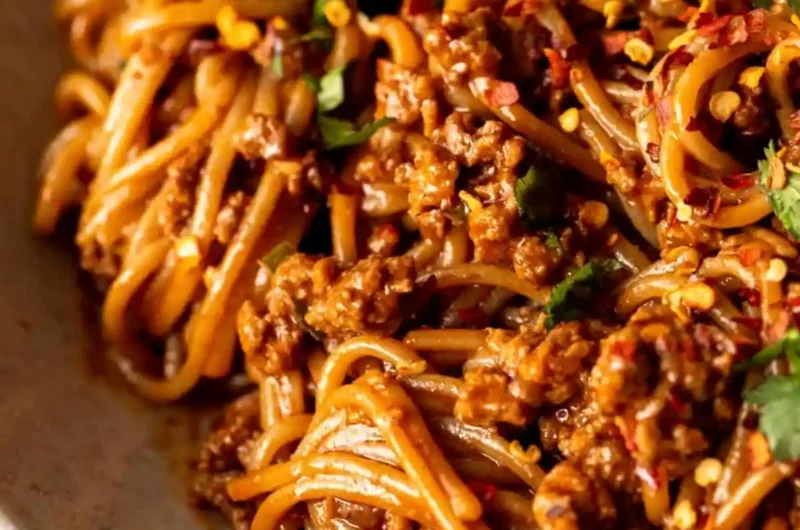
This quick meal combines savory beef with a spicy and sweet Korean-inspired sauce. It is an ideal 30-minute dinner that delivers bold flavors with minimal effort.
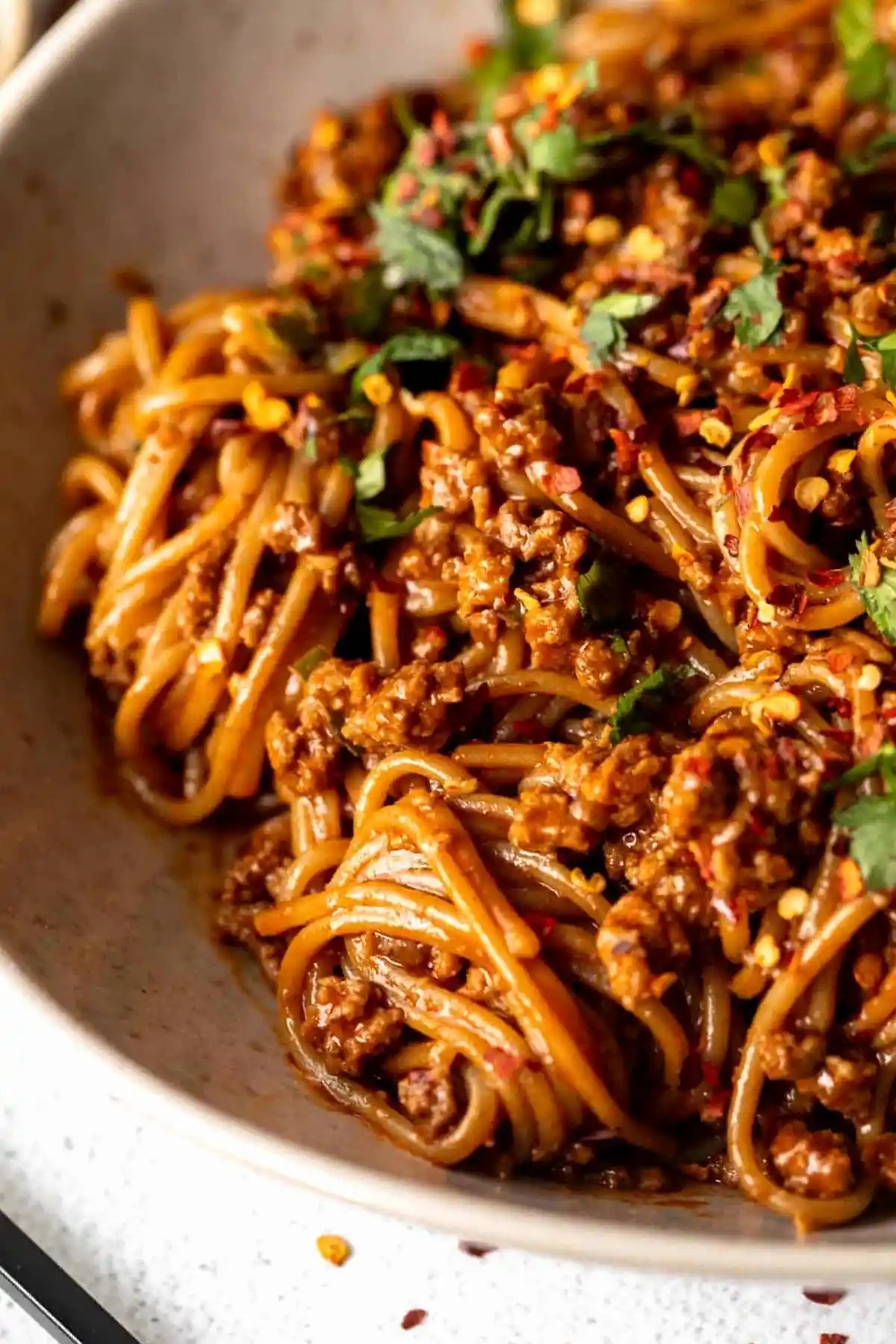
List of ingredients
- 1 pound ground beef (turkey or chicken) – lean ground beef works best for flavor.
- 12 ounces rice noodles or noodles of choice – brown rice soba is a great option.
- 1/4 cup low sodium soy sauce or tamari – for a salty, umami base.
- 1/4 cup gochujang paste – a fermented Korean chili paste.
- 2 tablespoons coconut cream – adds richness and creaminess.
- 2 teaspoons tomato paste – deepens the color and flavor.
- 2 tablespoons water – helps thin the sauce for coating.
- 2 tablespoons honey or brown sugar – balances the heat with sweetness.
- 1 tablespoon toasted sesame oil – provides a nutty aroma.
- 1 tablespoon rice vinegar – adds a bright, acidic touch.
- 2 teaspoons minced garlic – for aromatic depth.
- 1 teaspoon fresh grated ginger – adds a zesty, spicy note.
- 1/2 teaspoon red pepper flakes – adjust based on your heat preference.
step-by-step instructions
- Cook the noodles: Bring a pot of salted water to a boil and cook noodles according to package instructions. Toss with 2 tablespoons of butter after cooking and let it melt to prevent sticking.
- Brown the meat: Add the ground meat to a large skillet and saute over medium-high heat until completely cooked through.
- Prepare the sauce: While the meat is cooking, whisk together all sauce ingredients in a bowl. Do not worry if the coconut cream has small chunks; they will melt during the heating process.
- First sauce coat: When the noodles are finished, drain and rinse them, then return them to the pot. Stir in about half of the prepared sauce until the noodles are evenly coated.
- Combine everything: Add the cooked ground meat and the remaining sauce to the pot. Toss everything together and let the flavors meld over low heat for a few minutes.
- Garnish and serve: Plate the noodles and top with chopped scallions, sesame seeds, cilantro, and additional red pepper flakes if desired.
Customizing Your Protein Choice
Using Ground Turkey or Chicken
If you prefer a leaner meat, ground turkey or chicken are excellent substitutes. These meats take on the gochujang flavor very well, though they may require a tiny bit more oil in the pan to prevent sticking.
Substituting with Firm Tofu
For a plant-based version, use crumbled extra-firm tofu. Sauté the tofu until the edges are golden brown before adding the sauce to ensure a meaty texture.
Adding Sliced Steak Strips
Instead of ground meat, you can use thinly sliced flank steak or sirloin. Sear the steak quickly over high heat to keep it tender before combining it with the noodles.
Incorporating Fresh Vegetables
Adding Sautéed Bok Choy
Bok choy adds a wonderful crunch and nutritional value to the dish. Sauté the chopped stems first for 2 minutes, then add the leaves just before adding the meat to the pan.
Using Sliced Bell Peppers
Red and yellow bell peppers provide a sweet contrast to the spicy sauce. Slice them thinly and sauté them until tender-crisp before mixing in the noodles.
Adding Broccoli Florets
Small broccoli florets soak up the gochujang sauce beautifully. You can steam them separately or sauté them in the skillet with the beef for a one-pan approach.
Incorporating Shredded Carrots
Grated or julienned carrots add color and a natural sweetness. Stir them in during the last two minutes of cooking the meat to maintain a slight snap.
Selecting the Perfect Noodle
Rice Noodles for Gluten-Free Needs
Rice noodles are naturally gluten-free and provide a soft, slippery texture. Be careful not to overcook them, as they can become mushy very quickly.
Udon for a Chewier Bite
Thick udon noodles are perfect for this recipe because they hold onto the thick sauce. They provide a satisfying, chewy contrast to the ground meat.
Soba Noodles for Earthy Flavor
Buckwheat soba noodles add a nutty, earthy flavor that complements the sesame oil. These are best when rinsed thoroughly in cold water to remove excess starch.
Using Standard Spaghetti
If you don’t have Asian noodles, standard spaghetti works as a pantry substitute. Cook it al dente so it doesn’t overcook when you toss it with the sauce over low heat.
Mastering the Gochujang Sauce
Adjusting the Spice Level
Gochujang varies in heat depending on the brand. If the dish is too spicy, add an extra tablespoon of honey; if it is too mild, increase the red pepper flakes or add a dash of sriracha.
Balancing the Sweetness
The honey or brown sugar is essential to cut through the fermented heat of the chili paste. If you prefer a more savory profile, reduce the sweetener by half.
Managing the Sauce Consistency
The coconut cream provides a velvety texture. If you prefer a thinner, glazier sauce, you can omit the coconut cream and add an extra tablespoon of water.
Storage and Reheating Advice
Refrigeration Guidelines
Store leftovers in an airtight container in the refrigerator for up to 3 days. Because the sauce contains coconut cream and oil, the noodles will stay moist during storage.
Best Reheating Methods
The stovetop is the best way to reheat these noodles to maintain the texture. Add a splash of water or broth to the pan to loosen the sauce as it warms up.
Microwave Reheating Tips
If using a microwave, heat the noodles in short 30-second intervals. Stir between each interval to ensure the heat is distributed evenly and the sauce doesn’t separate.
Preventing Noodle Clumping
The butter added immediately after boiling is key to preventing clumps. If you are reheating cold noodles, a small pat of butter can help them slide apart again.
Troubleshooting Common Issues
Fixing Overcooked Noodles
If your noodles are too soft, reduce the time they spend simmering in the sauce. Add them at the very last moment and toss quickly over low heat.
Correcting a Sauce That is Too Salty
If the soy sauce makes the dish too salty, add a squeeze of fresh lime juice. The acidity helps neutralize the saltiness and brightens the overall flavor.
Handling Lumpy Coconut Cream
If the coconut cream remains lumpy after mixing, whisk it vigorously in a separate bowl before adding it to the sauce. Alternatively, gently warm the sauce before tossing it with the noodles.
Frequently Asked Questions
What is gochujang exactly?
Gochujang is a savory, sweet, and spicy fermented condiment made from chili powder, glutinous rice, fermented soybeans, and salt. It is a staple in Korean cuisine and has a thick, paste-like consistency.
Can I use maple syrup instead of honey?
Yes, maple syrup is a great alternative for those avoiding honey. It provides a similar sweetness with a slightly different, woody flavor profile.
How do I keep the noodles from sticking together?
Rinse your noodles under cold water immediately after draining to remove surface starch. Tossing them with butter or a small amount of sesame oil further prevents sticking.
Is this recipe suitable for a vegan diet?
To make this vegan, replace the beef with tofu, use brown sugar instead of honey, and ensure your soy sauce is vegan. You can also use a vegan butter substitute for the noodles.
Where can I find gochujang paste?
Most large grocery stores carry it in the international or Asian food aisle. If not available locally, it is easily found at specialty Asian markets or online.
Print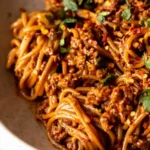
Spicy Korean Gochujang Beef Noodles
- Total Time: 30 minutes
- Yield: 4 servings 1x
- Diet: General
Description
These Spicy Korean Gochujang Beef Noodles are so easy to make, saucy, spicy yet sweet and perfect for a simple 30-minute dinner!
Ingredients
- 1 pound ground beef (turkey or chicken)
- 12 ounces rice noodles or noodles of choice
- 1/4 cup low sodium soy sauce or tamari
- 1/4 cup gochujang paste
- 2 tablespoons coconut cream
- 2 teaspoons tomato paste
- 2 tablespoons water
- 2 tablespoons honey or brown sugar
- 1 tablespoon toasted sesame oil
- 1 tablespoon rice vinegar
- 2 teaspoons minced garlic
- 1 teaspoon fresh grated ginger
- 1/2 teaspoon red pepper flakes
- 2 tablespoons butter
Instructions
- Step 1: Bring a pot of salted water to a boil and cook noodles according to package instructions. Toss with 2 tablespoons of butter after cooking and let melt.
- Step 2: Add the ground meat to a large skillet and saute until cooked through.
- Step 3: Meanwhile, whisk together all ingredients in a bowl and set aside.
- Step 4: When the noodles are done, drain and rinse and add back to the pot. Add in about half of the sauce and toss to combine.
- Step 5: Add in the ground meat and the rest of the sauce. Toss until well coated and let the flavors combine over low heat for a few minutes.
- Step 6: Serve with chopped scallions, sesame seeds, cilantro and/or red pepper flakes.
Notes
The coconut cream is optional, you can easily do without, but it does add a nice richness to the sauce.
- Prep Time: 10 minutes
- Cook Time: 20 minutes
- Category: Main Course
- Method: Stovetop
- Cuisine: Korean
Nutrition
- Serving Size: 1 serving
- Calories: 680 kcal
- Sugar: 16 g
- Sodium: 1350 mg
- Fat: 32 g
- Saturated Fat: 14 g
- Unsaturated Fat: 18 g
- Trans Fat: 0 g
- Carbohydrates: 65 g
- Fiber: 4 g
- Protein: 34 g
- Cholesterol: 85 mg
Keywords: gochujang, beef noodles, korean noodles, korean food, spicy noodles, 30 minute meal