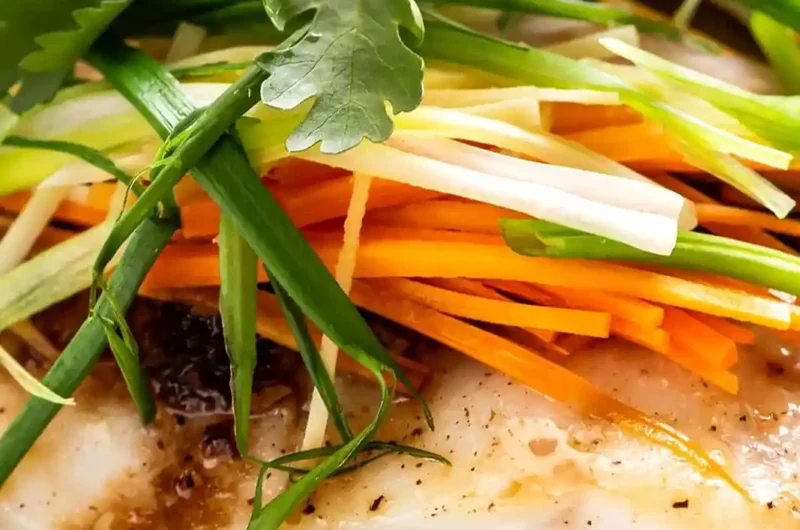
This light and savory dish combines tender fish fillets with the aromatic punch of ginger and scallions. It is a healthy, restaurant-quality meal that can be prepared in just 30 minutes.
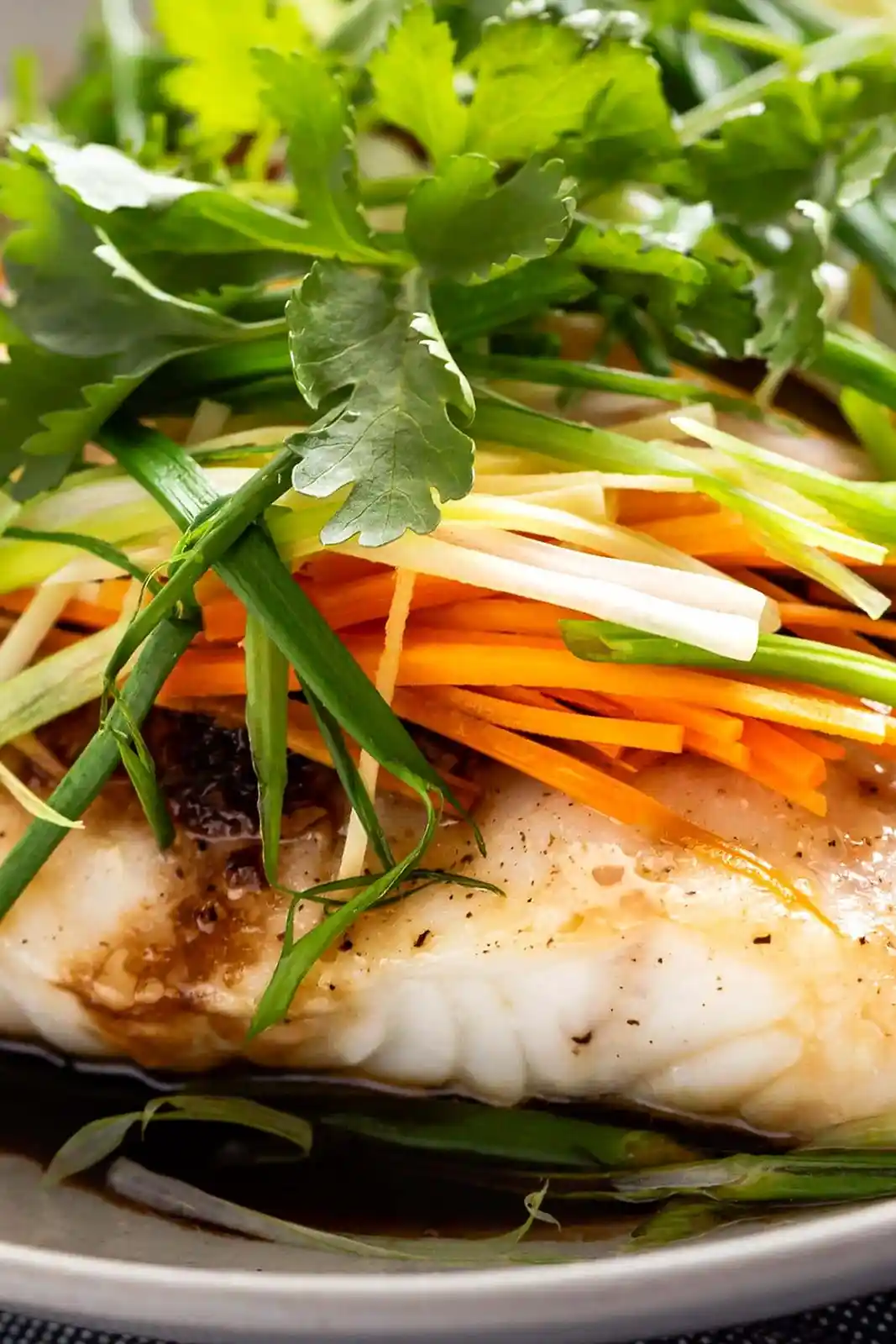
List of ingredients
- 12-14 oz fish fillet with white flesh (skin-on) – ensures a moist texture
- 2 teaspoons toasted sesame oil – for a nutty aroma
- 1/8 teaspoon salt – basic seasoning
- 1/8 teaspoon black pepper – adds a mild heat
- 1 1/2-inch piece of ginger, julienned – provides a fresh, spicy note
- 4-5 scallion stalks, cut into short sections, then julienned/shredded – adds brightness
- 1 small onion, very thinly sliced (or half a medium onion) – adds sweetness
- half a medium carrot, julienned – adds color and crunch
- 1 tablespoon olive oil – for sautéing the sauce
- 2 small shallots, minced (optional) – enhances depth of flavor
- 2-3 cloves of garlic, minced – for a pungent aroma
- 1/2 teaspoon minced ginger – integrates ginger into the sauce
- 1 1/2 – 2 tablespoons soy sauce – the primary savory element
- 1/8 teaspoon salt (optional, to taste) – adjusts saltiness
- 1/8 teaspoon black pepper – adds a subtle kick
step-by-step instructions
- Prepare the fish: Place the fish in a shallow plate that can be used for steaming. Massage it with sesame oil, 1/8 teaspoon salt and pepper. Set aside.
- Prep aromatics: Peel and julienne ginger and veggies as well as mince garlic, shallots and a small amount of ginger.
- Cook the sauce: Place a small pot over medium heat and add olive oil. Once the oil is heated, add minced shallots and garlic, stir and cook until fragrant. Then add minced ginger, also stir and cook briefly until fragrant. Pour soy sauce into the pot, add black pepper and 1/8 teaspoon of salt (to taste), stir and simmer for a few seconds. Transfer the sauce to a bowl.
- Initial steaming: Prepare your steamer. Arrange all the julienned ginger, onion and carrots over the fish. Cover the plate of fish with foil and place inside the steamer and cook for 8-9 minutes.
- Final steaming: Open the lid of the steamer, then remove the foil from the plate. Pour the sauce over the fish fillet, then top with julienned scallions. Put the steamer lid back on (no need to cover the plate with foil this time), and continue to steam for another 4-6 minutes or until the fish is cooked through.
- Plating: Serve hot with rice. You can garnish with some cilantro if desired.
Optimal Fish Selection
Using White Fish Fillets
Grouper is an excellent choice due to its mild sweetness and firm texture. Red snapper, halibut, and cod also work well for this steaming method. These varieties maintain their shape while absorbing the soy-ginger flavors.
Adapting the Recipe for Salmon
Salmon is a rich alternative that pairs beautifully with soy sauce. Because salmon is oilier than white fish, it remains very moist during steaming. Be careful not to overcook salmon, as it can become dry more quickly than some white fish.
Choosing Between Whole Fish and Fillets
Fillets are faster to cook and easier to serve for small groups. Whole fish provide a more impressive presentation and often more flavor. However, whole fish require a larger steamer basket and a larger plate.
Vegetable Preparation Techniques
How to Julienne Ginger and Carrots
To julienne, first slice the vegetable into very thin longitudinal sheets. Then, stack these sheets and cut them into thin, matchstick-sized strips. This ensures the aromatics cook evenly and look professional.
Shredding Scallions for Garnish
Cut the green parts of the scallions into 2-inch lengths. Slit them lengthwise carefully and soak them in ice water for a few minutes. They will curl up, creating a visually appealing garnish.
Thinly Slicing Onions
Use a sharp knife to slice the onion into translucent crescents. Thin slices are essential so that the onion softens and blends into the sauce during the short steaming window.
Steaming Equipment and Methods
Choosing the Right Steamer
A bamboo steamer is traditional and adds a subtle woody aroma to the dish. A stainless steel steamer insert for a large pot is also highly effective. Ensure the pot is large enough to hold the plate without it touching the boiling water.
The Purpose of Aluminum Foil
Covering the fish with foil during the first stage prevents water droplets from the lid from falling onto the fillet. This prevents the flavors of the fish and vegetables from being diluted by condensation. Removing the foil for the second stage allows the sauce to penetrate the fish.
Managing Water Levels
Fill the pot with enough water to create steam but not so much that it boils over into the plate. The water should be about one inch below the steamer rack. Use a tight-fitting lid to keep the steam trapped inside.
Sauce Enhancements and Variations
The Importance of Simmering
Briefly heating the soy sauce with garlic and ginger awakens the volatile oils in the aromatics. This process creates a more cohesive and fragrant sauce than simply mixing raw ingredients. Simmering for just a few seconds is sufficient to achieve this effect.
Adding Dried Shiitake Mushrooms
Rehydrated and thinly sliced dried shiitake mushrooms add an earthy, umami depth. Place them on top of the fish along with the carrots and onions during the first steaming phase. They absorb the fish juices and the soy sauce.
Adjusting Salt and Umami
If you prefer a less salty dish, reduce the amount of soy sauce and add a splash of water or mushroom broth. Conversely, a pinch of sugar can balance the saltiness of the soy sauce for a more rounded flavor.
Serving and Pairing Ideas
Recommended Grain Pairings
Steamed jasmine rice is the classic pairing as it absorbs the excess sauce perfectly. Brown rice or quinoa are healthier alternatives that provide a nuttier taste. For a different texture, serve the fish over a bed of steamed Napa cabbage.
Complementary Side Dishes
Pair this dish with sautéed bok choy or steamed broccoli to increase the vegetable content. A side of pickled cucumbers provides a refreshing acidic contrast to the savory soy sauce. Lightly stir-fried snap peas also complement the ginger notes.
Fresh Garnish Options
Fresh cilantro leaves add a citrusy brightness that cuts through the richness of the sesame oil. A sprinkle of toasted sesame seeds adds a slight crunch and visual detail. Thinly sliced red chilies can be added for those who prefer more heat.
Storage and Reheating Guide
Storing Leftovers
Place the fish and sauce in an airtight glass container. Store it in the refrigerator for no more than two days. Keep the sauce poured over the fish to prevent the flesh from drying out during storage.
Best Reheating Methods
The best way to reheat steamed fish is to steam it again for 3-5 minutes. This restores the moisture and prevents the fish from becoming rubbery. Avoid using a microwave on high heat, as this often overcooks the fillet.
Microwave Reheating Tips
If using a microwave, place the fish in a microwave-safe dish and cover it with a damp paper towel. Heat on medium power in short 30-second intervals. This creates a small steaming effect inside the dish.
Troubleshooting Common Issues
Preventing Overcooked Fish
Fish is done when it becomes opaque and flakes easily with a fork. Depending on the thickness of the fillet, you may need to reduce the steaming time by a minute or two. Always check the thickest part of the fish first.
Handling a Watery Sauce
If the sauce seems too thin after steaming, it is likely due to excess moisture from the fish. You can reduce the sauce in a small pan before pouring it over, or slightly increase the minced ginger and shallots to thicken the base.
Taming Strong Ginger Flavors
If the ginger taste is too overpowering, use a larger piece of fish or add a small amount of honey to the sauce. You can also reduce the amount of julienned ginger placed directly on the fish. Balancing the ginger with more scallions also helps.
Frequently Asked Questions
Can I use a microwave to steam the fish?
Yes, you can use a microwave-safe steamer or a covered dish with a small amount of water. However, microwave steaming can be uneven and may result in some parts of the fish being overcooked while others remain raw.
Which type of soy sauce is best for this recipe?
Light soy sauce is recommended for its salty, savory profile and lighter color. Dark soy sauce can be used for a deeper color and richer taste, but use it sparingly as it is more intense.
How do I know when the fish is fully cooked?
The fish should change from translucent to an opaque white or light pink. Use a fork to gently press the center; if the layers separate easily, the fish is ready to be served.
Can I substitute olive oil with another oil?
Yes, any neutral oil like canola, vegetable, or grapeseed oil will work for sautéing the sauce. Avoid using butter or strongly flavored oils that might clash with the ginger and soy profile.
Is the skin necessary on the fish fillet?
The skin is not strictly necessary, but it helps protect the flesh from overcooking and keeps the fish moist. If you prefer no skin, you can remove it before cooking or leave it on and remove it after steaming.
Print
Steamed Fish with Ginger and Soy Sauce
- Total Time: 30 minutes
- Yield: 2 servings 1x
- Diet: General
Description
Steamed Fish with Ginger, Scallion and Soy Sauce is a restaurant-quality dish you can easily cook at home in just 30 minutes. Serve this light yet flavorful dish with rice for a healthy and delicious meal.
Ingredients
- 12–14 oz fish fillet with white flesh (skin-on)
- 2 teaspoons toasted sesame oil
- 1/8 teaspoon salt
- 1/8 teaspoon black pepper
- 1 1/2-inch piece of ginger, julienned
- 4–5 scallion stalks, cut into short sections, then julienned/shredded
- 1 small onion, very thinly sliced
- half a medium carrot, julienned
- 1 tablespoon olive oil
- 2 small shallots, minced
- 2–3 cloves of garlic, minced
- 1/2 teaspoon minced ginger
- 1 1/2 – 2 tablespoons soy sauce
- 1/8 teaspoon salt
- 1/8 teaspoon black pepper
Instructions
- Step 1: Place the fish in a shallow plate that can be used for steaming. Massage it with sesame oil, 1/8 teaspoon salt and pepper. Set aside.
- Step 2: Peel and julienne ginger and veggies as well as mince garlic, shallots and a small amount of ginger.
- Step 3: Place a small pot over medium heat and add olive oil. Once the oil is heated, add minced shallots and garlic, stir and cook until fragrant. Then add minced ginger, also stir and cook briefly until fragrant. Pour soy sauce into the pot, add black pepper and 1/8 teaspoon of salt (to taste), stir and simmer for a few seconds. Transfer the sauce to a bowl.
- Step 4: Prepare your steamer. Arrange all the julienned ginger, onion and carrots over the fish. Cover the plate of fish with foil and place inside the steamer and cook for 8-9 minutes.
- Step 5: Open the lid of the steamer, then remove the foil from the plate. Pour the sauce over the fish fillet, then top with julienned scallions. Put the steamer lid back on (no need to cover the plate with foil this time), and continue to steam for another 4-6 minutes or until the fish is cooked through.
- Step 6: Serve hot with rice. You can garnish with some cilantro if desired.
Notes
Favorite fish options include grouper, red snapper, halibut, cod, or salmon. If using a whole fish, use a larger steamer basket and plate. Simmering the sauce on the stove before pouring it over the fish enhances the aromas and flavors. Adjust cooking time based on fish thickness.
- Prep Time: 15 minutes
- Cook Time: 15 minutes
- Category: Main Dish
- Method: Steaming
- Cuisine: Chinese, Vietnamese
Nutrition
- Serving Size: 1 serving
- Calories: 314 kcal
- Sugar: 5 g
- Sodium: 534 mg
- Fat: 14 g
- Saturated Fat: 3 g
- Unsaturated Fat: 11 g
- Trans Fat: 0 g
- Carbohydrates: 12 g
- Fiber: 2 g
- Protein: 36 g
- Cholesterol: 85 mg
Keywords: ca hap hanh gung, ca hap xi dau, steamed fish