This versatile Mediterranean marinade uses bright citrus and earthy herbs to infuse chicken with deep flavor. It works equally well as a meat tenderizer or a zesty dressing for fresh salads.
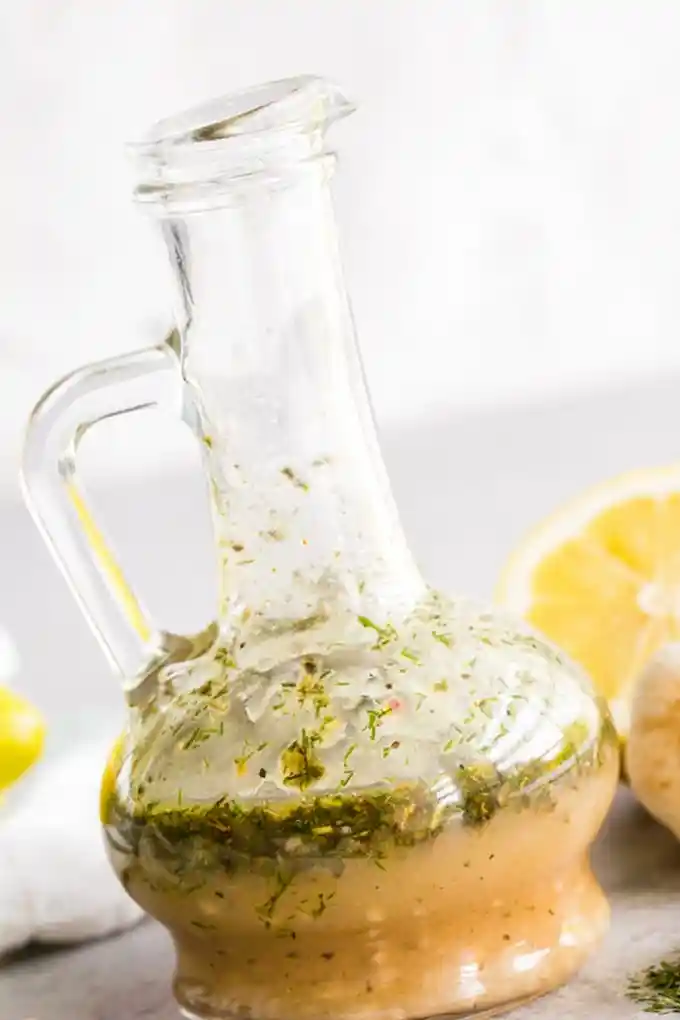
List of ingredients
- 3 tablespoons olive oil – provides a rich base and prevents sticking.
- 1 Tbs minced garlic – adds a sharp, aromatic punch.
- 1/3 cup fresh lemon juice – provides necessary acidity for tenderizing.
- 1 tablespoon apple cider vinegar – adds a tangy depth of flavor.
- 1 teaspoon dried oregano – delivers a classic Mediterranean scent.
- 1 teaspoon dried dill – adds a slightly grassy, fresh note.
- 1/2 tsp dried basil – contributes a subtle sweetness.
- 1/2 tsp dried thyme – adds an earthy, woody undertone.
- 1/2 tsp crushed rosemary – provides a strong, piney aroma.
- 1/2 tsp salt – enhances all other flavors in the blend.
- 1 tablespoon sugar – balances the acidity of the lemon and vinegar.
- 1/4 tsp pepper – adds a mild, warm spice.
- 1 1/2 tsp dijon mustard – acts as an emulsifier to bind the oil and acid.
step-by-step instructions
- Whisk the mixture: Combine all the marinade ingredients in a medium mixing bowl and whisk until the sugar is dissolved and the mustard is fully integrated.
- Prepare the chicken: Place your desired cut of chicken into a large freezer bag or an airtight container.
- Marinate the meat: Pour the prepared mixture over the chicken, seal the bag tightly, and refrigerate for 4 to 8 hours to allow flavors to penetrate.
- Cook the chicken: Remove the chicken from the marinade and grill, bake, or pan-fry until the internal temperature reaches 165 degrees Fahrenheit.
- Use as a dressing: For a salad version, simply whisk the ingredients together and pour directly over greens, grains, or chopped vegetables.
Optimized Cooking Methods
Pan-Searing for Quick Results
Heat a heavy-bottomed skillet or cast-iron pan over medium heat. Add a small amount of neutral oil, such as canola or peanut oil, and wait until the oil begins to ripple. Use tongs to place the chicken in the pan, cooking for 5 to 7 minutes per side depending on thickness.
Grilling for Charred Flavor
Preheat your grill to medium-high heat and lightly oil the grates to prevent sticking. Place the marinated chicken strips or breasts directly on the heat. Grill until you achieve deep char marks and the meat is cooked through, which typically takes 6 to 8 minutes per side.
Oven Roasting for Tenderness
Preheat your oven to 400 degrees Fahrenheit and line a baking sheet with parchment paper. Arrange the chicken pieces in a single layer to ensure even heat distribution. Roast for 20 to 30 minutes, depending on the size of the pieces, until the juices run clear.
Instant Pot Preparation
Place the marinated chicken in the Instant Pot inner pot with a small amount of additional liquid if necessary. Set the device to high pressure for 8 to 12 minutes depending on the cut of meat. Perform a quick release of the pressure and sear the tops under a broiler for 2 minutes for added color.
Strategic Serving Ideas
Mediterranean Pita Wraps
Warm a whole-wheat or white pita bread on the grill. Spread a generous layer of tzatziki or hummus on the bottom. Add sliced marinated chicken along with diced cucumbers, cherry tomatoes, red onions, and kalamata olives for a complete meal.
Greek Power Bowls
Start with a base of cooked quinoa or brown rice. Top the grains with grilled chicken, crumbled feta cheese, and a scoop of tabbouleh. Drizzle extra marinade (used as a dressing) over the top to tie the components together.
Fresh Garden Salad Pairing
Combine chopped romaine lettuce, sliced bell peppers, and red onions in a large bowl. Add the grilled chicken slices and a handful of olives. Use the marinade as a vinaigrette, tossing everything together for a light and healthy lunch.
Low-Carb Lettuce Cups
Use large butter lettuce or romaine leaves as natural wraps. Fill each leaf with diced marinated chicken and a slice of avocado. Top with a squeeze of fresh lemon juice and a pinch of cracked black pepper for a keto-friendly option.
Marinade Customization and Substitutions
Using Fresh Herbs Instead of Dried
Substitute each teaspoon of dried herbs with one tablespoon of freshly chopped herbs. Fresh parsley, dill, and oregano will provide a brighter, more vibrant flavor profile. This is especially effective when using the mixture as a salad dressing.
Adjusting the Heat Level
To add a spicy kick, whisk in a pinch of crushed red pepper flakes or a teaspoon of sriracha. For a more subtle heat, add a small amount of grated fresh ginger. This complements the lemon and garlic without overpowering the Greek theme.
Managing the Sugar Content
If you prefer a less sweet profile, reduce the sugar to one teaspoon or replace it entirely with a small amount of honey. The sugar is primarily there to balance the acidity and help with caramelization during grilling, so avoid removing it entirely if you want a charred crust.
Alternative Acid Bases
If you run out of apple cider vinegar, white wine vinegar is a suitable substitute. For an even tangier result, increase the lemon juice by one tablespoon and decrease the vinegar. Avoid using balsamic vinegar as it will change the color and flavor profile of the dish.
Storage and Meal Prep Guidelines
Refrigeration Limits
Store the unused marinade in an airtight glass jar in the refrigerator for up to one week. Ensure the lid is sealed tightly to prevent the garlic scent from permeating other foods. Shake the jar well before each use as the oil and acids will naturally separate.
Freezing the Marinade
Pour the marinade into freezer-safe bags and freeze for up to three months. You can place raw chicken directly into the bag with the marinade before freezing. The meat will marinate as it thaws in the refrigerator, saving you time during the work week.
Preventing Meat Mushiness
Do not marinate chicken breasts for more than 24 hours. The high acid content from the lemon juice and vinegar can begin to break down the muscle fibers too much, resulting in a mealy or mushy texture. Thighs are more forgiving and can handle longer marination times.
Best Containers for Marinating
Avoid using aluminum bowls or reactive metal containers when marinating. The acids in the lemon juice and vinegar can react with the metal, leaving a metallic taste in the meat. Use glass bowls, stainless steel, or food-grade plastic zip-top bags.
Troubleshooting and FAQs
How long can I safely marinate chicken?
For small pieces or thin cutlets, two hours is usually sufficient for deep flavor. For larger breasts or thighs, 4 to 8 hours is ideal. According to food safety guidelines, chicken can remain in a marinade for up to two days in the refrigerator.
Why is my chicken browning too quickly on the pan?
The sugar in the marinade caramelizes rapidly at high temperatures. If the exterior is darkening before the interior is cooked, lower the heat to medium-low. You can also add a tablespoon of water or broth to the pan to deglaze and lower the surface temperature.
Can this marinade be used for other proteins?
Yes, this blend works exceptionally well with shrimp, salmon, or tofu. Shrimp only requires 30 to 60 minutes of marinating to avoid becoming rubbery. Tofu should be pressed firmly before marinating to allow the liquid to soak into the protein.
How do I know when the chicken is fully cooked?
The most reliable method is using an instant-read meat thermometer. Insert the probe into the thickest part of the meat, avoiding the bone. The chicken is safe to eat and perfectly cooked when it reaches an internal temperature of 165 degrees Fahrenheit.
Can I use this as a sauce after cooking?
Do not use the marinade that has touched raw chicken as a sauce unless you boil it first. To have a safe sauce for drizzling, reserve a portion of the marinade before adding the meat. Simmer the reserved portion in a small saucepan for 5 minutes to thicken and sterilize it.
What should I do if the marinade is too tart?
If the lemon and vinegar flavors are too intense, whisk in an extra tablespoon of olive oil or a pinch more sugar. Adding a small amount of Greek yogurt to the finished dish can also help mellow out the acidity of the marinade.
Print
Greek Chicken Marinade
- Total Time: 4 hours 5 minutes
- Yield: 4 servings 1x
- Diet: General
Description
Whether you want to grill outside, lighten up with a salad, or roast chicken on a cold night, this easy and versatile Greek chicken marinade recipe will carry you away to a shady patio by the sea.
Ingredients
- 3 tablespoons olive oil
- 1 Tbs minced garlic
- 1/3 cup fresh lemon juice
- 1 tablespoon red wine vinegar
- 1 teaspoon dried oregano
- 1 teaspoon dried dill
- 1/2 tsp dried basil
- 1/2 tsp dried thyme
- 1/2 tsp crushed rosemary
- 1/2 tsp salt
- 1 tablespoon sugar
- 1/4 tsp pepper
- 1 ½ tsp dijon mustard
Instructions
- Whisk: Whisk together all of the Greek Marinade ingredients
- Marinate: Place marinade in a large freezer bag and add chicken. Marinate 4-8 hours.
- Prepare: Remove chicken from marinade before grilling, baking, or cooking in a skillet.
- Dress: Pour over favorite salads, power bowls, rice bowls, etc.
Notes
This recipe makes approximately 1 cup of marinade, which is enough for 2-3 lbs of chicken. It can be easily doubled or tripled for extra salad dressing.
- Prep Time: 5 minutes
- Cook Time: 4 hours
- Category: Salad Dressing
- Method: Whisking
- Cuisine: Greek
Nutrition
- Serving Size: 1 serving
- Calories: 116 kcal
- Sugar: 3 g
- Sodium: 23 mg
- Fat: 10 g
- Saturated Fat: 1 g
- Unsaturated Fat: 9 g
- Trans Fat: 0 g
- Carbohydrates: 5 g
- Fiber: 0 g
- Protein: 0 g
- Cholesterol: 0 mg
Keywords: greek chicken marinade, greek chicken marinade recipe, mediterranean flavors