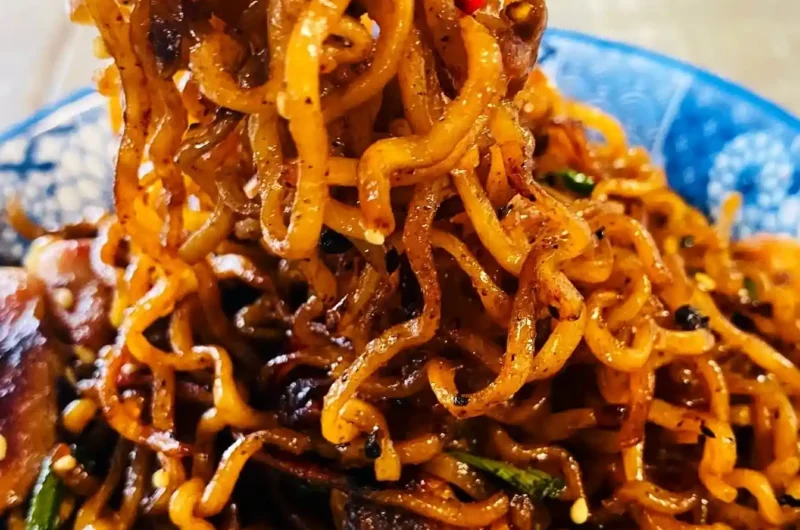
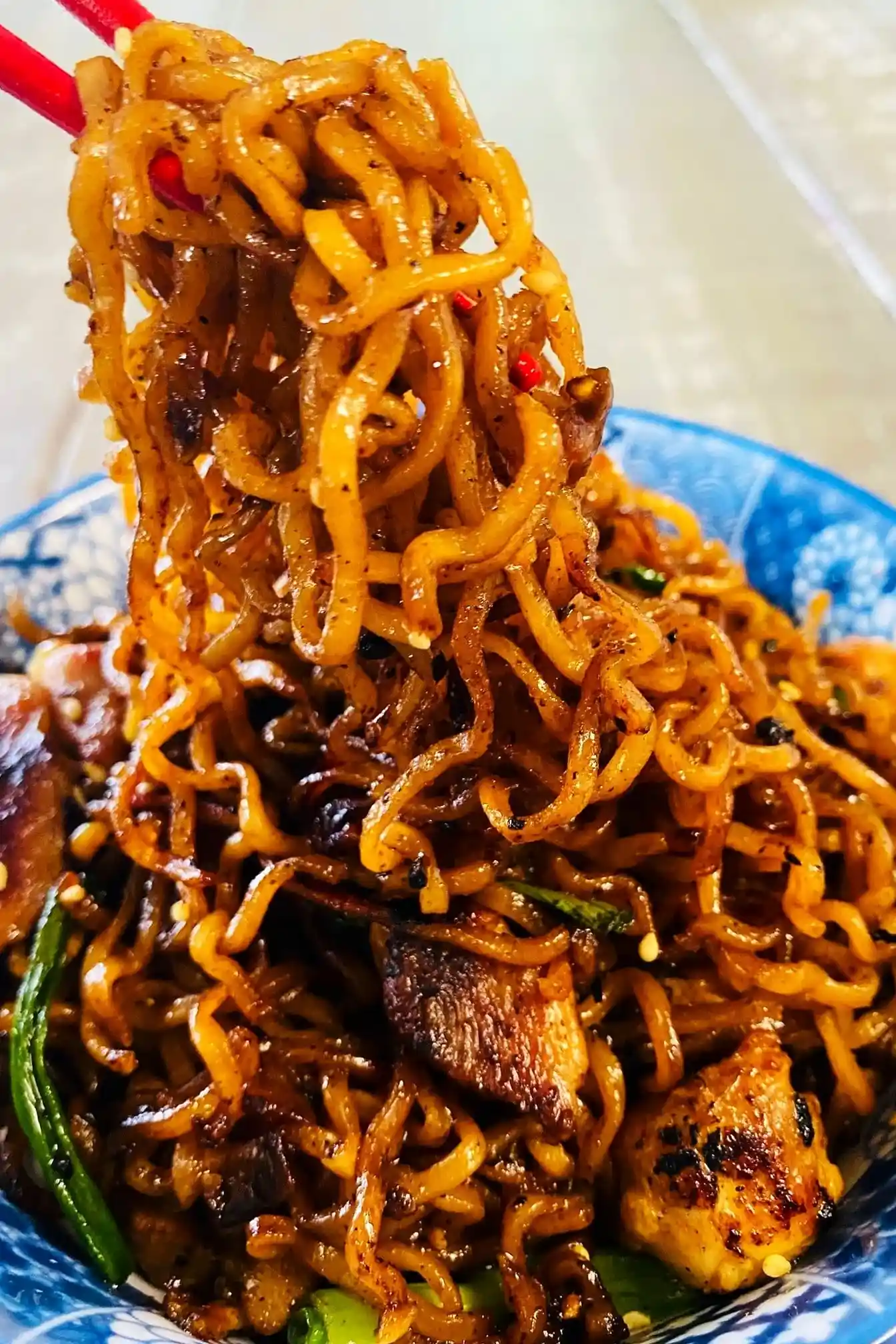
This quick stir fry uses ramen noodles and a savory BBQ sauce for a fast, budget-friendly dinner. It combines tender chicken with slightly crisp noodles for a satisfying texture and bold flavor.
List of ingredients
- 3 packages Ramen noodles – discard the flavor packets.
- 3 tablespoons olive oil – or any cooking oil of your choice.
- 1 pound boneless, skinless chicken thighs – optional, cut into bite-sized pieces.
- 1 onion – diced.
- Kosher salt and pepper – to taste.
- 6 to 7 cloves garlic – minced.
- 1/3 cup Japanese BBQ sauce – Bachan’s brand or hoisin sauce.
- 2 tablespoons soy sauce – for added saltiness and depth.
- 1 to 2 tablespoons sriracha – adjust based on preferred heat level.
- 4 tablespoons butter – adds richness and helps with browning.
- 1 bunch green onions – sliced.
- Optional garnishes: sesame seeds, extra Japanese BBQ sauce, and yum yum sauce.
step-by-step instructions
- Prepare the noodles: Boil the ramen noodles according to the package directions. Drain them and rinse very well with cold water to stop the cooking process and prevent them from becoming mushy.
- Sear the protein and aromatics: Set a large skillet or wok over medium-high heat. Once the pan is hot, add the olive oil, chicken (if using), diced onion, kosher salt, and pepper. Cook for 3 to 4 minutes until the chicken is browned and onions are soft.
- Combine sauce and noodles: Stir in the minced garlic, cooked noodles, Japanese BBQ sauce (or hoisin), soy sauce, sriracha, and butter.
- Fry for texture: Cook the mixture for 5 to 7 minutes. Stir frequently and press the noodles down into the pan with a spatula to create slightly crisp edges.
- Final touch: Add the sliced green onions and cook for an additional 1 to 2 minutes until just wilted.
- Serve: Plate the noodles and garnish with sesame seeds, additional BBQ sauce, or yum yum sauce as desired.
Optimizing Your Stir Fry Technique
Rinsing Noodles with Cold Water
Rinsing the noodles immediately after boiling removes excess surface starch. This prevents the noodles from sticking together in a clump. It also stops the carry-over cooking, ensuring the noodles maintain a firm bite during the stir-fry process.
Creating the Crispy Noodle Texture
To achieve the desired crispiness, avoid stirring the noodles constantly. Let them sit undisturbed against the hot surface of the pan for 30 to 60 seconds at a time. Pressing them down with a spatula increases the surface area in contact with the heat, promoting browning.
Managing High Heat in a Wok
Use a high-smoke point oil like olive oil or canola oil to prevent the oil from burning. If the pan begins to smoke excessively, lower the heat slightly. Keep the ingredients moving once the sauce is added to prevent the sugars in the BBQ sauce from scorching.
Preparing Garlic to Prevent Burning
Add minced garlic after the chicken and onions have already cooked for a few minutes. Garlic burns much faster than onions and can become bitter. Adding it shortly before the noodles ensures it releases its aroma without overcooking.
Protein and Vegetable Substitutions
Using Chicken Breast Instead of Thighs
Chicken breasts can be used as a leaner alternative to thighs. Since breast meat dries out faster, reduce the initial searing time by one minute. Cut the pieces into smaller, uniform cubes to ensure they cook through quickly without overcooking.
Integrating Firm Tofu for a Vegetarian Version
Replace the chicken with extra-firm tofu for a plant-based meal. Press the tofu for 20 minutes to remove excess moisture, then cut into cubes. Sear the tofu in olive oil until all sides are golden brown before adding the onions and garlic.
Adding Mixed Bell Peppers and Carrots
For extra nutrients, add sliced carrots and bell peppers during the onion sauté phase. Carrots should be sliced thinly or julienned so they cook at the same rate as the onions. Peppers add a sweetness that complements the savory BBQ sauce.
Substituting Onions with Shallots
Shallots provide a more delicate, sweeter flavor than standard yellow or white onions. Mince them finely and sauté them in the oil until translucent. This creates a more refined base for the sauce.
Using Shrimp as a Protein Option
Shrimp can be substituted for chicken for a seafood twist. Add the shrimp at the very end of the protein searing stage, cooking for only 2 minutes per side. Overcooking shrimp will make them rubbery, so move quickly to the sauce stage.
Customizing the Sauce Flavor
Substituting Hoisin Sauce for Japanese BBQ Sauce
If Japanese BBQ sauce is unavailable, hoisin sauce is an excellent alternative. Hoisin is thicker and slightly sweeter, which may require a teaspoon of water to thin it out. The flavor profile remains similar, offering a rich, umami-heavy glaze.
Adjusting the Spice Level with Sriracha
Use one tablespoon of sriracha for a mild kick that doesn’t overpower the other flavors. For those who prefer significant heat, increase the amount to two tablespoons or add a pinch of crushed red pepper flakes. You can also swap sriracha for gochujang for a deeper, fermented spice.
Using Low-Sodium Soy Sauce
To reduce the overall salt content, opt for low-sodium soy sauce. Since the BBQ sauce and ramen noodles may already contain salt, this helps balance the dish. Taste the noodles before adding extra salt at the end.
Swapping Butter for Plant-Based Alternatives
Replace butter with a plant-based butter substitute or an extra tablespoon of olive oil. Butter adds a creamy richness and helps the sauce emulsify, but oil provides a cleaner taste. Margarine also works well as a direct substitute for the butter’s fat content.
Serving and Presentation Ideas
Garnishing with Toasted Sesame Seeds
Toasting sesame seeds in a dry pan for one minute enhances their nutty flavor. Sprinkle them over the finished dish just before serving. This adds a professional look and a slight crunch to every bite.
Adding a Soft-Boiled Egg
A jammy, soft-boiled egg provides a creamy contrast to the savory noodles. Boil an egg for 6.5 minutes, then shock it in an ice bath before peeling. Slice it in half and place it on top of the stir fry.
Pairing with Steamed Bok Choy
Serve the ramen alongside lightly steamed or sautéed bok choy. The fresh, bitter notes of the greens cut through the richness of the butter and BBQ sauce. Simply steam the bok choy for 3 minutes with a splash of water.
Drizzling with Yum Yum Sauce
Yum yum sauce adds a creamy, tangy element to the dish. Drizzle it in a zigzag pattern across the top of the noodles. The mayonnaise-based sauce balances the saltiness of the soy and BBQ sauces.
Storage and Reheating Instructions
Refrigerating Leftovers
Place the cooked noodles in an airtight container and let them cool slightly before sealing. Store them in the refrigerator for up to three to four days. Ensure the container is sealed tightly to prevent the noodles from absorbing fridge odors.
Reheating in a Skillet for Best Texture
The best way to reheat these noodles is in a skillet over medium heat. Add a teaspoon of water or oil to loosen the noodles. Stir-fry for 3 to 5 minutes until heated through to regain some of the original crispiness.
Microwave Reheating Tips
If using a microwave, place the noodles in a microwave-safe bowl and sprinkle with a tablespoon of water. Cover the bowl with a damp paper towel to trap steam. Heat in 30-second intervals, stirring in between to ensure even heating.
Avoiding Freezer Burn
While stir fry can be frozen, the noodles may lose their texture and become soft upon thawing. If you choose to freeze them, use a vacuum-seal bag to remove as much air as possible. Thaw completely in the fridge before reheating in a pan.
Common Cooking Troubleshooting
Preventing Mushy Noodles
Mushy noodles usually result from overboiling or skipping the cold water rinse. Stick strictly to the package timer and rinse until the water runs clear and cold. Avoid over-stirring the noodles once they are in the pan with the sauce.
Fixing Overly Salty Sauce
If the dish tastes too salty, add a teaspoon of brown sugar or a squeeze of fresh lime juice. The sweetness or acidity helps neutralize the excess sodium from the soy and BBQ sauces. Adding a few more steamed vegetables can also dilute the saltiness.
Managing Burnt Garlic
If the garlic burns and turns dark brown, it is best to wipe the pan clean and start the aromatics over. Burnt garlic creates a permanent bitter taste that cannot be masked by sauce. Always keep the heat medium-high rather than maximum when adding minced garlic.
Dealing with Clumping Noodles
If the noodles clump together after rinsing, toss them with a teaspoon of neutral oil before adding them to the skillet. This creates a barrier that prevents them from sticking. Use a pair of tongs to gently pull the noodles apart during the frying process.
Frequently Asked Questions
Can I use whole wheat ramen noodles?
Yes, you can use whole wheat or brown rice ramen noodles. These versions have a nuttier flavor and more fiber, though they may require a slightly longer boiling time. Ensure they are rinsed thoroughly as they can be starchier than white noodles.
Is this dish naturally spicy?
The spice level depends entirely on the amount of sriracha you add. With one tablespoon, it is mildly spicy; with two, it becomes moderate. For a non-spicy version, you can omit the sriracha entirely without affecting the core flavor.
Can I use a different oil for frying?
Any neutral cooking oil such as canola, vegetable, or grapeseed oil works perfectly. Avocado oil is also a great choice due to its high smoke point. Avoid using extra virgin olive oil if you are cooking at extremely high temperatures.
How long do the cooked noodles stay fresh?
When stored in an airtight container in the refrigerator, the noodles stay fresh for 3 to 4 days. After this period, the texture may degrade, and the flavor of the aromatics may fade. Always reheat them thoroughly before consuming.
Print
Stir Fry Japanese BBQ Ramen Noodles
- Total Time: 22 minutes
- Yield: 6 servings 1x
- Diet: General
Description
Stir Fry Japanese BBQ Ramen Noodles is an easy and cheap Asian style recipe, add chicken or make it a vegetarian dish!
Ingredients
- 3 packages Ramen noodles
- 3 tablespoons olive oil
- 1 pound boneless, skinless chicken thighs
- 1 onion, diced
- kosher salt
- pepper
- 6 to 7 cloves garlic, minced
- 1/3 cup Japanese BBQ sauce
- 2 tablespoons soy sauce
- 1 to 2 tablespoons sriracha
- 4 tablespoons butter
- 1 bunch green onions
- sesame seeds (optional)
- yum yum sauce (optional)
Instructions
- Boil: Boil the noodles according to package directions (do not use flavor packet), drain and rinse very well with cold water so they don’t overcook.
- Sauté: Set a large skillet or wok over medium high heat. Once hot add the olive oil along with the chicken (if using), onion, kosher salt, and pepper. Cook 3 to 4 minutes.
- Combine: Add the garlic and the cooked noodles, Japanese BBQ sauce (or hoisin sauce), soy sauce, sriracha, and butter.
- Stir Fry: Cook for 5 to 7 minutes, stirring and pressing the noodles so they become slightly crisp. Add the green onions and cook another 1 to 2 minutes.
- Serve: Serve with sesame seeds and add more Japanese BBQ sauce and/or yum yum sauce if desired.
Notes
You can easily substitute hoisin sauce if you can’t find Japanese BBQ sauce.
- Prep Time: 10 minutes
- Cook Time: 12 minutes
- Category: Main Course
- Method: Stir Fry
- Cuisine: Japanese, American
Nutrition
- Serving Size: 1 serving
- Calories: 545 kcal
- Sugar: 12 g
- Sodium: 1150 mg
- Fat: 22 g
- Saturated Fat: 10 g
- Unsaturated Fat: 12 g
- Trans Fat: 0 g
- Carbohydrates: 58 g
- Fiber: 4 g
- Protein: 31 g
- Cholesterol: 85 mg
Keywords: BBQ, Chicken, Easy, Japanese, Noodles, ramen, Stir Fry, Vegetarian