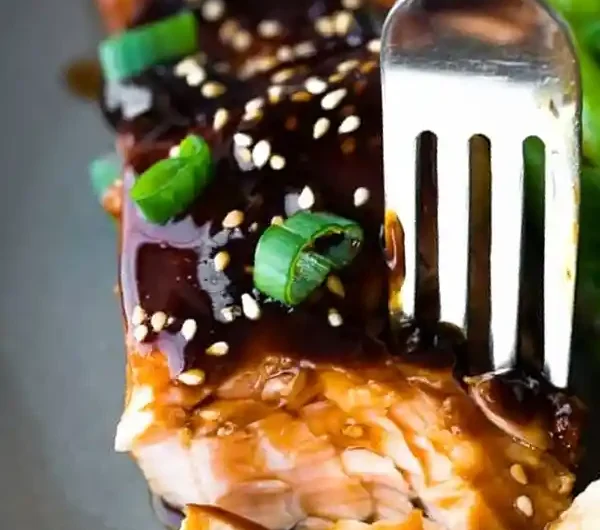
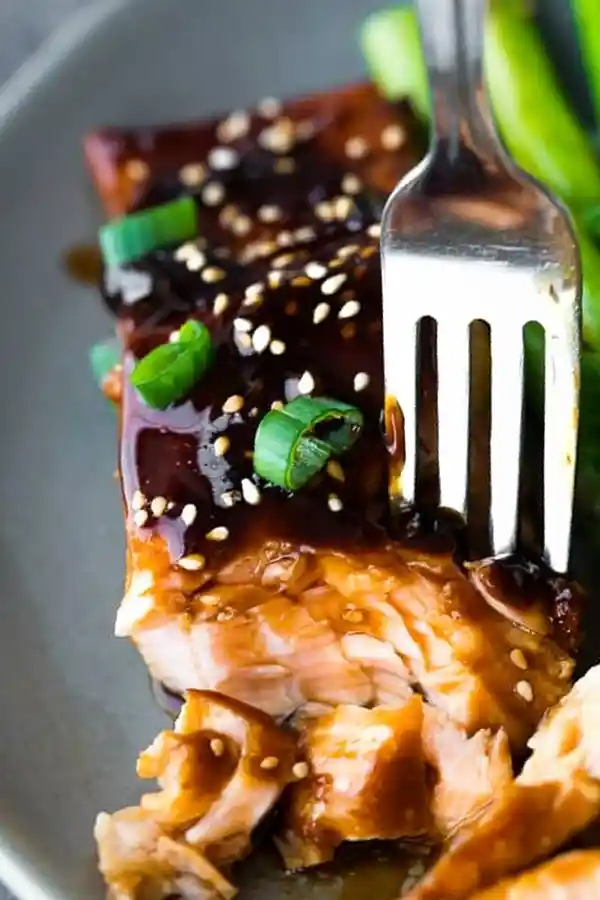
This simple teriyaki salmon glaze provides a sweet, sticky finish that makes weeknight dinners feel special without the need for long marination times. By baking the fillets directly in the sauce and adding a final thickening agent, you achieve a restaurant-quality glaze that clings perfectly to every bite of fish. This recipe is designed for maximum efficiency, taking you from prep to table in less than twenty-five minutes.
List of ingredients
- 20 oz salmon (cut into 4 even-sized fillets)
- 1/4 cup soy sauce
- 3 tablespoons honey
- 3 tablespoons water
- 2 tablespoons rice vinegar with a pinch of sugar
- 1 clove garlic (minced)
- 1 teaspoon fresh ginger (minced)
- 2 tablespoons water
- 1 tablespoon cornstarch
step-by-step instructions
- Step: In a 1 pint jar, combine the soy sauce, honey, water, rice vinegar mixture, garlic and ginger. Shake it up, and set aside.
- Step: Arrange the salmon fillets in a 9 x 9 inch baking dish. Pour the teriyaki sauce over top. Bake at 425°F for 12 minutes, or until the salmon reaches 110°F.
- Step: Mix together cornstarch with 2 tablespoons of water. Pour it evenly over the teriyaki sauce in the baking dish, then use tongs to gently stir up the sauce.
- Step: Return to the oven for 2-3 more minutes, until sauce is bubbly and thickened, and salmon reaches 125°F.
- Step: Allow to rest for 3-4 more minutes before serving.
Practical cooking insights
Achieving the perfect fillet texture
To ensure your salmon stays succulent, focus on the thickness of your fillets rather than just the weight. If your fillets are approximately two to three inches thick, the provided cooking times will yield a moist result. If you accidentally purchase thinner tail-end portions, consider pan-searing them over medium heat instead of baking, as thin pieces can overcook very quickly in a hot oven.
The importance of the resting phase
Never skip the three to four minutes of resting time after the salmon leaves the oven. This resting period allows the proteins to firm up slightly and enables the cornstarch-thickened glaze to cling more effectively to the surface of the fish. If you slice into the salmon immediately, the glaze may slide off, and the interior may lose more moisture than desired.
Ensuring consistent internal temperatures
Since ovens can vary slightly in calibration, using an instant-read thermometer is the most reliable way to guarantee success. You are looking for a target temperature of 125°F for a medium-rare finish, which balances tenderness with a pleasant flake. If your preference leans toward a fully opaque, firm texture, you can safely continue baking until the internal temperature reaches 145°F.
Substitutions and adjustments
Sweetener alternatives
If you prefer not to use honey, maple syrup serves as an excellent one-to-one substitute, providing a similar viscosity and depth of flavor. Brown sugar can also be used, though you should ensure it is thoroughly whisked into the water and soy sauce to avoid a gritty texture. These alternatives have been tested and maintain the structural integrity of the glaze during the high-heat baking process.
Gluten-free considerations
To make this dish suitable for those avoiding gluten, simply replace the standard soy sauce with high-quality tamari or coconut aminos. Always check the labels of your rice vinegar and cornstarch as well, as some manufacturers may process these items in facilities that handle wheat products. These small swaps ensure everyone at the table can enjoy the same savory experience without compromise.
Handling the glaze intensity
The flavor profile of this teriyaki sauce is designed to be punchy and aromatic. If you prefer a more subtle flavor, you can reduce the amount of fresh garlic to half a clove or decrease the ginger slightly. Conversely, if you enjoy more heat, you can incorporate a small pinch of red pepper flakes into the initial jar mixture before shaking.
Serving and pairing ideas
Choosing the right bed of grains
Because the sauce is rich and savory, it pairs beautifully with neutral grains that can soak up the excess glaze. Steamed jasmine rice or short-grain brown rice are classic choices. For a lower-carb alternative, riced cauliflower works remarkably well, as the light, airy texture of the vegetable contrasts nicely with the sticky density of the teriyaki reduction.
Incorporating fresh vegetable sides
To round out the meal, serve the salmon alongside steamed broccolini, roasted bok choy, or a quick sauté of shaved Brussels sprouts. The slight bitterness in these green vegetables cuts through the sweetness of the honey-based glaze. A simple kale salad with a light vinaigrette also provides a refreshing crunch that cleanses the palate between bites of rich, glazed salmon.
Common kitchen queries
How do I handle leftover sauce?
If you find yourself with extra sauce after removing the salmon, you can spoon it over your side dishes immediately. Because the sauce contains fresh aromatics like garlic and ginger, it is best enjoyed immediately rather than stored as a leftover. If you must store it, keep it in an airtight container in the refrigerator for no more than 24 hours.
Can I prepare the glaze in advance?
Absolutely, preparing the base sauce is a fantastic way to streamline your dinner routine. You can combine the soy sauce, honey, water, rice vinegar, garlic, and ginger in a glass jar and store it in the refrigerator for up to two weeks. When you are ready to cook, simply give it a good shake to re-emulsify the ingredients before pouring it over the fresh salmon fillets.
Is there a way to make this faster?
The beauty of this method is that it eliminates the need for marinating, which is usually the longest part of a teriyaki recipe. By baking the fish directly in the liquid and applying the thickener at the very end, you are already using the most efficient process possible. Keeping your salmon portions relatively uniform is the single most important factor in keeping this recipe under that twenty-five-minute mark.
What should I do if the sauce is too thin?
If you find that your sauce has not reached the desired thickness after the final baking stage, it usually means the oven temperature was slightly lower than required or the cornstarch slurry was not fully incorporated. To fix this, you can remove the salmon to a serving platter and return the dish with the sauce to the oven for an additional two minutes, or briefly whisk it over a stovetop burner until it reaches a syrupy consistency.
Print
Teriyaki Salmon Glaze
- Total Time: 25 minutes
- Yield: 4 servings 1x
- Diet: Pescatarian
Description
This teriyaki salmon glaze is sweet, sticky, and so easy to prepare! No need to marinate means this recipe is ready in under 25 minutes.
Ingredients
- 20 oz salmon (cut into 4 even-sized fillets)
- 1/4 cup soy sauce
- 3 tablespoons honey
- 3 tablespoons water
- 2 tablespoons rice vinegar with a pinch of sugar
- 1 clove garlic (minced)
- 1 teaspoon fresh ginger (minced)
- 2 tablespoons water
- 1 tablespoon cornstarch
Instructions
- Step: In a 1 pint jar, combine the soy sauce, honey, water, rice vinegar mixture, garlic and ginger. Shake it up, and set aside.
- Step: Arrange the salmon fillets in a 9 x 9 inch baking dish. Pour the teriyaki sauce over top. Bake at 425°F for 12 minutes, or until the salmon reaches 110°F.
- Step: Mix together cornstarch with 2 tablespoons of water. Pour it evenly over the teriyaki sauce in the baking dish, then use tongs to gently stir up the sauce.
- Step: Return to the oven for 2-3 more minutes, until sauce is bubbly and thickened, and salmon reaches 125°F.
- Step: Allow to rest for 3-4 more minutes before serving.
Notes
Cook times are for 5 oz fillets that are 2-3 inches thick. For medium-well salmon, add the cornstarch when the salmon is 130°F, then cook to 145°F.
- Prep Time: 10 minutes
- Cook Time: 15 minutes
- Category: Dinner
- Method: Baking
- Cuisine: Japanese
Nutrition
- Serving Size: 5 oz salmon fillet
- Calories: 279 kcal
- Sugar: 15 g
- Sodium: 660 mg
- Fat: 9 g
- Saturated Fat: 1 g
- Unsaturated Fat: 8 g
- Trans Fat: 0 g
- Carbohydrates: 19 g
- Fiber: 0 g
- Protein: 29 g
- Cholesterol: 77 mg
Keywords: salmon, teriyaki, dinner, fish, glazed salmon