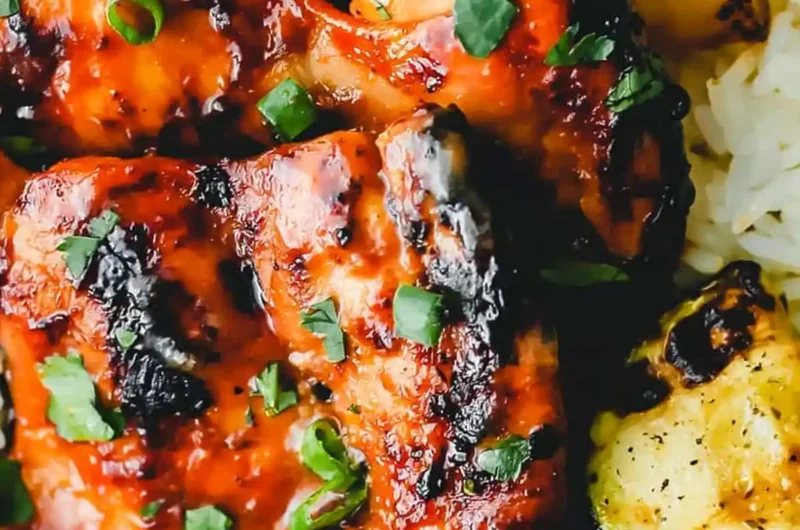
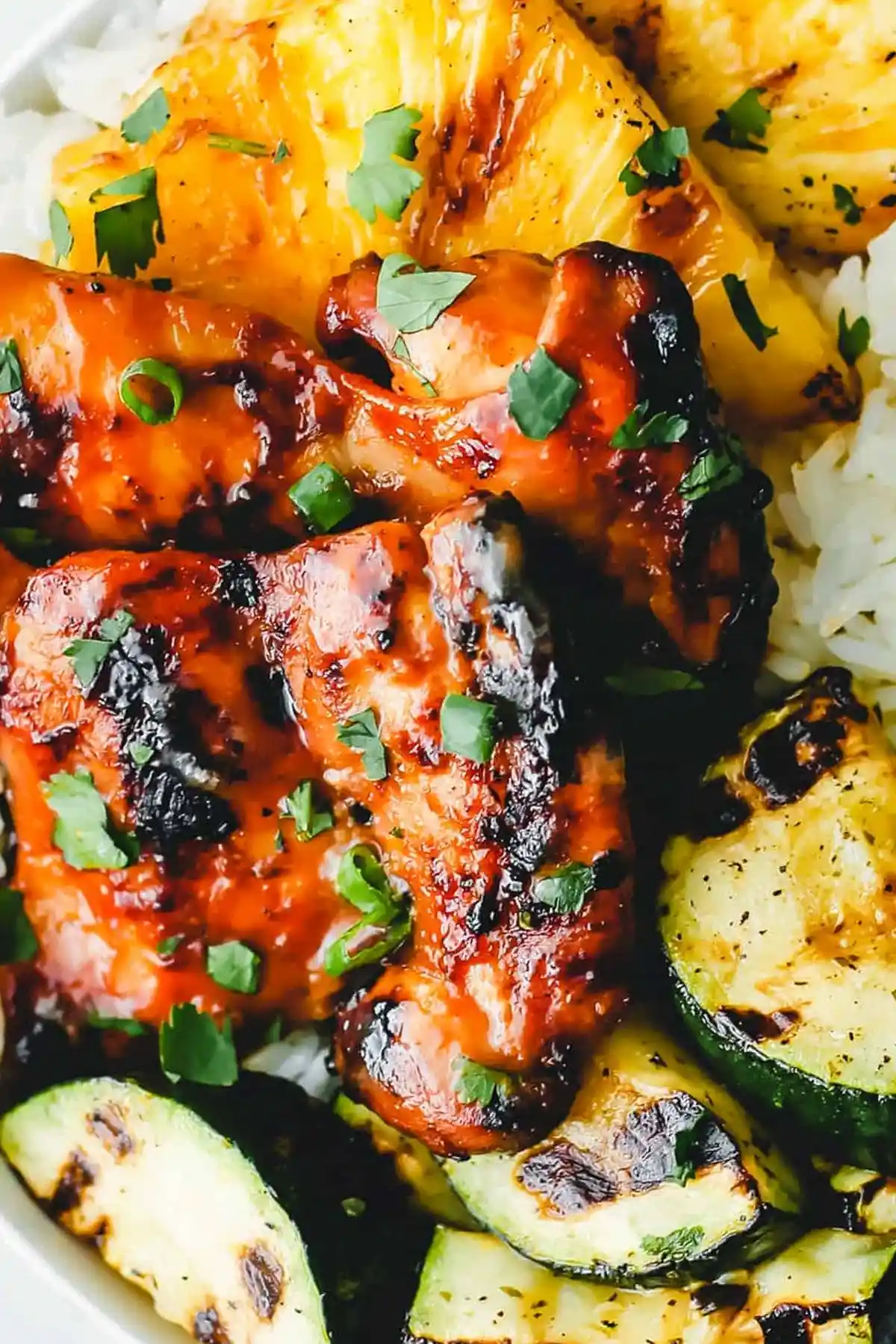
This tropical grilled chicken features a sweet and tangy glaze inspired by Hawaiian flavors. It is an ideal dish for outdoor grilling during the summer months to achieve a charred, caramelized finish.
List of ingredients
- 4 pounds boneless, skinless chicken thighs – serves as the primary protein for juicy results.
- ½ cup brown sugar – adds rich sweetness and aids in caramelization on the grill.
- ½ cup ketchup – provides a thick consistency and a tangy base.
- ½ cup soy sauce – brings a salty, umami depth to the marinade.
- ⅓ cup rice vinegar – balances the sugar with a mild acidic brightness.
- 1 small knob fresh ginger, minced – adds a zesty, aromatic kick.
- 3 cloves garlic, minced – enhances the overall savory profile of the sauce.
- Chopped fresh cilantro – optional garnish for a fresh herbal finish.
- Chopped green onions – optional garnish for a mild onion flavor.
- Pineapple slices – optional side to complement the tropical theme.
step-by-step instructions
- Prepare the Marinade: Whisk together the brown sugar, ketchup, soy sauce, rice vinegar, minced ginger, and minced garlic in a large bowl or a resealable plastic bag.
- Reserve Basting Sauce: Carefully measure out and set aside ½ cup of the marinade before adding the meat to avoid cross-contamination.
- Marinate the Meat: Place the chicken thighs into the remaining marinade and ensure every piece is fully submerged and coated.
- Chill: Refrigerate the chicken for at least 2 hours, though leaving it overnight allows the flavors to penetrate more deeply.
- Heat the Grill: Preheat your grill to medium heat, ideally between 350-375°F.
- Prepare Grates: Rub a small amount of oil onto the preheated grill racks to prevent the chicken from sticking.
- Grill and Flip: Place the chicken on the grill and cook for 20 to 25 minutes total.
- Baste Regularly: Flip the chicken every 5 minutes and brush on the reserved marinade to create a thick, caramelized glaze.
- Check Temperature: Remove the chicken when the thickest part reaches an internal temperature of 165°F.
- Final Touch: Garnish with chopped cilantro and green onions, and serve with grilled pineapple slices if desired.
Grill Temperature and Heat Management
Maintaining Medium Heat Settings
Keeping the grill between 350°F and 375°F is crucial for this recipe. This moderate temperature ensures the chicken cooks through without burning the sugar-heavy glaze too quickly. If the heat is too high, the exterior will char before the interior is safe to eat.
Preventing Sugar Flare-ups
Because the marinade contains a high concentration of brown sugar and ketchup, it can cause flare-ups on charcoal or gas grills. To manage this, avoid letting excess marinade drip directly onto the heat source. If flames become too aggressive, move the chicken to a cooler part of the grill temporarily.
Ingredient Substitutions and Modifications
Using Gluten-Free Soy Sauce
To make this recipe suitable for those with gluten sensitivities, replace standard soy sauce with tamari or coconut aminos. These alternatives provide the same salty, umami profile without the wheat content. The ratios remain the same as the original recipe.
Substituting Honey for Brown Sugar
If you do not have brown sugar, honey is an excellent alternative for sweetness. Use an equal amount of honey, though be aware that honey caramelizes faster than brown sugar. You may need to monitor the grill more closely to prevent the glaze from burning.
Alternative Vinegar Options
Rice vinegar is preferred for its mildness, but apple cider vinegar can be used as a substitute. Apple cider vinegar has a slightly stronger punch, which can add a different dimension to the tanginess. Use the same ⅓ cup measurement for a consistent balance.
Using Chicken Breasts Instead of Thighs
While thighs are more forgiving, you can use boneless, skinless chicken breasts for a leaner option. Reduce the grilling time to approximately 15-20 minutes to prevent the meat from drying out. Ensure they reach an internal temperature of 165°F and remove them immediately.
Alternative Cooking Methods
Oven Baking Instructions
Preheat your oven to 350°F. For the best results, sear the chicken in a skillet for 2-3 minutes per side before transferring it to a covered baking dish. Bake for 30 minutes, then remove the cover, brush with the reserved sauce, and bake for another 5-10 minutes.
Indoor Grill Pan Technique
If you do not have an outdoor grill, a cast-iron grill pan works well. Heat the pan over medium-high heat with a thin layer of oil. Follow the same flipping and basting sequence, though you may need to adjust the heat downward if the sauce begins to stick.
Pro Tips for Maximum Tenderness
The Importance of Overnight Marinating
While a 2-hour soak provides basic flavor, marinating the chicken overnight is highly recommended. This extended time allows the acids in the vinegar and the enzymes in the ginger to break down the muscle fibers. The result is a significantly more tender and juicy piece of meat.
The Carry-over Cooking Method
For the most tender thighs, remove the meat from the grill exactly at 165°F. Tent the chicken loosely with aluminum foil and let it rest for 5-10 minutes. This allows the temperature to rise naturally to 170-175°F, which is the ideal range for chicken thigh tenderness.
Proper Internal Temperature for Thighs
Unlike chicken breasts, which can become dry if overcooked, thighs benefit from a slightly higher internal temperature. Cooking thighs to 175°F helps render the fat and connective tissue. This process makes the meat more succulent and easier to chew.
Serving Suggestions
Authentic Hawaiian Sides
Pair this chicken with a creamy macaroni salad and steamed white rice for a traditional plate lunch experience. The neutrality of the rice helps balance the intensity of the sweet and tangy glaze. A side of coleslaw also adds a refreshing crunch.
Fresh Salad Pairings
A crisp garden salad with a lime-based vinaigrette complements the tropical flavors. Consider adding sliced cucumbers, radishes, and mixed greens. The acidity of a fresh salad cuts through the richness of the caramelized chicken.
Grain-Based Accompaniments
Quinoa or coconut rice are excellent alternatives to standard white rice. Coconut rice, specifically, enhances the tropical theme by adding a creamy, nutty sweetness. This pairing works exceptionally well with the grilled pineapple slices.
Storage and Preservation
Refrigeration Guidelines
Store any leftover Huli Huli chicken in an airtight container in the refrigerator. It will remain fresh and safe to eat for up to 3 days. Ensure the container is completely sealed to prevent the chicken from absorbing other fridge odors.
Freezing Instructions
Cooked Huli Huli chicken can be frozen for up to 3 months. Wrap the chicken tightly in freezer-safe foil or place it in a heavy-duty freezer bag. Squeeze out as much air as possible to prevent freezer burn on the meat.
Best Thawing Methods
To thaw frozen chicken, move it from the freezer to the refrigerator 24 hours before you plan to eat it. Avoid thawing at room temperature to keep the meat within safe temperature zones. This slow thaw preserves the texture of the chicken.
Reheating for Best Quality
Microwave Reheating Tips
Place the chicken in a microwave-safe dish and add a teaspoon of water or extra sauce to maintain moisture. Heat in 30-second increments, stirring or flipping the meat between intervals. This prevents the edges from becoming rubbery.
Oven Reheating for Texture
For a result closer to the original grill texture, reheat the chicken in a 350°F oven. Place the pieces on a baking sheet and cover them with foil to trap steam. Heat for 10-15 minutes until the internal temperature is warmed through.
Troubleshooting Common Issues
Managing Burnt Sauce
If the sauce begins to burn or turn black too quickly, your grill is likely too hot. Move the meat to a zone with no direct heat and lower the temperature. You can also brush on a small amount of oil to create a barrier between the sugar and the flame.
Handling Undercooked Centers
If the outside is perfectly charred but the center remains raw, you are cooking at too high a temperature. Lower the heat and increase the cooking time. Using a meat thermometer is the only way to ensure the center has reached the safe 165°F threshold.
Reducing Excess Stickiness
If the glaze becomes too sticky or tacky, you can thin it slightly with a teaspoon of water or rice vinegar. This allows the sauce to spread more evenly across the chicken. Basting more frequently with a thinner sauce creates a smoother finish.
Frequently Asked Questions
Can I use bone-in chicken?
Yes, bone-in thighs or drumsticks can be used. However, they will require a longer cooking time, often up to 30 minutes, to ensure the meat near the bone is fully cooked.
How long can the marinade be kept?
The marinade, before it touches raw chicken, can be stored in the fridge for about a week. Once raw meat has been added, the remaining marinade must be discarded unless it is boiled thoroughly.
Why do I need to reserve sauce?
Reserving sauce is essential for food safety. The marinade used to soak raw chicken contains bacteria that cannot be safely used as a finishing sauce unless it is heated to a high temperature.
Print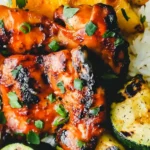
Tropical Grilled Huli Huli Chicken
- Total Time: 2 hours 30 minutes
- Yield: 4 servings 1x
- Diet: General
Description
This easy huli huli chicken recipe is a summertime staple! Marinated chicken is grilled to perfection using the “huli huli” method, and coated in a Hawaiian BBQ style sauce.
Ingredients
- 4 pounds boneless, skinless chicken thighs
- ½ cup brown sugar
- ½ cup ketchup
- ½ cup soy sauce
- ⅓ cup rice vinegar
- 1 small knob fresh ginger, minced
- 3 cloves garlic, minced
- chopped fresh cilantro (optional, for serving)
- chopped green onions (optional, for serving)
- pineapple slices (optional, for serving)
Instructions
- Marinate: Whisk together the brown sugar, ketchup, soy sauce, rice vinegar, ginger, and garlic together in a resealable plastic bag or large dish.
- Reserve: Reserve ½ cup of the marinade to use as a basting sauce.
- Coat: Place the chicken in the marinade. Make sure it is fully submerged/coated.
- Chill: Marinate in the fridge for at least 2 hours, or overnight for the best flavor.
- Prep Grill: Oil the racks of the grill to prevent sticking. Heat the grill to medium (350-375°F).
- Grill: Place the chicken on the grill, cooking for 20-25 minutes total.
- Baste: Every 5 minutes, flip the chicken and baste with the reserved marinade.
- Finish: The chicken is finished once the internal temperature of the thickest part reaches 165°F.
- Serve: Finish with a sprinkling of chopped cilantro and green onions. Serve with grilled pineapple if desired.
Notes
Marinate chicken overnight for ultra-tender meat. For a gluten-free version, use GF soy sauce. For maximum tenderness in thighs, cook to an internal temperature of 175°F.
- Prep Time: 5 minutes
- Cook Time: 25 minutes
- Category: Main Course
- Method: Grilling
- Cuisine: Hawaiian
Nutrition
- Serving Size: 1 serving
- Calories: 627 kcal
- Sugar: 34 g
- Sodium: 2053 mg
- Fat: 33 g
- Saturated Fat: 9 g
- Unsaturated Fat: 24 g
- Trans Fat: 0 g
- Carbohydrates: 37 g
- Fiber: 1 g
- Protein: 44 g
- Cholesterol: 163 mg
Keywords: huli huli chicken, Hawaiian BBQ, grilled chicken thighs, tropical dinner