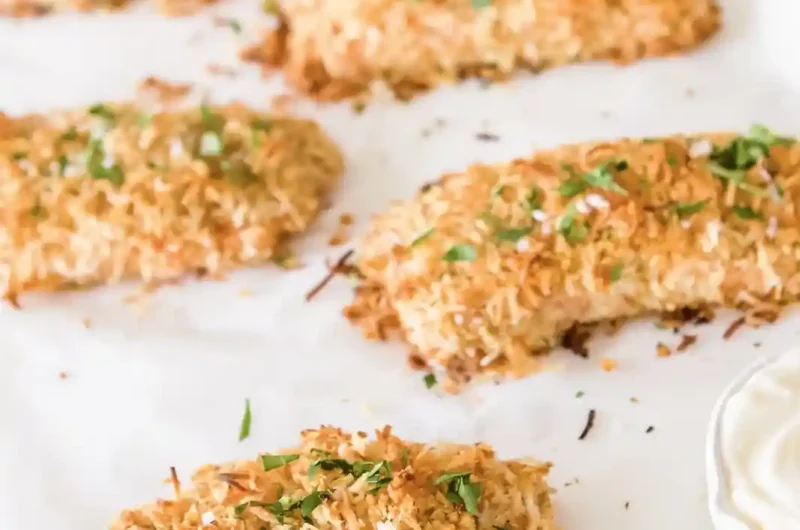
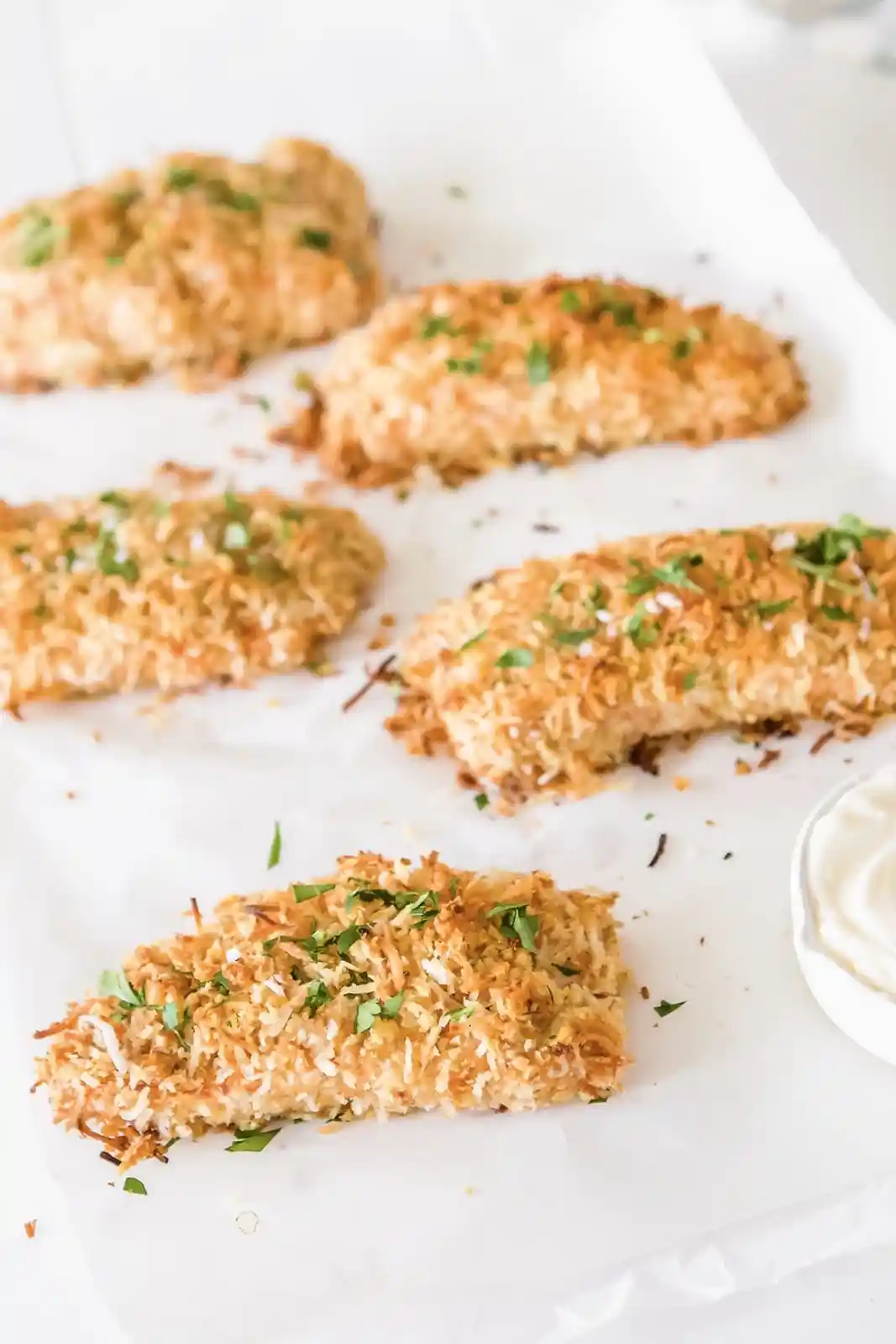
This baked salmon features a crunchy, tropical crust made from toasted coconut and panko breadcrumbs. It is a fast and efficient dinner option that balances the richness of the fish with a sweet and savory exterior.
List of ingredients
- 4-6 fillets salmon, skinned and de-boned (1.5 lbs) – ensure they are patted dry for better adhesion.
- 2 tablespoons olive oil – used for toasting the breadcrumbs and coconut.
- 1 cup panko – provides a light, airy crunch.
- 1 cup shredded unsweetened coconut – adds a distinct tropical flavor.
- 1/2 cup mayonnaise – serves as the primary binder for the crust.
- 2 tablespoons Dijon mustard – adds a sharp, tangy contrast.
- salt and pepper to taste – for basic seasoning of the fish.
- parsley to garnish (optional) – adds a pop of color and freshness.
step-by-step instructions
- Prep the Oven: Preheat your oven to 425 F and line a baking sheet with parchment paper to prevent sticking and simplify cleanup.
- Toast the Coating: Heat olive oil in a small frying pan over medium heat. Once the oil is hot, add the panko and stir continuously until golden brown, then transfer to a shallow dish. In the same pan, toast the shredded coconut, monitoring it closely to avoid burning, then mix it into the panko.
- Prepare the Binder: In a separate shallow bowl, combine the mayonnaise and Dijon mustard. Stir the two together until the mixture is smooth and well combined.
- Bread the Salmon: Take a piece of salmon and coat it with a thin, even layer of the mayonnaise mixture. Transfer the fillet to the panko and coconut mixture, pressing gently to ensure the coating adheres firmly. Place the fillet on the prepared baking sheet and repeat for the remaining pieces.
- Bake: Bake for 10-15 minutes, or until the crust is golden brown and the salmon is cooked through. The exact time will depend on the thickness of your salmon fillets.
Maximizing Crust Quality
Achieving the Perfect Panko Toast
When toasting panko, maintain a medium heat and stir constantly. The breadcrumbs can go from golden to burnt in seconds due to their small size. Remove them from the heat the moment they reach a light golden hue.
Preventing Coconut from Burning
Shredded coconut has a high natural oil content, making it prone to scorching. Keep the heat moderate and stir rapidly. The coconut is done as soon as it smells fragrant and turns a pale gold color.
Ensuring Even Binder Application
Use a brush or a spoon to apply a thin, consistent layer of the mayonnaise and mustard mixture. If the layer is too thick, the crust may slide off during baking. If it is too thin, the panko and coconut will not adhere properly.
Pressing the Coating
After dipping the salmon into the coconut mixture, press the crumbs firmly into the fish. This ensures that the crust stays intact when you move the fillet to the baking sheet. It also creates a denser, crunchier layer.
Cooking Salmon for Ideal Texture
Selecting the Right Fillet Thickness
Consistency in fillet thickness ensures that all pieces cook evenly. If you have fillets of varying sizes, you may need to remove the thinner pieces from the oven a few minutes early. Aim for fillets approximately one inch thick for best results.
Monitoring Internal Temperature
For a medium finish, the internal temperature of the salmon should reach 125-130 F. If you prefer it fully cooked, aim for 145 F. Use an instant-read thermometer in the thickest part of the fillet to be precise.
Avoiding Overcooking
Salmon can dry out quickly if left in the oven too long. Check the fish at the 10-minute mark. The fish is done when it flakes easily with a fork and the center is no longer translucent.
Using Parchment Paper
Parchment paper is essential for this recipe because the coconut and panko can stick to the pan. It also prevents the bottom of the salmon from scorching. Avoid using wax paper, as it can melt at 425 F.
Alternative Binders and Coatings
Greek Yogurt Substitution
If you prefer not to use mayonnaise, plain Greek yogurt is a suitable replacement. It provides a similar creamy texture and binding ability. The yogurt adds a slightly more tart flavor to the fish.
Gluten-Free Coating Options
To make this recipe gluten-free, substitute the panko with gluten-free breadcrumbs or crushed pork-free crackers. Ensure the coconut used is certified gluten-free if necessary. The texture remains very similar to the original version.
Low-Carb Crust Alternatives
For a lower-carb option, replace the panko with almond flour or finely crushed walnuts. This changes the crunch profile but maintains the nutty flavor of the coconut. You may need to adjust the baking time slightly as almond flour browns differently.
Using Different Mustards
While Dijon provides a classic tang, whole grain mustard can be used for added texture. Honey mustard can also be used if you prefer a sweeter binder to complement the coconut. Ensure the binder remains thick enough to hold the crumbs.
Suggested Side Dish Pairings
Tropical Rice Combinations
Serve the salmon with coconut cilantro lime rice to enhance the tropical theme. The acidity of the lime cuts through the richness of the salmon. Use basmati or jasmine rice for a light, fluffy texture.
Fresh Green Salad Pairings
A crisp garden salad with a lemon vinaigrette provides a refreshing contrast to the fried crust. Include mixed greens, sliced cucumbers, and cherry tomatoes. The acidity in the dressing cleanses the palate between bites.
Roasted Vegetable Accompaniments
Roasted asparagus or broccolini pairs well with the coconut flavor. Toss the vegetables in olive oil, salt, and pepper, and roast them on a separate sheet in the same oven. They typically require a similar cooking time as the salmon.
Quinoa and Mango Salad
A chilled quinoa salad mixed with diced mango, red onion, and parsley complements the sweetness of the coconut. The protein in the quinoa makes the meal more filling. Use a simple lime and olive oil dressing.
Complementary Sauce Options
Lemon Garlic Mayonnaise
Blend mayonnaise with a squeeze of fresh lemon juice and one minced garlic clove. This sauce adds a bright, zesty element to the dish. It works well as a dip or a drizzle over the top of the fillets.
Mango Chutney Blend
Mix equal parts mango chutney and mayonnaise for a sweet and savory sauce. This pairing highlights the tropical notes of the coconut crust. It is particularly effective if the salmon is served with plain white rice.
Fresh Mango Salsa
Create a salsa with diced mango, red bell pepper, red onion, and fresh cilantro. Add lime juice and a pinch of salt to balance the sweetness. Spoon the salsa directly over the baked salmon for a fresh, vibrant topping.
Modified Tartar Sauce
Use a standard tartar sauce but omit the dill to avoid clashing with the coconut. Add extra lemon juice or a touch of capers for a sharper taste. The creaminess of the tartar sauce pairs well with the flaky fish.
Storage and Reheating Guidelines
Refrigerator Storage
Store leftover salmon in an airtight container in the refrigerator for up to three days. Ensure the fish is completely cooled before sealing the lid to prevent steam from softening the crust. Keep it in the coldest part of the fridge.
Best Reheating Methods
To maintain the crunch of the crust, reheat the salmon in the oven or an air fryer at 350 F for 5-7 minutes. Avoid the microwave, as it will make the panko and coconut soggy. Heat until the center is warmed through.
Freezing Cooked Salmon
While possible, freezing the crusted salmon can compromise the texture of the breading. If freezing, wrap each fillet tightly in foil and place them in a freezer bag. Thaw in the refrigerator overnight before reheating in the oven.
Managing Moisture
If storing the fish, place a paper towel at the bottom of the container to absorb excess moisture. This helps keep the crust from becoming too damp. This is especially important for salmon as it releases oils as it sits.
Preparation and Make-Ahead Tips
Preparing the Crust in Advance
You can toast the panko and coconut mixture up to two days ahead of time. Store the mixture in an airtight container at room temperature. This reduces the active cooking time on the night of the meal.
Pre-coating the Salmon
The salmon can be breaded and placed on the baking sheet a few hours before cooking. Keep the tray covered with plastic wrap and refrigerated. Bake directly from the fridge, adding 2-3 minutes to the total oven time.
Organizing the Workstation
Use a mise en place approach by setting up your binder bowl and your crumb bowl side-by-side. This creates an assembly line that makes the breading process faster and cleaner. Have the baking sheet ready and lined before you start coating.
Batch Prepping Fillets
If you are cooking for a large group, bread all the fillets at once. Work in batches to ensure the mayonnaise binder does not dry out. Keep the breaded fillets close together on the pan to maintain consistent heat distribution.
Common Troubleshooting Issues
Crust Falling Off
If the crust detaches, it is usually because the salmon was too wet or the binder layer was too thin. Always pat the fish dry with paper towels before applying the mayonnaise. Ensure the fish is pressed firmly into the coconut mixture.
Soggy Bottom Crust
A soggy bottom occurs when the salmon releases moisture into the pan. Using a wire rack on top of the baking sheet allows air to circulate under the fish. This ensures the bottom stays as crisp as the top.
Burnt Coconut
If the coconut burns, it will taste bitter. This happens when the heat is too high or the stirring is too slow. If this happens, discard the burnt batch and start over with a lower heat setting.
Underdone Salmon Center
If the crust is brown but the center is raw, your oven temperature may be too high. Lower the temperature slightly and increase the cooking time. Alternatively, use thinner fillets to ensure the heat reaches the center more quickly.
Frequently Asked Questions
Can I use frozen salmon?
Yes, but you must thaw the salmon completely and pat it very dry before breading. If the fish is still partially frozen, the binder will not adhere, and the crust will likely fall off during baking.
Can I air fry this recipe?
Yes, you can air fry the fillets at 375 F for about 8-12 minutes. Flip them halfway through if your air fryer does not have strong bottom circulation. Be careful not to overcrowd the basket to ensure the crust stays crispy.
What other fish works with this crust?
White fish like halibut, cod, or tilapia work very well with this tropical coating. Because white fish often have different densities, adjust the baking time. Check the internal temperature to ensure they are cooked through without drying out.
Is it possible to bake without oil?
The oil is used to toast the panko and coconut before they go on the fish. You can dry-toast them in a pan, but they will not brown as evenly or taste as rich. For the best texture, the oil is recommended.
Print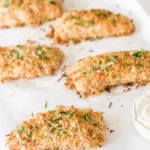
Crispy Coconut Crusted Baked Salmon
- Total Time: 30 minutes
- Yield: 4 servings 1x
- Diet: General
Description
Flaky and tender, this coconut crusted salmon is a weeknight (or weekend) family favourite!
Ingredients
- 4–6 fillets salmon, skinned and de-boned (1.5 lbs)
- 2 tablespoons olive oil
- 1 cup panko
- 1 cup shredded unsweetened coconut
- 1/2 cup mayonnaise
- 2 tablespoons Dijon mustard
- salt and pepper to taste
- parsley to garnish (optional)
Instructions
- Step: Preheat the oven to 425 F and line a baking sheet with parchment paper.
- Step: In a small frying pan over medium heat add the olive oil, when the oil is hot add in the panko and stir until golden. Transfer to a shallow dish. In the same pan toast the shredded coconut, keeping a careful eye on it to prevent it from burning. Once the shredded coconut has toasted add it to the panko.
- Step: In a seperate shallow bowl, combine the mayonnaise and mustard and stir together to combine.
- Step: To bread the fish take a piece of salmon and coat it with a thin layer of the mayonnaise mixture and transfer it to the panko/coconut mixture to coat. Place the filet on the prepared baking sheet and repeat with the remaining salmon filets. Bake 10-15 minutes, until golden brown and the salmon is cooked (this time will depend on the thickness of your salmon).
Notes
Use gluten-free panko and coconut to make this recipe gluten free.
- Prep Time: 10 minutes
- Cook Time: 20 minutes
- Category: Dinner
- Method: Baking
- Cuisine: American
Nutrition
- Serving Size: 1 fillet
- Calories: 810 kcal
- Sugar: 6 g
- Sodium: 680 mg
- Fat: 54 g
- Saturated Fat: 24 g
- Unsaturated Fat: 30 g
- Trans Fat: 0 g
- Carbohydrates: 32 g
- Fiber: 5 g
- Protein: 34 g
- Cholesterol: 115 mg
Keywords: Coconut, Crusted, fish, Salmon