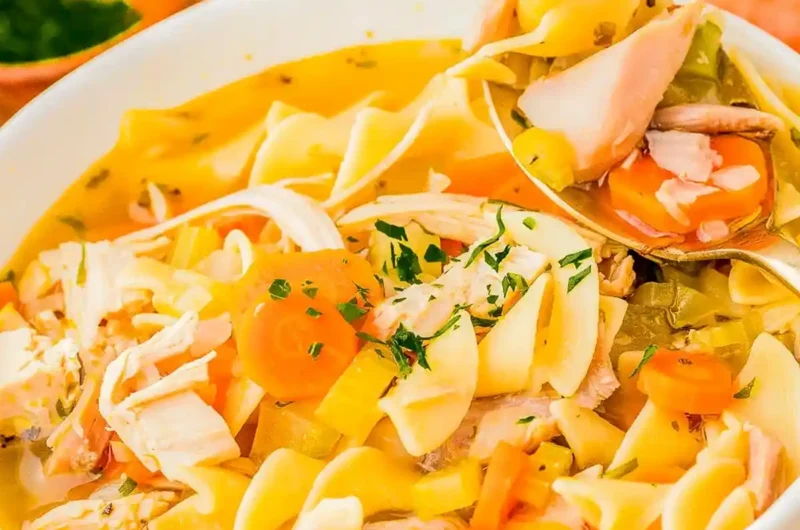
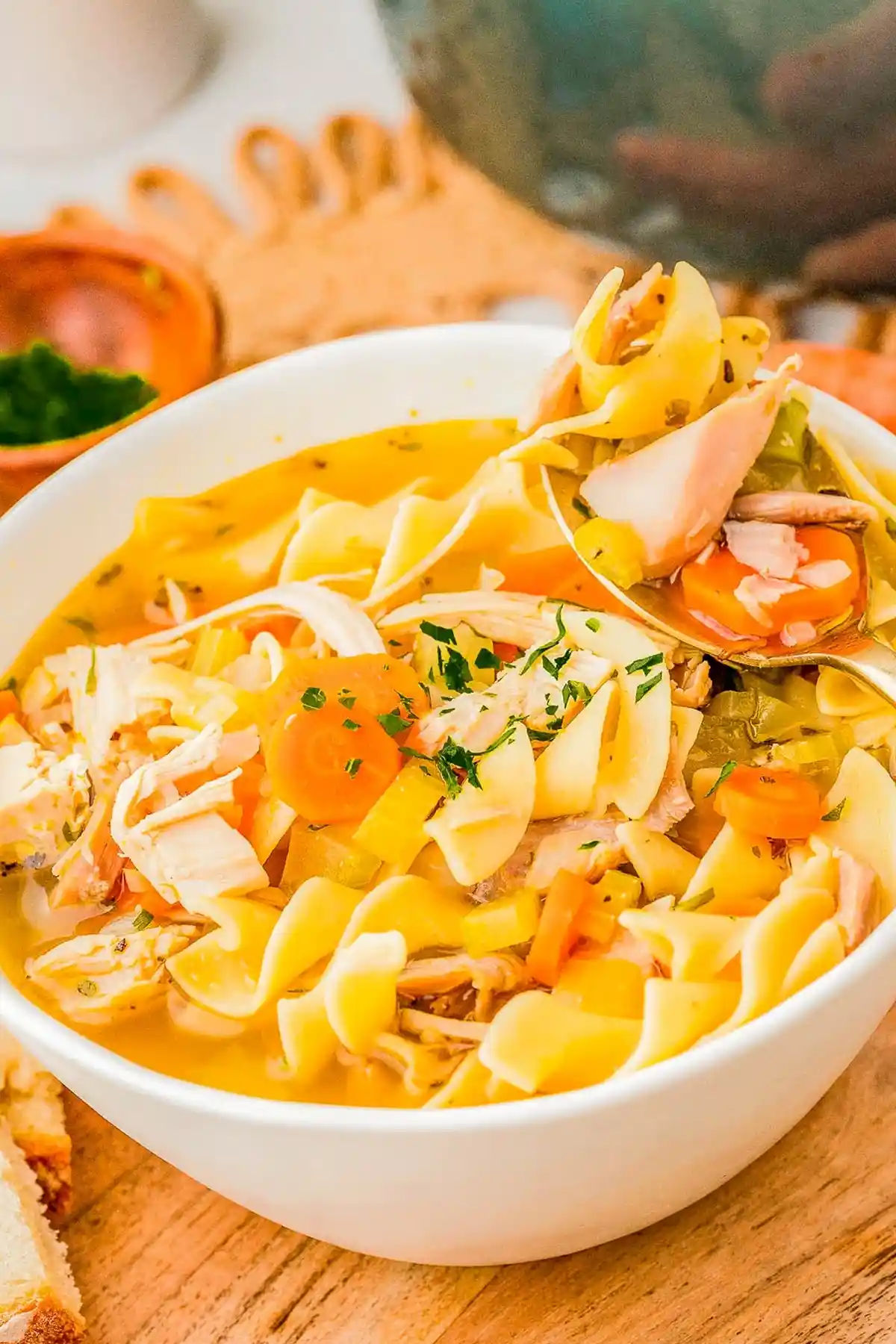
This efficient chicken noodle soup recipe delivers a comforting meal in just 30 minutes using a single pot. It is designed for busy weeknights while maintaining the classic flavors of a traditional homemade soup. The process is straightforward and requires minimal cleanup.
List of ingredients
- 2 tablespoons olive oil – used for sautéing the aromatic vegetables.
- 1 cup carrots, peeled and sliced thin (about 1 1/2 large carrots) – adds sweetness and color.
- 1 cup celery, sliced thin (about 2 stalks) – provides a savory base flavor.
- 1 cup sweet Vidalia or yellow onion, peeled and diced small (about 1 medium onion) – essential for depth.
- 2 garlic cloves, minced – adds a sharp, aromatic quality.
- 64 ounces (8 cups) low-sodium chicken broth, plus more if desired – the liquid base of the soup.
- 2 bay leaves – adds a subtle herbal background note.
- 1 teaspoon fresh thyme (or 1/2 teaspoon dried thyme) – provides a woody, earthy flavor.
- 1/2 teaspoon dried oregano – adds a Mediterranean herbal touch.
- 1 teaspoon pepper, or to taste – basic seasoning for heat.
- 12 ounces wide egg noodles, or your favorite pasta – the primary starch for heartiness.
- 2 cups shredded cooked chicken – used for protein; rotisserie chicken works well.
- 3 to 4 tablespoons fresh flat-leaf parsley leaves, finely chopped – adds brightness and color.
- 1 tablespoon lemon juice (optional) – used to brighten the overall flavor profile.
- salt, to taste – adjusts the seasoning based on broth saltiness.
- black pepper, to taste – final seasoning adjustment.
step-by-step instructions
- Sauté Aromatics: Heat the olive oil in a large Dutch oven or stockpot over medium-high heat. Add the carrots, celery, and onion, sautéing for about 7 minutes until the vegetables begin to soften, stirring intermittently.
- Add Garlic: Stir in the minced garlic and continue to sauté for another 1 to 2 minutes until fragrant.
- Simmer Base: Pour in the chicken broth and add the bay leaves, thyme, oregano, and pepper. Bring the mixture to a boil, then let it boil gently for about 5 minutes or until the vegetables are fork-tender. If you prefer a thinner soup, you may add up to 64 ounces of additional broth at this stage.
- Cook Noodles: Add the wide egg noodles to the pot. Boil for approximately 10 minutes, or until the noodles are soft and fully cooked through. If the liquid level drops too low, you can add a cup or two of water during this process.
- Combine and Finish: Stir in the shredded cooked chicken, chopped parsley, and optional lemon juice. Boil for 1 to 2 minutes just until the chicken is warmed through.
- Final Seasoning: Taste the soup and add salt and black pepper as needed. The amount of salt required will vary based on the sodium content of your broth and chicken.
- Serve: Remove the bay leaves and serve the soup immediately in bowls.
Maximizing the Soup Base
Selecting the Ideal Chicken Broth
Using a high-quality low-sodium chicken broth allows you to control the salt levels precisely. Store-bought broths vary significantly in salt content, so tasting as you go is essential. If the broth tastes flat, a pinch of salt can wake up the other flavors.
Adjusting Broth Volume for Consistency
Egg noodles are highly absorbent and will continue to soak up liquid even after the heat is turned off. For those who prefer a brothier soup, increasing the initial liquid by several cups prevents the soup from becoming too thick. This is especially important if you plan to store the soup for several days.
Managing Liquid Levels During Boiling
When boiling noodles, significant evaporation occurs, which can lower the overall liquid volume. Adding a small amount of water or additional broth during the noodle cooking stage maintains the desired consistency. Ensure you re-season with salt if you add a significant amount of plain water.
Protein and Pasta Variations
Using Rotisserie Chicken for Speed
Store-bought rotisserie chicken is an excellent time-saver and provides a rich flavor due to the seasoning used in roasting. Use a mix of white and dark meat to add different textures and flavor depths to the soup. Shred the meat finely so it distributes evenly in every spoonful.
Choosing Alternative Pasta Shapes
While wide egg noodles are traditional, other shapes like rotini, ditalini, or orzo can be used. Smaller pastas often distribute more evenly and are easier to eat with a spoon. Be mindful that different pastas have different cooking times, so adjust the boiling duration accordingly.
Preventing Pasta Overcooking
To keep noodles from becoming mushy, cook them only until they are al dente. If you are making a large batch for the week, consider cooking the noodles separately and adding them to individual bowls. This prevents the pasta from absorbing all the broth in the refrigerator.
Flavor Enhancement Techniques
Balancing Fresh and Dried Herbs
A combination of fresh and dried herbs provides a more complex flavor profile. Dried oregano offers a concentrated, earthy base, while fresh parsley adds a bright, clean finish at the end. If using dried thyme instead of fresh, reduce the quantity by half to avoid an overpowering taste.
The Impact of Acidity on Flavor
Adding a tablespoon of lemon juice at the final stage does not make the soup taste like lemon. Instead, the acidity cuts through the richness of the chicken broth and brightens the other herbal notes. This simple addition makes the soup taste fresher and more vibrant.
Substituting Vinegar for Lemon
If fresh lemons are unavailable, a small amount of apple cider vinegar serves as an effective substitute. The goal is to introduce a slight acidic tang to balance the savory elements. Start with a teaspoon and taste before adding more to ensure the flavor remains balanced.
Controlling Salt with Low-Sodium Ingredients
Because rotisserie chicken and pre-made broths often contain high levels of sodium, it is best to add salt only at the very end. Taste the completed soup before adding any additional salt to avoid over-seasoning. This approach ensures the natural flavors of the vegetables and chicken remain prominent.
Serving and Pairing Ideas
Complementing with Crusty Breads
Serving this soup with a warm, crusty baguette or sourdough bread helps soak up the savory broth. Garlic herb rolls or buttery dinner rolls also provide a rich contrast to the light, herbal flavors of the soup. Toasted bread can add a needed textural contrast to the soft noodles.
Pairing with Fresh Side Salads
A simple house salad with a vinaigrette dressing provides a refreshing counterpoint to the warm soup. Use crisp greens like romaine or spinach with a light lemon-olive oil dressing to mirror the acidity in the soup. This creates a balanced, complete meal that feels light yet satisfying.
Adding Color with Supplemental Vegetables
While the mirepoix of carrots, celery, and onion is classic, adding a handful of frozen peas during the last two minutes of cooking adds vibrant color. Sliced mushrooms can also be added during the sauté stage for an extra layer of umami. These additions increase the nutritional value without altering the core flavor.
Storage and Reheating Logic
Refrigeration Guidelines
Store leftover soup in an airtight container in the refrigerator for up to 5 to 7 days. Keep the container sealed tightly to prevent the soup from absorbing other odors in the fridge. Allow the soup to cool slightly before sealing to prevent excessive condensation.
Freezing for Long-Term Use
This soup can be frozen for up to 4 months in freezer-safe containers or heavy-duty freezer bags. For the best results, freeze the soup without the noodles to prevent them from becoming mushy upon thawing. Add freshly cooked noodles when you reheat the liquid base.
Effective Reheating Methods
Reheat the soup gently in a saucepan over medium heat or in the microwave in short bursts. Because noodles absorb liquid over time, you will likely need to stir in a splash of chicken broth or water during reheating. This restores the original consistency and prevents the soup from becoming a stew.
Common Troubleshooting and FAQs
Why are my noodles absorbing all the broth?
Noodles are made of starch, which continues to swell and absorb liquid as they sit in the broth. To fix this, add extra broth during the initial cook or stir in a small amount of water when reheating leftovers. This is a natural process and is common in all noodle-based soups.
Can I make this recipe dairy-free?
This recipe is naturally dairy-free as it relies on olive oil and chicken broth for its base. Ensure your chicken broth brand does not contain hidden dairy additives. For extra richness without dairy, you can slightly increase the amount of olive oil used for sautéing.
How do I prevent the vegetables from overcooking?
Sauté the vegetables just until they begin to soften before adding the broth. The 5-minute gentle boil is sufficient to make them tender without turning them into mush. If you prefer very firm vegetables, reduce the boiling time slightly before adding the noodles.
What can I use if I don’t have bay leaves?
If you lack bay leaves, you can omit them without ruining the dish, as they provide a subtle background note. Alternatively, a small pinch of ground allspice or a tiny bit of extra thyme can mimic some of the depth. However, the soup will still be delicious with just the other listed herbs.
Print
Easy 30-Minute Homemade Chicken Noodle Soup
- Total Time: 35 minutes
- Yield: 6 servings 1x
- Diet: General
Description
Classic, comforting, and tastes just like grandma made but way easier and faster! This soup is AMAZING and it’ll be your new favorite recipe! Made in just one pot and ready in 30 minutes!
Ingredients
- 2 tablespoons olive oil
- 1 cup carrots, peeled and sliced thin
- 1 cup celery, sliced thin
- 1 cup sweet Vidalia or yellow onion, peeled and diced small
- 2 garlic cloves, minced
- 64 ounces low-sodium chicken broth
- 2 bay leaves
- 1 teaspoon fresh thyme (or 1/2 teaspoon dried thyme)
- 1/2 teaspoon dried oregano
- 1 teaspoon pepper
- 12 ounces wide egg noodles
- 2 cups shredded cooked chicken
- 3 to 4 tablespoons fresh flat-leaf parsley leaves, finely chopped
- 1 tablespoon lemon juice (optional)
- salt, to taste
- black pepper, to taste
Instructions
- Sauté: Heat olive oil in a large Dutch oven or stockpot over medium-high heat, then sauté carrots, celery, and onion for about 7 minutes until vegetables begin to soften.
- Garlic: Add the garlic and sauté for another 1 to 2 minutes.
- Boil Broth: Add the chicken broth, bay leaves, thyme, oregano, and pepper, and bring to a boil for about 5 minutes or until vegetables are fork-tender.
- Cook Noodles: Add the egg noodles and boil for about 10 minutes, or until noodles are soft and cooked through.
- Combine: Add the chicken, parsley, and optional lemon juice, and boil for 1 to 2 minutes until chicken is warmed through.
- Season: Taste soup, add salt and pepper to taste, remove the bay leaves, and serve immediately.
Notes
Storage: Soup will keep airtight in the fridge for 5 to 7 days or in the freezer for up to 4 months. Note that as leftover soup sits, the noodles will continue to absorb the broth, so you can add a bit more broth when reheating.
- Prep Time: 5 minutes
- Cook Time: 30 minutes
- Category: Soup
- Method: One-pot
- Cuisine: American
Nutrition
- Serving Size: 1 serving
- Calories: 412 kcal
- Sugar: 4 g
- Sodium: 168 mg
- Fat: 12 g
- Saturated Fat: 3 g
- Unsaturated Fat: 9 g
- Trans Fat: 0.03 g
- Carbohydrates: 50 g
- Fiber: 4 g
- Protein: 27 g
- Cholesterol: 83 mg
Keywords: chicken noodle soup, 30-minute meal, comforting soup, one pot recipe, easy homemade soup