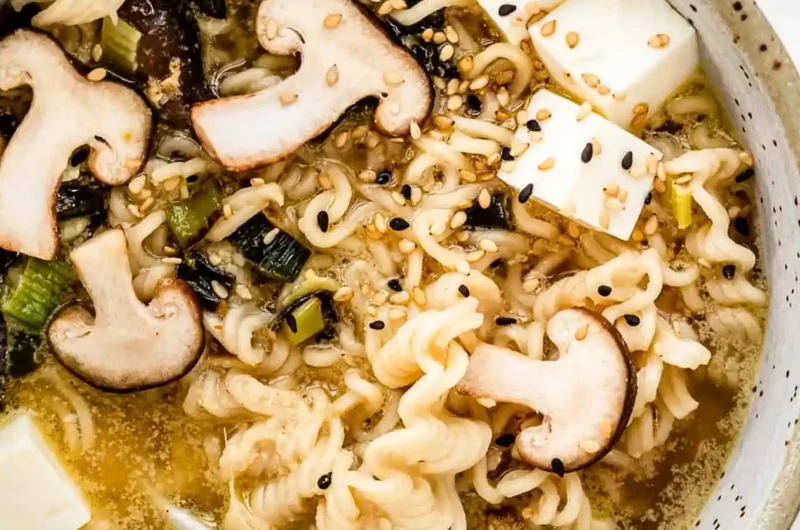
This Miso Ramen is a fast and savory meal that comes together in just 15 minutes. It uses a combination of miso paste and tahini to create a rich, creamy broth without needing hours of simmering.
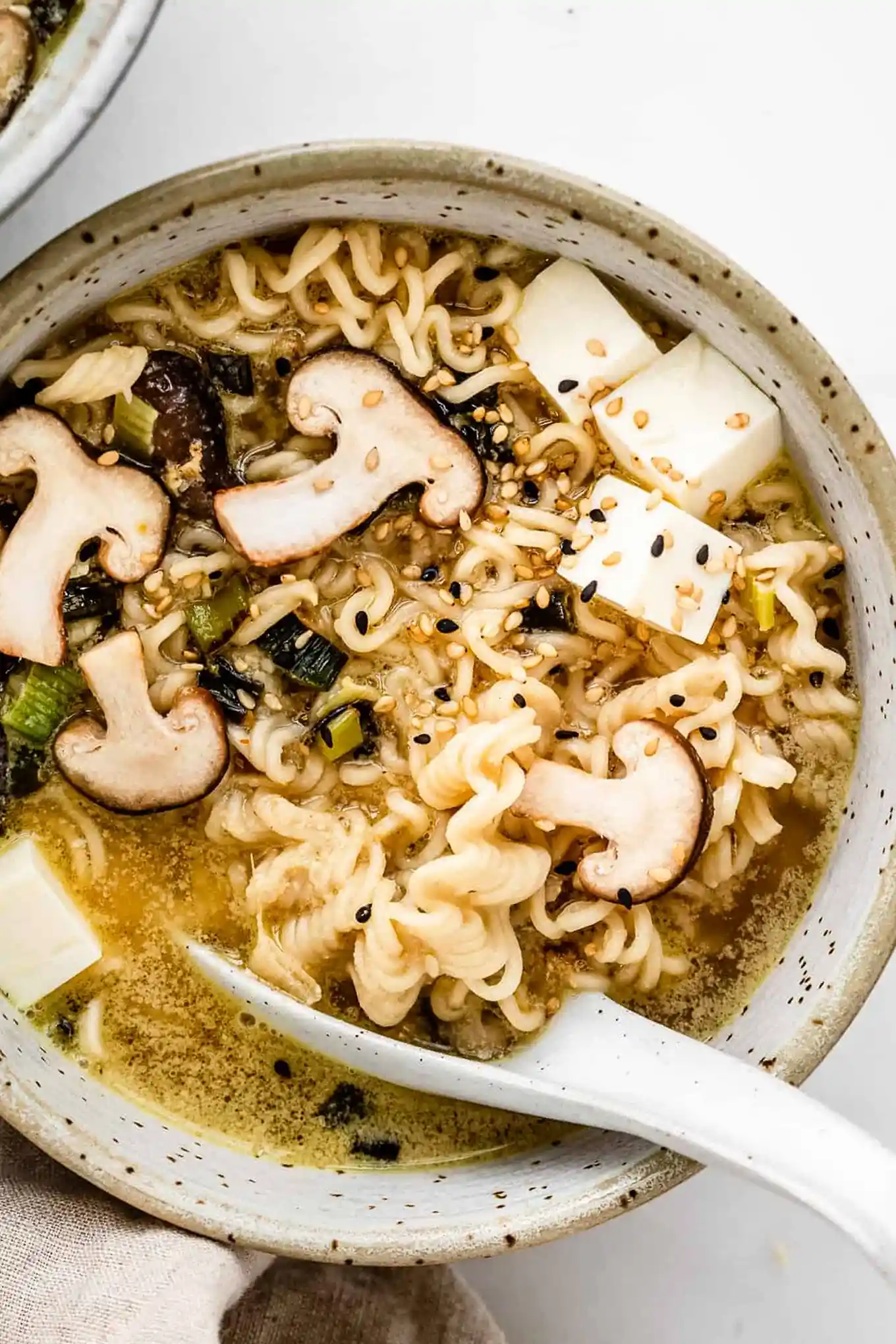
List of ingredients
- 2 tbsp avocado oil (can sub vegetable oil) – used for sautéing aromatics.
- 4 scallions, chopped – provides a fresh onion base.
- 1 tbsp grated ginger – adds a sharp, aromatic heat.
- 2 garlic cloves, chopped – enhances the savory depth.
- 1/2 cup shiitake mushrooms, sliced – adds an earthy, meaty texture.
- 1 1/2 tbsp white miso paste – the primary savory flavoring agent.
- 2 tbsp tahini – adds creaminess and a nutty undertone.
- 4 cups vegetable broth – the liquid base for the soup.
- 1-2 tbsp tamari (can sub soy sauce) – adds salt and umami.
- 2 tsp Sriracha (optional) – provides a touch of spice.
- 2 packs of ramen noodles – the heart of the dish.
- 1 pack soft tofu (optional) – adds a silky protein component.
step-by-step instructions
- Sauté Aromatics: Heat the avocado oil in a large pot on medium-high heat, then add the scallions and ginger and sauteé for 1-2 minutes.
- Brown Mushrooms: Add the shiitake mushrooms and garlic and let sauteé for another 2-3 minutes. Avoid stirring the mushrooms too often to allow them to brown properly.
- Combine Pastes: Add the miso paste and tahini to the pot and mix everything together until well combined.
- Simmer Broth: Pour in the vegetable broth, tamari, and Sriracha. Heat lightly to warm through, but do not allow the liquid to boil on high heat to prevent the miso from becoming bitter.
- Cook Noodles: Add the ramen noodles to the broth and cook for 2-3 minutes until the noodles reach a soft consistency.
- Final Assembly: Gently add the soft tofu to the pot and serve immediately.
Guidelines for Choosing Miso Paste
White Miso for a Milder Profile
White miso is fermented for a shorter period, resulting in a milder, slightly sweeter flavor. It is the ideal choice for this ramen because it blends seamlessly with the tahini without overpowering the other aromatics. You can find it in the refrigerated section of most Asian grocery stores.
Red Miso for Intense Saltiness
Red miso is fermented longer and has a much stronger, saltier taste. If you choose to use red miso, reduce the amount of tamari or soy sauce in the recipe to avoid over-salting the broth. It provides a deeper, more fermented punch that appeals to those who prefer bold flavors.
Awase Miso for Balanced Taste
Awase miso is a blend of white and red miso, offering a middle ground in terms of intensity. It provides the sweetness of white miso and the depth of red miso. This version is highly versatile and works well if you cannot decide between the two primary types.
Customizing Your Vegetable Toppings
Adding Baby Spinach or Bok Choy
Add fresh baby spinach or sliced bok choy during the last minute of the noodle cooking process. The residual heat of the broth is enough to wilt the greens without overcooking them. This adds a fresh, bitter contrast to the creamy miso base and increases the nutrient density.
Including Sweet Corn Kernels
Fresh or frozen corn kernels add a pop of sweetness and color to the bowl. You can add them raw to the hot soup or quickly sauté them with the mushrooms for a roasted flavor. They provide a textural contrast to the soft noodles and tofu.
Using Sautéed Mushrooms
While the recipe includes shiitakes, you can add oyster or cremini mushrooms for more variety. Sauté them separately in a hot pan with a bit of oil until they are golden brown. Place them on top of the assembled ramen for an enhanced earthy flavor.
Adding Fresh Bean Sprouts
Raw bean sprouts provide a satisfying crunch that balances the softness of the ramen noodles. Place a handful of sprouts on top of the bowl just before serving. Do not cook them in the broth if you wish to maintain their crisp texture.
Incorporating Shredded Carrots
Thinly shredded carrots add a subtle sweetness and vibrant orange color. You can blanch them quickly in the broth or add them raw as a garnish. They provide a nice visual contrast against the creamy beige color of the miso broth.
Protein Enhancement Options
Soft Boiled Jammy Eggs
Boil eggs for exactly 6.5 to 7 minutes, then immediately plunge them into an ice bath. Peel them carefully and slice them in half lengthwise. The creamy yolk acts as a secondary sauce that mixes into the miso broth.
Cubed Extra Firm Tofu
If you prefer a chewier texture than soft tofu, use extra firm tofu. Cut it into small cubes and pan-fry them until the edges are golden brown. This adds a more substantial bite and a nutty flavor to the meal.
Steamed Edamame Beans
Shelled edamame beans add a boost of plant-based protein and a bright green color. Steam them for a few minutes or add them to the broth during the final heating phase. They are a classic ramen accompaniment that adds a buttery texture.
Crispy Tempeh Strips
Slice tempeh into thin strips and sauté them in a pan with a dash of soy sauce and maple syrup. The fermented nature of tempeh complements the fermented flavor of the miso. Place the crispy strips on top for a hearty, protein-rich addition.
Grilled Tofu Steaks
Press a block of firm tofu to remove excess water, slice it into thick slabs, and grill it on a stovetop pan. Brush the tofu with a mixture of tamari and ginger for extra flavor. Lay the steak across the top of the noodles before serving.
Optimizing the Broth Flavor
Adjusting Salt Levels with Extra Broth
Miso brands vary significantly in their salt concentration. If the soup tastes too salty after adding the tamari, stir in a splash more vegetable broth or water. This dilutes the salt without sacrificing the creamy consistency provided by the tahini.
Increasing Creaminess with Tahini
For a thicker, more indulgent broth, increase the tahini amount by one tablespoon. Tahini acts as an emulsifier that gives the soup a rich, milky appearance similar to traditional tonkotsu ramen. Whisk it thoroughly into the miso paste to avoid clumps.
Adding Heat with Chili Oil
While Sriracha is an option, a drizzle of chili oil or chili crisp adds a smoky depth and visual appeal. Add the oil as a final garnish on top of the broth. This allows you to control the spice level for each individual serving.
Balancing with Rice Vinegar
A small teaspoon of rice vinegar can cut through the richness of the tahini and miso. Stir it in at the very end of the cooking process. The acidity brightens the overall flavor profile and balances the saltiness of the tamari.
Noodle Selection and Preparation
Using Dried Ramen Noodles
Dried noodles are convenient and widely available in grocery stores. Follow the package instructions for cooking time, but remember that they will continue to soften in the hot broth. Add them to the pot only when the broth is at a gentle simmer.
Utilizing Fresh Ramen Noodles
Fresh noodles offer a superior, springy texture and are often found in the refrigerated section. Rinse fresh noodles under cold water to remove excess starch before adding them to the pot. This prevents the broth from becoming overly thick or gummy.
Gluten-Free Noodle Alternatives
To make this dish gluten-free, replace wheat ramen with brown rice noodles or buckwheat soba. Ensure you use a gluten-free miso paste, as some contain barley. Adjust the cooking time based on the specific noodle type to avoid overcooking.
Preventing Overcooked Noodles
Avoid boiling the noodles on high heat for too long, as they can become mushy. Remove the pot from the heat as soon as the noodles reach an al dente texture. They will finish cooking in the bowl as you prepare to eat.
Storage and Meal Prep Advice
Storing Broth in Airtight Containers
Store the prepared miso broth in a glass airtight container in the refrigerator for up to 4 days. Do not store the noodles in the broth, as they will absorb all the liquid and lose their structure. Keep the broth and noodles separate for the best results.
Keeping Toppings Fresh
Prep your vegetables and proteins in advance and store them in separate containers. Sliced scallions and carrots can be kept for several days. Store jammy eggs in a bowl of cold water or a sealed container to maintain their texture.
Reheating Methods for Best Taste
Reheat the broth slowly on the stovetop over medium-low heat. Avoid using a high boil to protect the delicate flavors of the miso paste. Once the broth is hot, add fresh noodles and your prepped toppings.
Avoiding Freezer Burn
While the broth can be frozen, the tahini may separate upon thawing. If you freeze the broth, shake it well or whisk it vigorously after reheating. Do not freeze the noodles or the soft tofu, as their texture will be ruined.
Troubleshooting Common Issues
Fixing Bitter Miso Taste
Bitterness usually occurs when miso is boiled at a very high temperature for too long. To fix this, add a pinch of sugar or a small amount of maple syrup to neutralize the bitterness. In the future, ensure the broth only reaches a gentle simmer.
Solving Liquid Absorption Issues
If you find that your noodles have absorbed too much broth by the time you serve, simply stir in a bit of hot water. This restores the soup-to-noodle ratio without diluting the flavor too much. Serve immediately after adjusting the liquid.
Correcting Overly Salty Soup
If the combination of miso and tamari makes the soup too salty, add a squeeze of fresh lime juice. The acid helps mask the excess salt. Alternatively, adding more unsalted vegetable broth is the most effective way to balance the taste.
Improving Broth Emulsification
If the tahini separates and creates oil droplets on the surface, use a whisk to blend the broth. Stirring vigorously as you add the broth to the miso-tahini paste helps create a smooth emulsion. A handheld immersion blender can also be used for a perfectly creamy texture.
Frequently Asked Questions
Can I use soy sauce instead of tamari?
Yes, soy sauce is a direct substitute for tamari in this recipe. Tamari is generally preferred for its richer flavor and gluten-free properties, but soy sauce provides the same essential salt and umami. Use the same measurement of 1-2 tablespoons.
How do I keep the noodles from getting soggy?
The best way to prevent soggy noodles is to cook them separately and add them to the bowl just before pouring in the hot broth. If cooking in the pot, ensure you do not exceed the recommended 2-3 minute cook time.
Is this recipe suitable for all diets?
This recipe is naturally vegan and vegetarian as it uses vegetable broth and plant-based proteins. To make it gluten-free, simply use gluten-free ramen noodles and ensure your miso paste is certified gluten-free.
What is the best way to slice shiitake mushrooms?
Remove the woody stems and slice the caps into 1/4-inch thick strips. This thickness ensures the mushrooms brown well on the outside while remaining tender on the inside. Avoid slicing them too thin, or they may shrivel during sautéing.
Print
Fast and Creamy Miso Ramen
- Total Time: 15 minutes
- Yield: 2 servings 1x
- Diet: Vegan
Description
This Miso Ramen recipe is ready in 15-minutes for a quick and easy comfort meal!
Ingredients
- 2 tbsp avocado oil
- 4 scallions, chopped
- 1 tbsp grated ginger
- 2 garlic cloves, chopped
- 1/2 cup shiitake mushrooms, sliced
- 1 1/2 tbsp white miso paste
- 2 tbsp tahini
- 4 cups vegetable broth
- 1–2 tbsp tamari
- 2 tsp Sriracha
- 2 packs of ramen noodles
- 1 pack soft tofu
Instructions
- Step 1: Heat the avocado oil in a large pot on medium-high heat, then add the scallions and ginger and sauteé for 1-2 minutes.
- Step 2: Next, add the shiitake mushrooms and garlic and let sauteé for another 2-3 minutes.
- Step 3: Add the miso paste and tahini and mix everything together.
- Step 4: Then add the vegetable broth, tamari and Sriracha and lightly heat to warm through.
- Step 5: Add the ramen noodles and cook for 2-3 minutes until the noodles are soft.
- Step 6: Add the soft tofu and serve.
Notes
Start with one tablespoon of tamari and add more if it needs more salt. Adjust saltiness with a splash of broth or water if needed. Prep toppings ahead so they’re ready to add before serving. Use a good quality broth for the best flavour.
- Prep Time: 5 minutes
- Cook Time: 10 minutes
- Category: Main
- Method: Cook
- Cuisine: Japanese
Nutrition
- Serving Size: 1 serving
- Calories: 400 kcal
- Sugar: 5 g
- Sodium: 1150 mg
- Fat: 5 g
- Saturated Fat: 1 g
- Unsaturated Fat: 4 g
- Trans Fat: 0 g
- Carbohydrates: 50 g
- Fiber: 5 g
- Protein: 20 g
- Cholesterol: 0 mg
Keywords: miso ramen, quick vegan ramen, japanese noodle soup, 15 minute meal, comfort food