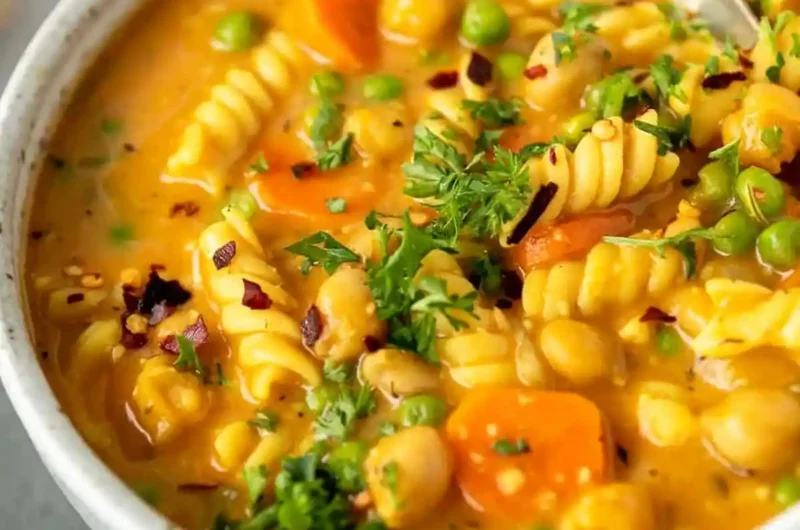
This vibrant vegan chickpea noodle soup serves as a comforting, protein-packed meal that perfectly bridges the gap between a classic noodle soup and a hearty vegetable stew. By utilizing pantry staples like chickpeas and dried pasta alongside fresh aromatics and garden vegetables, you can pull together a nourishing dinner in less than forty-five minutes. Its versatility makes it an ideal candidate for busy weeknights or quiet weekends when you need something warm and restorative.
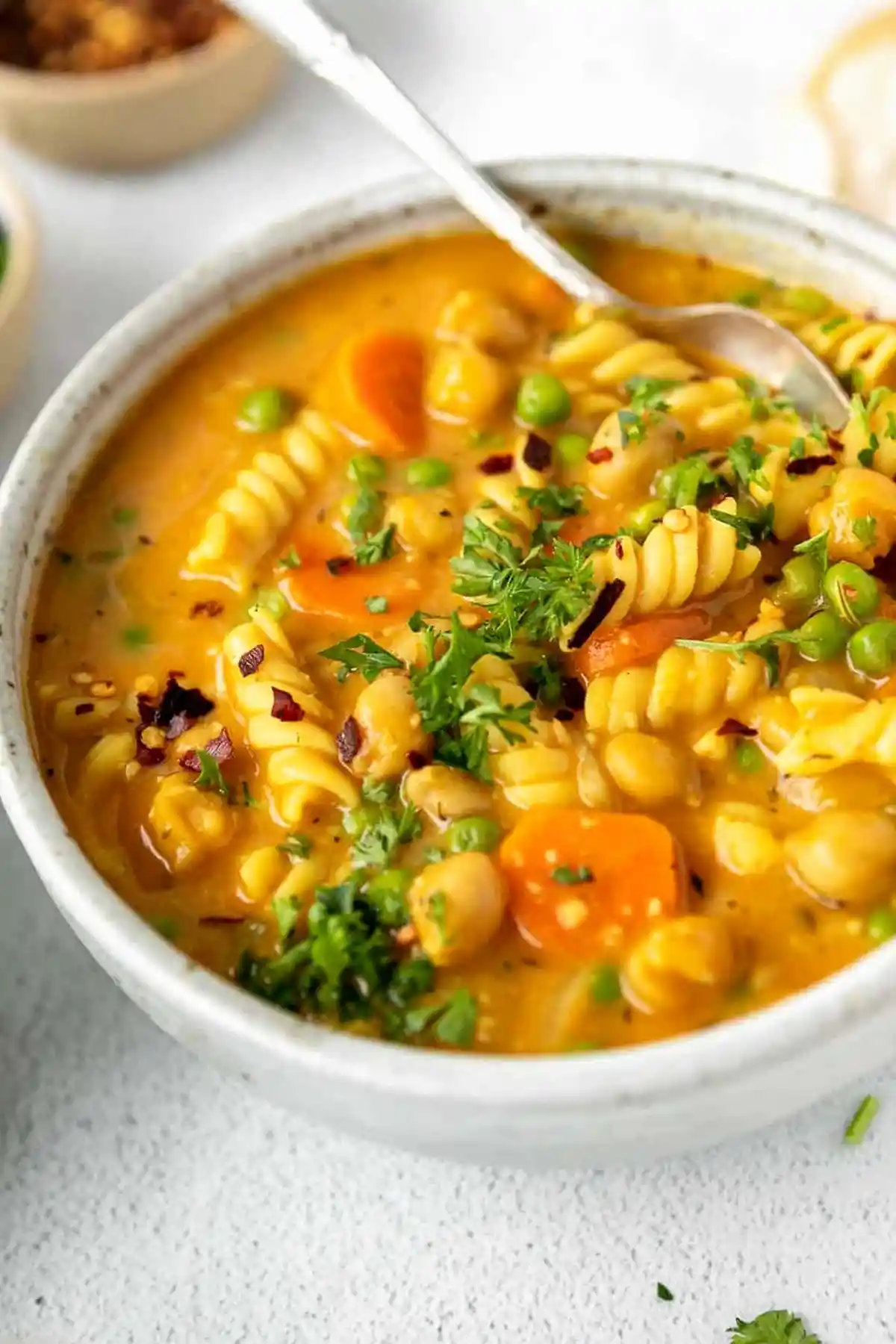
List of ingredients
- 1 yellow onion (diced)
- 2 tablespoon olive oil
- 4 cloves garlic (minced)
- 2 large carrots (peeled and diced)
- 2 stalks celery (diced)
- 2-3 tablespoon tomato paste
- 1/4 teaspoon black pepper
- 1/2-1 teaspoon sea salt
- 8 ounces chickpea pasta
- 1 15 ounce can chickpeas
- 5-7 cups vegetable stock
- 1/4 teaspoon ground turmeric
- 1 tablespoon fresh rosemary
- 1 tablespoon fresh thyme
- 2 large bay leaves
- Juice from 1/2 lemon
- 1 cup frozen peas
step-by-step instructions
- Step: In a large pot, add your chopped onion and garlic with the olive oil.
- Step: Saute until the onions are translucent, about 5-10 minutes.
- Step: Add in the chopped carrots and celery and saute for an additional 5 minutes.
- Step: Add in the tomato paste and saute an extra 1-2 minutes.
- Step: Add in all remaining ingredients except for peas and lemon and let simmer for about 15 minutes or until the pasta is finished cooking.
- Step: Remove and discard the herbs and bay leaves.
- Step: Add in the peas and lemon juice, let simmer for 1-2 minutes to defrost the peas.
- Step: Taste and adjust seasonings as desired.
Understanding Vegetable Broth Selection
Choosing the Right Sodium Content
When selecting a vegetable stock, opt for low-sodium varieties whenever possible. This gives you total control over the seasoning of your final dish, as the salt content in pre-packaged broths varies wildly between brands. If you find your soup tastes a bit flat after cooking, it is almost always due to the broth being too diluted or lacking enough salt to wake up the flavor of the vegetables.
Selecting Organic or Homemade Bases
Using a high-quality or homemade vegetable stock significantly impacts the final taste of your soup. Stocks made from slow-simmered mirepoix, dried mushrooms, and roasted vegetable scraps yield a much richer, complex flavor profile than store-bought options that lean heavily on yeast extracts. If you are using a lighter store-bought broth, consider sautéing an extra stalk of celery or a pinch more turmeric to bolster the complexity before adding the liquid.
Refining Pasta Texture
Selecting Ideal Shapes
The texture of your soup is greatly enhanced by the shape of the pasta chosen. Short, sturdy shapes like spirals, shells, or small bowtie pasta are excellent because they trap the broth and small bits of carrots within their curves. These shapes hold up well during the simmering process, whereas long, thin noodles might break down into smaller pieces if the soup is reheated multiple times over the course of the week.
Preventing Overcooked Noodles
To avoid mushy pasta, monitor the cooking time closely according to the package instructions. Because the pasta absorbs some of the broth during the resting phase, it is often best to pull the pot from the heat when the noodles are just barely al dente. If you anticipate having leftovers, consider cooking the pasta separately in a different pot and adding it to individual bowls before pouring the soup over it to ensure each serving is perfectly textured.
Nutritional Balance and Protein Additions
Boosting Plant-Based Protein
While the chickpeas already provide a robust amount of protein, you can easily increase the nutritional density by adding other legumes. Cannellini beans or red lentils are excellent companions to chickpeas in this recipe, as they maintain their shape during the simmer. If you want a more substantial texture, adding a half-cup of pre-cooked quinoa alongside the pasta adds a pleasant chew and additional complete amino acids.
Incorporating Leafy Greens
Adding greens is a simple way to increase the vitamin content of your soup without altering the fundamental flavor. Finely chopped kale or spinach can be stirred into the broth during the final two minutes of cooking. Kale is particularly sturdy and will hold up well to the heat, providing a nice contrast to the soft carrots and tender chickpeas found in every spoonful.
Optimizing Storage and Reheating
Proper Cooling Procedures
To keep the soup fresh for as long as possible, cool it down as quickly as you can before putting it into the refrigerator. Spreading the soup into a shallow container helps heat escape faster, preventing the temperature from staying in the danger zone for too long. Once completely cooled, seal the container tightly with an airtight lid to keep the aromatics contained and the flavor fresh.
Reheating Methods for Best Results
When reheating, use the stovetop rather than the microwave whenever possible. Gently warming the soup over medium-low heat allows the ingredients to heat through evenly without overcooking the pasta. If the soup appears too thick after being stored, simply splash in a few tablespoons of water or fresh vegetable broth to restore the desired consistency before serving.
Freezing Considerations
While this recipe keeps perfectly in the fridge, freezing it requires a little extra care due to the pasta. If you plan to freeze the batch, it is highly recommended to undercook the pasta by a minute or freeze the soup base without the noodles entirely. You can then boil fresh pasta separately when you are ready to serve the meal, preventing the noodles from becoming overly soft or disintegrating during the thawing process.
Frequently Asked Questions
Can I make this soup without oil?
Yes, you can easily make this an oil-free recipe by using a splash of vegetable broth or water to sauté the onion, garlic, carrots, and celery. Simply keep the heat on low and add more liquid by the tablespoon whenever the pan starts to look dry to prevent sticking.
Why is the soup cloudy after cooking?
The cloudiness usually comes from the starch released by the pasta during the cooking process. If you prefer a crystal-clear broth, cook the pasta in a separate pot of boiling water, drain it, and add it to the finished soup base just before serving. This also ensures the broth remains thin and clean-tasting even after a few days in the fridge.
Is it possible to use fresh herbs instead of dried?
Absolutely, fresh herbs generally provide a more vibrant flavor profile, but they should be added towards the end of the cooking process to preserve their volatile oils. If using fresh rosemary and thyme, tie them into a bundle with kitchen twine so they can be easily retrieved and discarded before the soup is ladled into bowls.
What is the benefit of adding tomato paste?
The tomato paste acts as a flavor anchor, providing a rich, concentrated savory note that helps bind the different spices together. It also provides a slight body to the broth, making the final dish feel more like a substantial meal rather than a simple light soup.
Print
Hearty Vegan Chickpea Noodle Soup
- Total Time: 50 minutes
- Yield: 4 servings 1x
- Diet: Vegan, Gluten Free
Description
Packed with protein, veggies, and lots of herbs and spices, this chickpea noodle soup is the ultimate soup to get you through the winter! It’s vegan, gluten free and comes together in under 30 minutes.
Ingredients
- 1 yellow onion (diced)
- 2 tablespoon olive oil
- 4 cloves garlic (minced)
- 2 large carrots (peeled and diced)
- 2 stalks celery (diced)
- 2–3 tablespoon tomato paste
- 1/4 teaspoon black pepper
- 1/2–1 teaspoon sea salt
- 8 ounces chickpea pasta
- 1 15 ounce can chickpeas
- 5–7 cups vegetable stock
- 1/4 teaspoon ground turmeric
- 1 tablespoon fresh rosemary
- 1 tablespoon fresh thyme
- 2 large bay leaves
- Juice from 1/2 lemon
- 1 cup frozen peas
Instructions
- Step: In a large pot, add your chopped onion and garlic with the olive oil.
- Step: Saute until the onions are translucent, about 5-10 minutes.
- Step: Add in the chopped carrots and celery and saute for an additional 5 minutes.
- Step: Add in the tomato paste and saute an extra 1-2 minutes.
- Step: Add in all remaining ingredients except for peas and lemon and let simmer for about 15 minutes or until the pasta is finished cooking.
- Step: Remove and discard the herbs and bay leaves.
- Step: Add in the peas and lemon juice, let simmer for 1-2 minutes to defrost the peas.
- Step: Taste and adjust seasonings as desired.
Notes
How much broth you need will depend on the type of pasta you use and how brothy you like your soup. I suggest starting with 5 cups of vegetable broth and adding more as needed. Once prepared, this recipe will keep in the fridge for 5 days. Let it cool completely before transferring to an air tight container.
- Prep Time: 20 minutes
- Cook Time: 30 minutes
- Category: Dinner
- Method: Stovetop
- Cuisine: American
Nutrition
- Serving Size: 1 bowl
- Calories: 460 kcal
- Sugar: 6 g
- Sodium: 850 mg
- Fat: 10.7 g
- Saturated Fat: 1.5 g
- Unsaturated Fat: 7.5 g
- Trans Fat: 0 g
- Carbohydrates: 65 g
- Fiber: 11.5 g
- Protein: 16.5 g
- Cholesterol: 0 mg
Keywords: vegan, gluten free, soup, chickpea, healthy, winter recipe