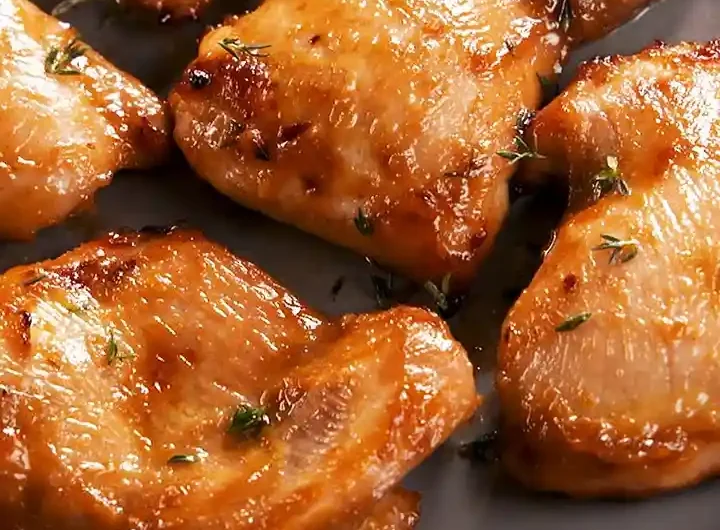
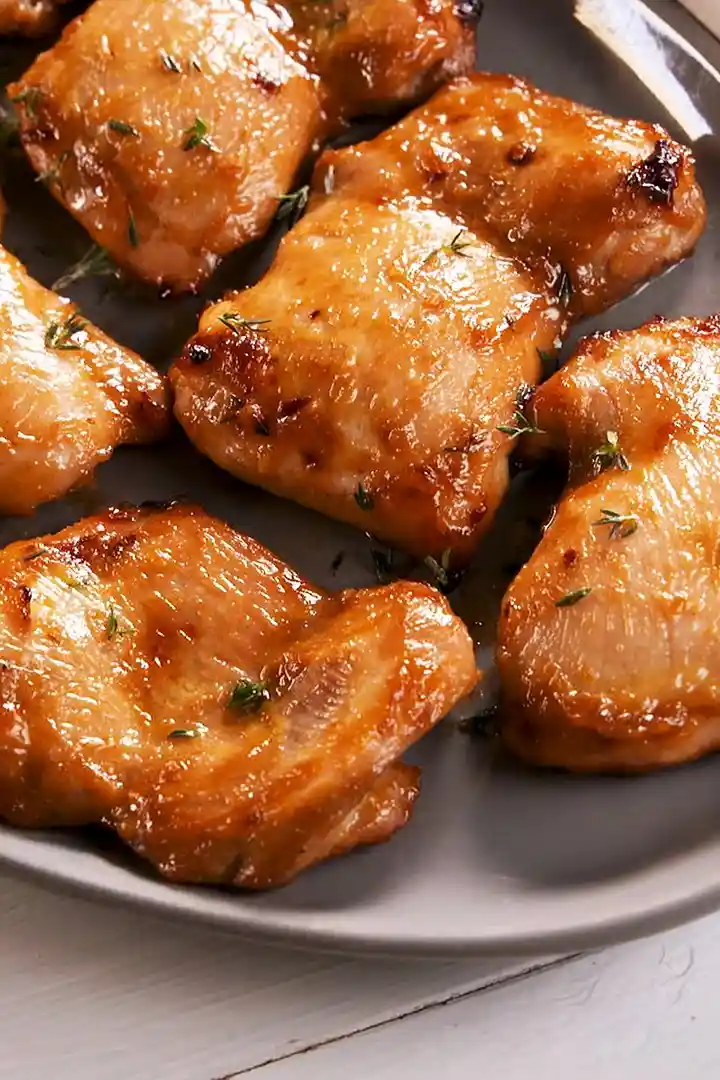
These baked boneless chicken thighs use a savory-sweet glaze to ensure the meat remains juicy and flavorful. This method combines high-heat roasting with a final broil for a caramelized finish.
List of ingredients
- 8 boneless, skinless chicken thighs – use uniform sizes for even cooking.
- 1/4 cup extra-virgin olive oil – provides moisture and heat conduction.
- 1/4 cup low-sodium soy sauce – adds salt and deep umami flavor.
- 1/4 cup dijon mustard – gives a tangy, sharp contrast.
- 2 tbsp. honey – helps with sweetness and glaze thickness.
- 2 tbsp. packed brown sugar – enhances caramelization during baking.
- 2 cloves garlic, minced – provides aromatic depth.
- 2 tsp. fresh thyme leaves – adds a woody, earthy note.
- Kosher salt – used for basic seasoning.
- Freshly ground black pepper – adds a subtle spicy bite.
- 1/4 tsp. crushed red pepper flakes – provides a mild heat.
step-by-step instructions
- Prepare marinade: Preheat your oven to 425°F. In a large mixing bowl, whisk together the olive oil, soy sauce, dijon mustard, honey, brown sugar, minced garlic, fresh thyme, and red pepper flakes. Season the mixture with salt and pepper.
- Marinate chicken: Add the boneless, skinless chicken thighs to the bowl and toss until every piece is thoroughly coated. Let the chicken marinate for at least 30 minutes to allow flavors to penetrate.
- Bake: Remove the chicken from the marinade and arrange the pieces on a large baking sheet lined with aluminum foil. Discard any remaining unused marinade. Bake for approximately 20 minutes or until the chicken is golden and the internal temperature reaches 165°F.
- Broil: Switch the oven setting to broil. Place the chicken back under the heat for about 5 minutes until the sauce thickens and bubbles slightly.
Marinating Guidelines for Maximum Flavor
Room Temperature Marinating
If you only have 30 minutes to marinate, keep the chicken on the kitchen counter. This prevents the meat from being too cold when it enters the hot oven, which helps it cook more evenly.
Refrigerated Marinating
For any marinating period longer than one hour, you must store the chicken in the refrigerator. This is essential for food safety to prevent the growth of bacteria at room temperature.
Maximum Marinating Duration
Avoid marinating the chicken for longer than 24 hours. The salt in the soy sauce and the acids in the mustard can begin to break down the muscle fibers too much, resulting in a mushy texture.
Precision Cooking and Temperature Control
Benefits of High Heat Roasting
Baking at 425°F allows the exterior of the chicken to sear and brown quickly. This high temperature locks in moisture and reduces the overall time the meat spends in the oven.
Using a Digital Meat Thermometer
The most accurate way to check for doneness is using a probe thermometer. Insert it into the thickest part of the thigh to ensure it has reached exactly 165°F to avoid overcooking.
Tempering the Chicken
Taking the chicken out of the fridge 15 to 20 minutes before baking allows the internal temperature to rise slightly. This prevents the meat from tightening up and becoming tough during the roasting process.
Adjusting for Different Chicken Sizes
Thighs vary in thickness; thinner pieces may cook faster than thicker ones. Check the internal temperature a few minutes early if your thighs appear smaller than average.
Ingredient Substitutions and Modifications
Alternative Natural Sweeteners
You can replace the brown sugar with maple syrup for a different depth of sweetness. Agave nectar is also a suitable substitute for honey if you prefer a more neutral sugar profile.
Replacing Fresh Thyme
If fresh thyme is unavailable, use dried thyme or fresh rosemary. Use about one-third of the amount if using dried herbs, as they are more concentrated in flavor.
Soy-Free Sauce Alternatives
Coconut aminos are an excellent substitute for soy sauce for those avoiding soy. Tamari can be used as well, which provides a similar salty profile and is often gluten-free.
Reducing the Sodium Content
To further reduce salt, replace the soy sauce with a mixture of vegetable broth and a small amount of coconut aminos. You can also omit the additional kosher salt if using regular soy sauce.
Serving Suggestions and Pairings
Hearty Grains and Starches
Garlic mashed potatoes are a classic pairing that complements the honey-mustard glaze. Steamed jasmine rice or quinoa also work well to soak up any extra sauce from the pan.
Fresh Vegetable Accompaniments
Roasted Brussels sprouts or steamed broccoli provide a crisp, bitter contrast to the sweet glaze. Sautéed spinach with lemon juice adds a bright, acidic element to the plate.
Cooling Salad Options
A crisp cucumber salad with a vinegar-based dressing helps cut through the richness of the chicken. A traditional coleslaw provides a creamy and crunchy side that balances the meal.
Fresh Garnish Ideas
Sprinkle thinly sliced green onions over the chicken just before serving for a fresh, sharp taste. Chopped fresh parsley or cilantro adds color and a mild herbal finish.
Storage and Food Preservation
Refrigeration Limits
Store leftover cooked chicken in an airtight container in the refrigerator for up to 4 days. Let the meat cool slightly before sealing to prevent excess moisture buildup.
Freezing for Long Term
Cooked thighs can be frozen for up to 3 months. Wrap each piece tightly in foil and place them in a heavy-duty freezer bag to protect against freezer burn.
Freezing the Marinade
You can freeze the raw marinade separately in a freezer bag. Thaw it in the fridge overnight before using it on fresh chicken thighs.
Reheating Best Practices
Oven Reheating for Texture
Place the chicken in a 325°F oven for 10 to 15 minutes. This method is superior to the microwave as it helps maintain the exterior glaze’s consistency.
Microwave Reheating Tips
Heat the chicken on medium power in 30-second intervals. Covering the dish with a damp paper towel prevents the meat from drying out during the process.
Stovetop Reheating
Warm the thighs in a skillet over medium-low heat with a tablespoon of water or broth. Cover the pan with a lid to steam the meat back to tenderness.
Troubleshooting Common Issues
Preventing Dry Chicken Thighs
Always monitor the internal temperature and remove the chicken as soon as it hits 165°F. Overcooking is the primary cause of dryness, even with moist cuts like thighs.
Managing Glaze Burn
The honey and sugar can burn quickly under the broiler. Stay by the oven and watch the chicken closely, removing it the moment the sauce begins to bubble and thicken.
Dealing with Uneven Cooking
Ensure that the chicken thighs are not overcrowded on the baking sheet. Leaving space between the pieces allows hot air to circulate and cook all sides evenly.
Fixing a Thin Glaze
If the sauce is too thin after baking, increase the broiling time by one or two minutes. Ensure your oven is fully preheated to the broil setting for the best results.
Frequently Asked Questions
Can I use bone-in chicken thighs instead?
Yes, you can use bone-in thighs, but you must increase the baking time by 15 to 20 minutes. Use a thermometer to ensure the meat near the bone reaches 165°F.
Can this recipe be adapted for chicken breasts?
Yes, but reduce the baking time to approximately 12 to 15 minutes. Chicken breasts lean out faster than thighs and will dry out if cooked for the full 20 minutes.
Why is the sauce not thickening during the broil?
This usually happens if the oven was not preheated to the broiler setting or if the chicken was too wet. Ensure the chicken is patted dry before adding the marinade.
Can I marinate the chicken overnight?
Yes, overnight marinating is possible and often improves flavor. Keep the chicken in a sealed container in the refrigerator to maintain safety and quality.
Is it necessary to line the pan with foil?
Lining the pan with foil makes cleanup much easier because the honey and sugar in the glaze can stick to the metal. It also prevents the glaze from burning onto the pan.
Print
Honey Soy Mustard Baked Chicken Thighs
- Total Time: 1 hour
- Yield: 6 – 8 servings 1x
- Diet: Dairy-free
Description
Baked boneless chicken thighs are marinated in an easy honey-soy mustard glaze and is guaranteed to never dry out in the oven.
Ingredients
- 8 boneless, skinless chicken thighs
- 1/4 cup extra-virgin olive oil
- 1/4 cup low-sodium soy sauce
- 1/4 cup dijon mustard
- 2 tbsp honey
- 2 tbsp packed brown sugar
- 2 cloves garlic, minced
- 2 tsp fresh thyme leaves
- Kosher salt
- Freshly ground black pepper
- 1/4 tsp crushed red pepper flakes
Instructions
- Step: Preheat oven to 425°. In a large bowl, combine oil, soy sauce, dijon, honey, brown sugar, garlic, thyme, and red pepper flakes. Season with salt and pepper. Add chicken thighs and toss to combine. Let marinate for at least 30 minutes.
- Step: Remove chicken from marinade and place on a large baking sheet lined with foil. Discard leftover marinade. Bake until golden and internal temperature reaches 165°, about 20 minutes.
- Step: Switch oven to broil and broil until sauce on chicken starts to thicken slightly, about 5 minutes.
Notes
For marinating longer than an hour, keep the chicken in the refrigerator. Let the chicken warm up slightly at room temperature before baking for more even cooking.
- Prep Time: 10 minutes
- Cook Time: 25 minutes
- Category: Poultry
- Method: Baking
- Cuisine: American
Nutrition
- Serving Size: 1 serving
- Calories: 446 kcal
- Sugar: 14 g
- Sodium: 610 mg
- Fat: 18 g
- Saturated Fat: 4 g
- Unsaturated Fat: 13 g
- Trans Fat: 0 g
- Carbohydrates: 16 g
- Fiber: 1 g
- Protein: 32 g
- Cholesterol: 95 mg
Keywords: baked chicken thighs, honey soy glaze, dinner, boneless chicken