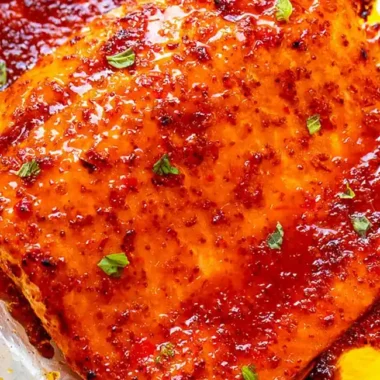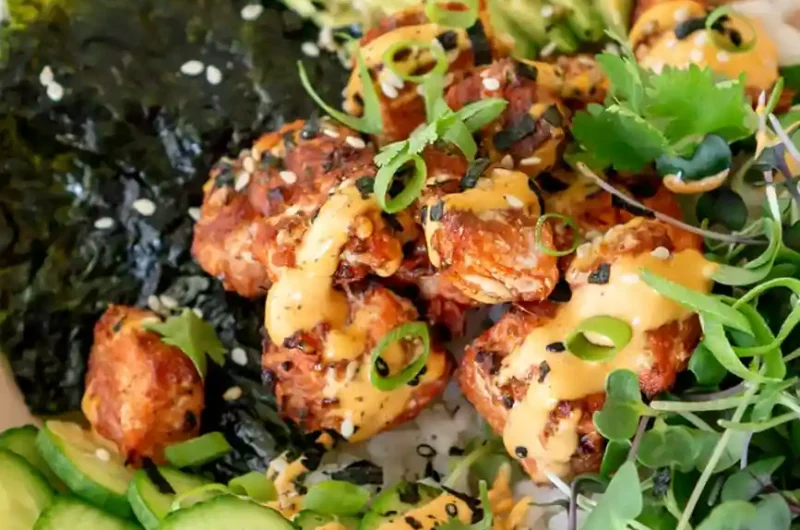
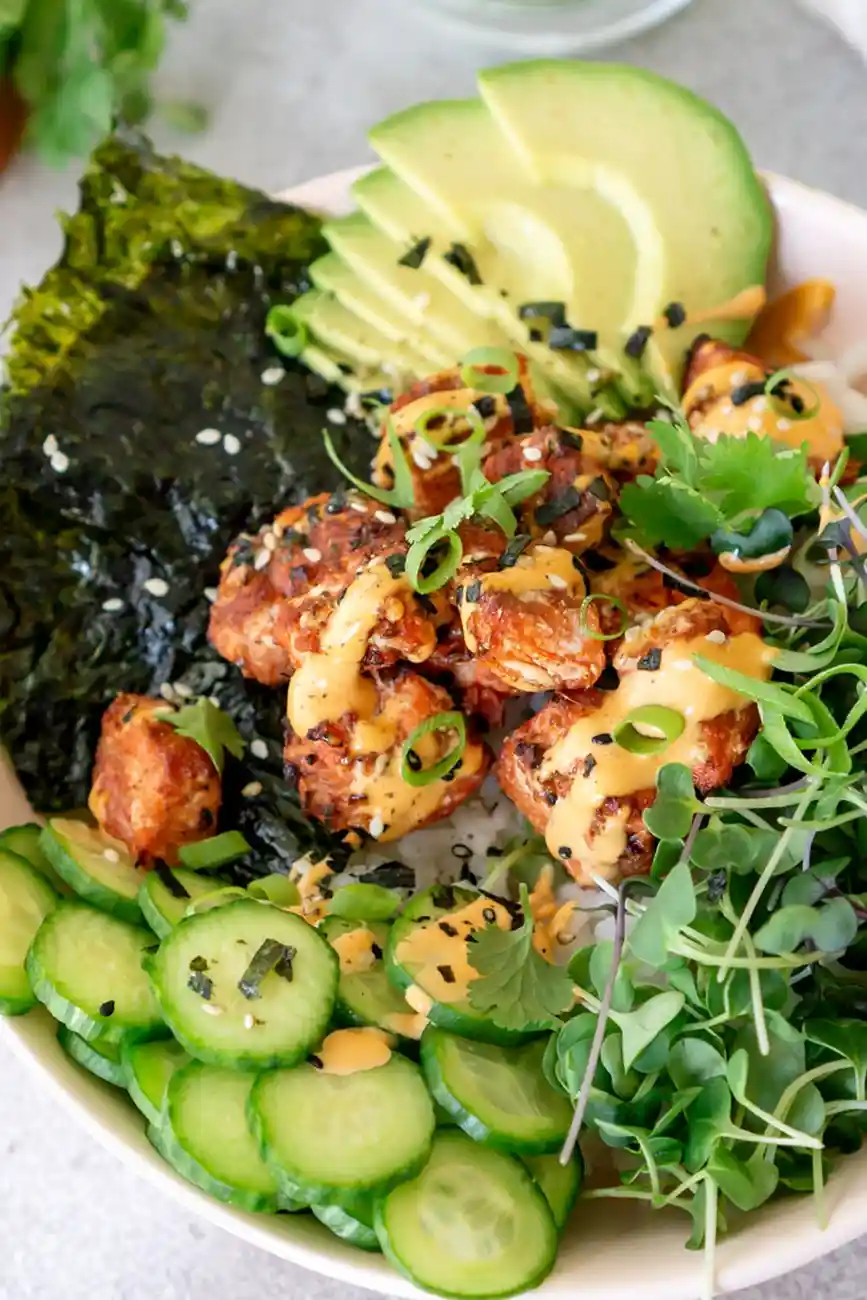
These rice bowls combine seasoned salmon with fresh vegetables for a balanced and quick meal. They are ideal for lunch prep or a fast weeknight dinner.
List of ingredients
- 1 cup jasmine rice – provides a fragrant and fluffy base.
- 8 ounces salmon – skin removed and cut into 1 inch cubes for even cooking.
- 1 teaspoon paprika – adds color and a mild earthy flavor.
- 1 teaspoon onion powder – provides a concentrated savory depth.
- 1/4 teaspoon chili powder – introduces a subtle heat.
- 1 garlic clove – minced finely for aromatic flavor.
- 1 avocado – sliced into wedges for creaminess.
- 2 english cucumbers – thinly sliced for a refreshing crunch.
- 2 tablespoons fresh cilantro – torn into small pieces for herbal notes.
- 2 green onions – thinly sliced as a fresh garnish.
step-by-step instructions
- Cook the rice: Prepare the jasmine rice according to the package instructions using a rice cooker or stovetop method.
- Prepare the air fryer: Preheat your air fryer to 390° F to ensure the salmon sears quickly.
- Season the fish: Combine the cubed salmon, paprika, onion powder, chili powder, and minced garlic in a mixing bowl and toss until evenly coated.
- Air fry the salmon: Arrange the salmon cubes in a single layer in the air fryer basket and cook for 6-8 minutes, or until the internal temperature reaches 125° F.
- Assemble the bowls: Divide the cooked rice between two bowls and top with the air-fried salmon, sliced avocado, cucumbers, cilantro, and green onions.
Optimizing Your Rice Base
Using Jasmine Rice for Aroma
Jasmine rice is preferred for its natural fragrance and slightly sticky texture. Rinsing the rice under cold water before cooking removes excess surface starch, resulting in distinct grains rather than a gummy mass.
Switching to Sushi Rice
For a more traditional Asian-style bowl, substitute jasmine rice with short-grain sushi rice. Sushi rice has a higher starch content and a chewier texture that holds up well under heavy toppings.
Brown Rice for Added Fiber
Brown rice is a nutritious alternative that increases the fiber content of the meal. Keep in mind that brown rice requires more water and a longer simmering time than white varieties.
Low-Carb Cauliflower Rice
To reduce the carbohydrate count, replace the grain with sautéed cauliflower rice. Pulse cauliflower florets in a food processor and sauté them in a pan for 5 minutes until tender.
Salmon Selection and Preparation
Selecting the Right Cut
Choose center-cut salmon fillets for consistent thickness. This ensures that all the cubes are roughly the same size, which prevents smaller pieces from overcooking while larger ones stay raw.
Cubing for Even Cooking
Cut the salmon into precise 1-inch cubes. Uniform sizing is critical when using an air fryer or skillet to ensure the fish reaches the target internal temperature simultaneously.
Handling the Salmon Skin
Remove the skin before cubing the fish to ensure the seasoning adheres to all sides. If you prefer the skin, you can cook the fillet whole and flake it into the bowl after cooking.
Using a Meat Thermometer
Use a digital meat thermometer to check the salmon’s center. Pulling the salmon at 125° F allows for carry-over cooking, bringing the final temperature to a safe but tender medium-rare or medium.
Alternative Cooking Methods
Stovetop Skillet Method
Heat a non-stick skillet on medium-high heat with 1 tablespoon of olive oil. Cook the seasoned salmon cubes for 5-7 minutes, turning them occasionally to brown all sides evenly.
Oven Roasting Approach
Preheat your oven to 400° F and line a baking sheet with parchment paper. Spread the salmon cubes in a single layer and roast for 8-10 minutes until the edges are caramelized.
Preventing Salmon from Sticking
When using a skillet, avoid overcrowding the pan. If too many cubes are added at once, the temperature drops and the fish will steam rather than sear, increasing the risk of sticking.
Oil Selection for Searing
Use oils with a high smoke point, such as avocado or canola oil, when cooking on a stovetop. This prevents the oil from burning at high temperatures, which can impart a bitter taste.
Expanding Your Toppings
Adding Seaweed for Umami
Incorporate strips of roasted seaweed or furikake seasoning to add a salty, oceanic depth. Seaweed provides a strong contrast to the creamy avocado and mild rice.
Using Edamame for Protein
Shelled edamame adds a bright green color and an extra boost of plant-based protein. Steam them briefly or use frozen thawed edamame for a quick addition.
Incorporating Fresh Jalapeños
For those who prefer more spice, thinly sliced fresh jalapeños provide a crisp heat. Remove the seeds to reduce the intensity of the spice while keeping the peppery flavor.
Adding Sesame Seeds for Texture
Toasted white or black sesame seeds provide a subtle nuttiness and visual appeal. Toast them in a dry pan for 2 minutes until they become aromatic before sprinkling them on top.
Sauce Pairings and Flavor Enhancements
Creating a Spicy Mayo Blend
Mix Japanese mayonnaise with sriracha and a drop of lime juice for a creamy, spicy finish. Drizzle this over the salmon to add moisture and a zesty kick to the bowl.
Soy-Ginger Glaze Option
Combine soy sauce, grated fresh ginger, and a small amount of honey in a pan and simmer until thickened. This glaze adds a sweet and savory element that complements the paprika seasoning.
Adding Citrus Acidity
Squeeze fresh lemon or lime juice over the cooked salmon just before serving. The acidity cuts through the richness of the salmon and avocado, brightening the overall flavor profile.
Using Rice Vinegar for the Base
Stir a tablespoon of rice vinegar and a pinch of sugar into the warm rice. This mimics sushi rice seasoning and adds a tangy layer that balances the savory fish.
Storage and Meal Prep Advice
Airtight Container Selection
Store the components in glass airtight containers to maintain freshness. Keep the rice and salmon together but store the fresh vegetables in separate compartments to prevent wilting.
Preventing Avocado Oxidation
To stop the sliced avocado from turning brown, toss the slices in a small amount of lemon juice. Alternatively, store the avocado whole and slice it immediately before eating.
Managing Rice Storage
Cooked rice can be stored in the refrigerator for up to 4 days. To prevent it from drying out, ensure it is sealed tightly and add a teaspoon of water before reheating.
Prepping Vegetables in Advance
Slice the cucumbers and green onions a day ahead of time and store them in cold water or a sealed container. This saves preparation time during the final assembly of the bowls.
Reheating Best Practices
The Ice Cube Steaming Method
Place a single ice cube on top of the rice and salmon and cover the bowl with a damp paper towel. Microwave for 45-60 seconds; the ice cube creates steam that re-hydrates the rice without overcooking the fish.
Avoiding Microwave Overheating
Heat the salmon and rice in 30-second intervals. Salmon can quickly become rubbery if overheated, so check the temperature frequently until it is just warmed through.
Stovetop Reheating for Salmon
Gently warm the salmon cubes in a pan over low heat with a teaspoon of water or butter. This preserves the texture better than a microwave and prevents the fish from drying out.
Adding Fresh Toppings After Heating
Never microwave the avocado, cucumber, or cilantro. Always reheat the base and protein first, then add the cold, fresh toppings to maintain the temperature contrast.
Troubleshooting Common Issues
Fixing Mushy Rice
If your rice turns out too soft, you may have used too much water. Next time, reduce the water by two tablespoons or rinse the rice more thoroughly to remove excess starch.
Preventing Salmon from Breaking
If the salmon cubes break apart in the pan, you are likely flipping them too often. Let the fish sear undisturbed for 2-3 minutes to develop a crust before turning.
Balancing Excessive Heat
If the chili powder makes the dish too spicy, add a dollop of Greek yogurt or extra avocado. The fats in these ingredients neutralize the capsaicin and mellow the heat.
Addressing Dry Salmon
Dry salmon is usually a result of overcooking. Use a thermometer to ensure you pull the fish off the heat at 125° F, allowing the residual heat to finish the job.
Frequently Asked Questions
Can I use frozen salmon for this recipe?
Yes, but ensure the salmon is completely thawed and patted dry with paper towels. Excess moisture from frozen fish can prevent a proper sear in the air fryer or skillet.
What is the best way to cube salmon?
Use a very sharp chef’s knife and cut the fillet into 1-inch pieces. Slicing across the grain helps ensure the cubes hold their shape during the cooking process.
How do I keep the rice fluffy?
Once the rice is finished cooking, let it sit covered for 5-10 minutes. Then, gently fluff it with a fork or rice paddle to release excess steam and separate the grains.
Can I substitute the cilantro?
If you dislike cilantro, fresh parsley or Thai basil are excellent alternatives. Both provide a fresh, herbal contrast that pairs well with the seasoned salmon.
Print
Seasoned Salmon Rice Bowls
- Total Time: 25 minutes
- Yield: 2 servings 1x
- Diet: General
Description
Inspired by the viral TikTok Salmon Rice Bowl, this variation features chunks of tender salmon, creamy avocado, cucumber, cilantro, and green onion.
Ingredients
- 1 cup jasmine rice
- 8 ounces salmon, skin removed and cut into 1 inch cubes
- 1 teaspoon paprika
- 1 teaspoon onion powder
- 1/4 teaspoon chili powder
- 1 garlic clove, minced
- 1 avocado, sliced
- 2 english cucumbers, thinly sliced
- 2 tablespoons fresh cilantro, torn
- 2 green onions, thinly sliced
Instructions
- Step 1: Cook the rice according to package instructions.
- Step 2: Meanwhile, preheat the air fryer to 390° F. See notes for stovetop instructions.
- Step 3: Place the cubed salmon in a mixing bowl and season with paprika, onion powder, chili powder, and minced garlic.
- Step 4: Place the salmon in the air fryer basket in a single layer and cook 6-8 minutes, or until the internal temperature has reached 125° F.
- Step 5: Divide the cooked rice between two bowls and top with the cooked salmon, avocado, cucumber, cilantro, and green onions.
Notes
Skillet instructions: Heat a non-stick skillet on medium-high heat with 1 tbsp of olive oil. Place the salmon in the skillet and cook 5-7 minutes, turning occasionally to cook all sides. Remove from pan and set aside.
- Prep Time: 10 minutes
- Cook Time: 15 minutes
- Category: Main Course
- Method: Air Fryer
- Cuisine: Asian American
Nutrition
- Serving Size: 1 bowl
- Calories: 680 kcal
- Sugar: 2 g
- Sodium: 70 mg
- Fat: 23 g
- Saturated Fat: 3 g
- Unsaturated Fat: 17 g
- Trans Fat: 0 g
- Carbohydrates: 87 g
- Fiber: 9 g
- Protein: 32 g
- Cholesterol: 62 mg
Keywords: salmon rice bowl, tiktok recipe, air fryer salmon, healthy bowls, Asian American cuisine