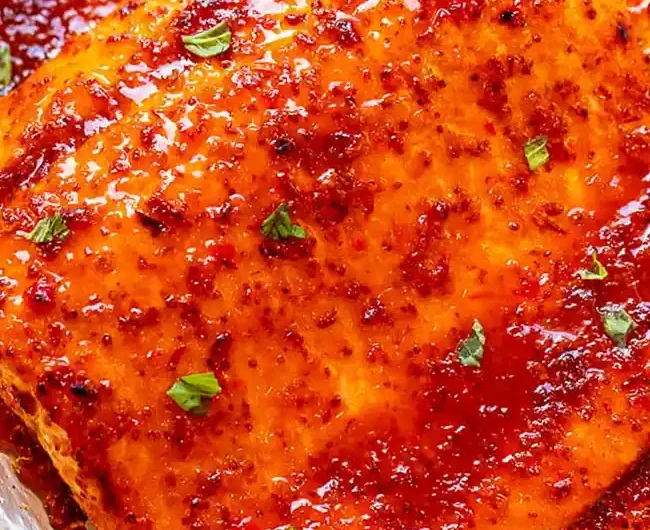
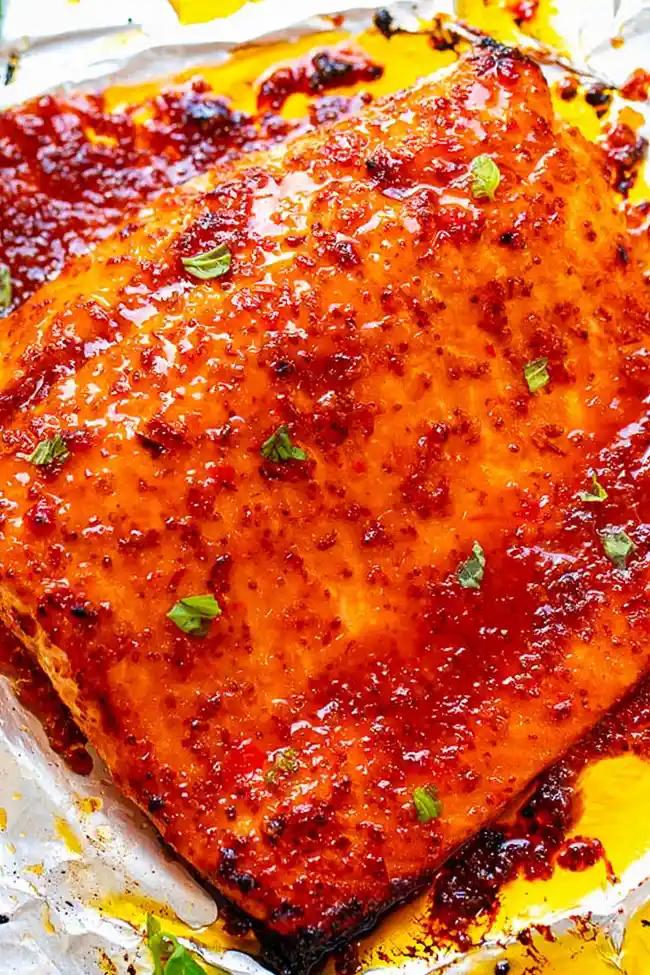
This baked salmon recipe combines sweet and spicy notes for a restaurant-quality meal in under 30 minutes. It uses a simple sheet pan method to minimize cleanup and maximize flavor.
List of ingredients
- 1.50 to 2 pounds skin-on salmon – use a large piece or several center-cut filets.
- 2 to 3 tablespoons olive oil – used to prevent sticking and add moisture.
- 1/2 cup sweet chili sauce – provides the primary sweet and tangy base.
- 1/4 cup stone ground grainy Dijon mustard – ensure you use the variety with visible mustard seeds for texture.
- 1 to 2 tablespoons chili garlic sauce – adjust this amount based on your preferred heat level.
- 2 to 3 tablespoons honey – adds a glossy finish and deep sweetness.
- Lemon juice – optional for adding a fresh, acidic garnish.
- Fresh basil, cilantro, or parsley – optional for a pop of color and herbal flavor.
- Salt and pepper – optional and to taste, as the sauces are naturally salty.
step-by-step instructions
- Prepare the Pan: Preheat your oven to 375F, using the convection setting if available for more even heat. Line a sheet pan with heavy-duty aluminum foil, curving the edges upward to create a lip that prevents sauces from leaking. Place the salmon skin-side-down in the center of the pan and drizzle evenly with olive oil.
- Mix the Glaze: In a medium-sized mixing bowl, combine the sweet chili sauce, grainy Dijon mustard, chili garlic sauce, and honey. Stir the ingredients thoroughly until the mixture is smooth and well-integrated.
- Apply Sauce: Spoon the glaze mixture generously over the top of the salmon. It is normal for some sauce to roll off the sides and pool at the base of the fish; leave it there for now.
- Initial Bake: Place the pan in the oven and bake for 10 to 15 minutes. The fish should be nearly cooked through but not fully done. Once the time is up, turn your oven broiler to the High setting.
- Broil for Finish: Carefully remove the pan from the oven. Use a spoon to redistribute any pooled sauce from the bottom of the pan back onto the center of the salmon. Return the pan to the oven and broil for 5 to 8 minutes, or until the edges are lightly browned and caramelized.
- Final Touch: Remove the salmon from the oven. Optionally garnish with a squeeze of fresh lemon juice and chopped fresh herbs. Add salt and pepper if desired, then serve immediately.
Selecting the Best Salmon
Farm-Raised Versus Wild Salmon
Farm-raised salmon typically has a higher fat content, which makes it more forgiving during the baking and broiling process. This extra fat helps prevent the fish from drying out under the high heat of the broiler. Wild salmon, such as Sockeye or King, offers a deeper red color and a more robust flavor but can overcook more quickly due to lower fat levels.
Using Center-Cut Filets
If you prefer individual servings, choose center-cut filets weighing between 6 to 8 ounces each. These are typically more uniform in thickness than a whole side of salmon, which ensures that every piece cooks at the same rate. When using filets, space them evenly on the pan to allow hot air to circulate around each piece.
The Importance of Skin-On Salmon
Keeping the skin on the salmon serves as a protective barrier between the delicate flesh and the hot baking sheet. This prevents the bottom of the fish from overcooking or sticking to the foil. Additionally, the skin provides a textural contrast and holds the fillet together during the flipping or spooning process.
Mastering the Cooking Process
Optimizing Oven Settings
Using a convection oven is highly recommended for this recipe because the internal fan circulates hot air more efficiently. This results in a more consistent temperature across the entire sheet pan and helps the glaze set more quickly. If you are using a conventional oven, you may need to rotate the pan halfway through the baking stage.
Precision Broiling Techniques
The broiler provides intense, direct heat from the top, which is essential for caramelizing the sugars in the honey and chili sauce. Because this process happens rapidly, you must watch the fish constantly. The glaze can transition from perfectly browned to burnt in less than sixty seconds.
Using the Second Oven Rack
If you are concerned about burning the glaze, place your sheet pan on the second oven rack rather than the top rack. This increases the distance between the heating element and the salmon, slowing down the browning process. While this may add a few minutes to the broil time, it provides a wider margin of error.
Determining Perfect Doneness
Salmon is cooked perfectly when the flesh transitions from translucent to opaque and flakes easily with a fork. To be precise, use a digital meat thermometer to check the thickest part of the fish. For a medium-rare center, aim for an internal temperature of 125F to 135F, or 145F for fully cooked.
Adjusting Flavor and Heat
Modifying the Spice Level
The chili garlic sauce provides the primary heat in this recipe. If you are sensitive to spice, start with one tablespoon or omit it entirely without compromising the structural integrity of the sauce. For those who prefer a more intense kick, you can increase the amount of chili garlic sauce or add a pinch of crushed red pepper flakes to the glaze.
Substituting the Sweetener
While honey provides the best gloss and a mild sweetness, maple syrup is a practical alternative that adds a slightly different woody flavor. If you need a vegan-friendly sweetener, agave nectar can be used in a 1:1 ratio. Ensure the substitute is a liquid sweetener to maintain the consistency of the glaze.
Choosing the Right Mustard
Stone ground grainy Dijon is specified because the whole mustard seeds add a sophisticated texture and a sharp, vinegary contrast to the sweet glaze. If you only have smooth Dijon, the recipe will still work, but the flavor will be more uniform and less complex. Avoid using yellow mustard, as it lacks the depth required for this profile.
Recommended Side Dishes
Grain-Based Accompaniments
Steamed jasmine or basmati rice is an ideal pairing because the neutral flavor balances the intensity of the sweet chili glaze. For a lower-carb option, cauliflower rice sautéed with a bit of garlic and lime juice provides a similar texture while adding extra nutrients. Quinoa also works well for those seeking additional protein and a nutty flavor.
Roasted and Sautéed Vegetables
Broccoli and green beans are excellent choices as they can be roasted on a separate pan at the same temperature as the salmon. The charred florets of roasted broccoli complement the caramelized edges of the fish. For a faster side, sauté baby spinach or bok choy in olive oil and ginger to maintain an Asian-inspired theme.
Fresh Salad Pairings
A simple green side salad with a light vinaigrette provides a refreshing contrast to the rich, sweet glaze. Consider a cucumber salad with rice vinegar, sesame oil, and toasted sesame seeds to echo the flavors of the chili sauce. Adding sliced avocado to any salad adds a creamy texture that pairs well with the flakiness of the salmon.
Storage and Handling
Refrigeration Guidelines
Leftover salmon can be stored in an airtight container in the refrigerator for up to four days. To prevent the fish from absorbing other odors in the fridge, ensure the seal is tight. It is recommended to let the salmon cool completely before sealing the container to avoid excess moisture buildup.
Serving Salmon Cold
Many people find that reheating salmon can lead to a dry texture and a less appealing aroma. A better alternative is to serve the leftover chilled salmon flaked over a fresh garden salad. The cold glaze becomes thicker and acts as a flavorful dressing when combined with fresh greens.
Reheating for Best Results
If you prefer the salmon warm, avoid the microwave, which often overcooks the fish and makes it rubbery. Instead, place the salmon in a low-temperature oven (around 275F) for 10 minutes. Lightly cover the fish with foil to trap moisture and prevent the glaze from drying out.
Troubleshooting Common Issues
Preventing Sauce from Burning
If the glaze begins to darken too quickly under the broiler, immediately move the pan to a lower rack or cover the top loosely with a piece of foil. This shields the sugars from the direct heat while allowing the interior of the fish to finish cooking. Always keep a close eye on the pan during the final stage.
Fixing Dry Salmon
Dry salmon is usually the result of overcooking. If you find your fish is too dry, try reducing the initial baking time by two minutes next time. Adding a small pat of unsalted butter on top of each filet before serving can also add a touch of moisture and richness to a slightly overcooked piece.
Managing Excess Sauce Pooling
When sauce pools at the bottom of the pan, it can sometimes burn or become too thick. The key is the redistribution step before broiling. By spooning the pooled liquid back over the fish, you ensure the salmon is coated in a thick layer of glaze, which protects the meat and creates a better crust.
Frequently Asked Questions
Can I use frozen salmon for this recipe?
Yes, but you must thaw it completely in the refrigerator overnight before cooking. Cooking salmon from frozen will lead to uneven heating and an excess of water releasing on the pan, which will dilute the glaze and prevent it from caramelizing during the broiling phase.
Is the salmon skin edible?
Yes, the skin is completely edible and becomes quite tasty when baked and broiled. The skin-side-down cooking method allows it to crisp up slightly while the fat renders into the fish. If you prefer not to eat it, you can simply slide the fillet off the skin before serving.
What can I use instead of chili garlic sauce?
Sriracha or a small amount of Gochujang (Korean chili paste) are excellent substitutes. Sriracha is slightly more vinegary, while Gochujang is thicker and fermented. If using Gochujang, you may need to add a teaspoon of water or oil to thin it out so it mixes easily with the honey and mustard.
Can I bake this without using foil?
While you can bake without foil, it is not recommended because the honey and sweet chili sauce create a sticky residue that is very difficult to clean. Furthermore, the foil edges act as a basin to hold the sauce, allowing the fish to braise slightly in its own juices and the glaze.
Print
Sheet Pan Sweet Chili Salmon
- Total Time: 30 minutes
- Yield: 4 servings 1x
- Diet: General
Description
A 5-ingredient salmon recipe that’s loaded with layers of incredible flavor from two types of chili sauce, Dijon mustard, and honey!
Ingredients
- 1.50 to 2 pounds skin-on salmon
- 2 to 3 tablespoons olive oil
- 1/2 cup sweet chili sauce
- 1/4 cup stone ground grainy Dijon mustard
- 1 to 2 tablespoons chili garlic sauce
- 2 to 3 tablespoons honey
- lemon juice (optional for garnishing)
- fresh basil, cilantro or parsley (optional for garnishing)
- salt and pepper (optional and to taste)
Instructions
- Step 1: Preheat oven to 375F (use convection if you have it), place a heavy-duty sheet of foil on a sheet pan, slightly curve up the edges to prevent liquids from rolling off, place the salmon skin-side-down in the center, and evenly drizzle with olive oil; set aside.
- Step 2: To a medium bowl, add the sweet chili sauce, Dijon mustard, chili garlic sauce, honey, and stir to combine.
- Step 3: Spoon mixture over the salmon.
- Step 4: Bake the salmon for 10 to 15 minutes, or until nearly done. Turn on broiler to High.
- Step 5: Remove the pan from the oven, re-distribute any pooled sauce at the base of the salmon by spooning it back into the center of the salmon, and broil for 5 to 8 minutes, or until as lightly browned around the edges as desired.
- Step 6: Remove salmon from the oven, and optionally garnish with lemon juice and fresh herbs, optionally add salt and pepper, and serve immediately.
Notes
Broiling Tips: Keep an extremely close eye on your salmon while it’s under the broiler because it can go from underdone to burnt in less than 1 minute. You can use the second rack to be less likely to burn it. Storage: Extra will keep airtight in the fridge for up to 4 days.
- Prep Time: 5 minutes
- Cook Time: 25 minutes
- Category: Seafood
- Method: Baking
- Cuisine: Asian
Nutrition
- Serving Size: 1 serving
- Calories: 718 kcal
- Sugar: 31 g
- Sodium: 1983 mg
- Fat: 40 g
- Saturated Fat: 7 g
- Unsaturated Fat: 30 g
- Trans Fat: 0 g
- Carbohydrates: 36 g
- Fiber: 3 g
- Protein: 53 g
- Cholesterol: 143 mg
Keywords: sheet pan salmon, sweet chili salmon, easy dinner, baked salmon, Asian salmon