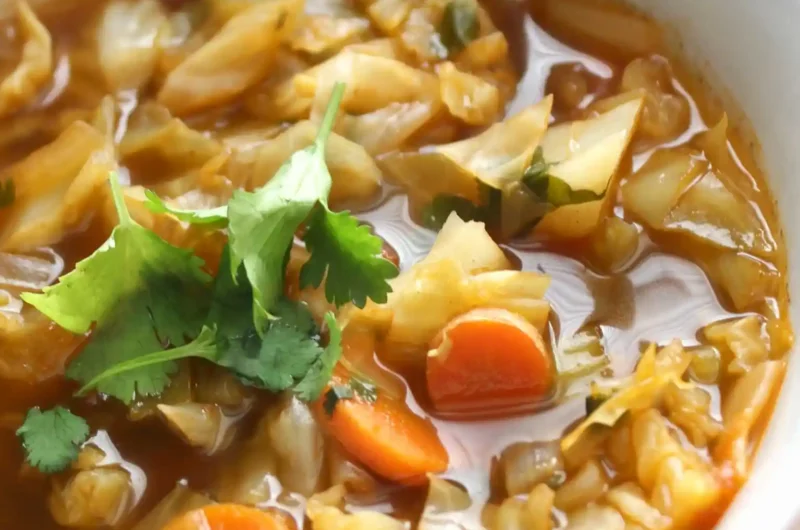
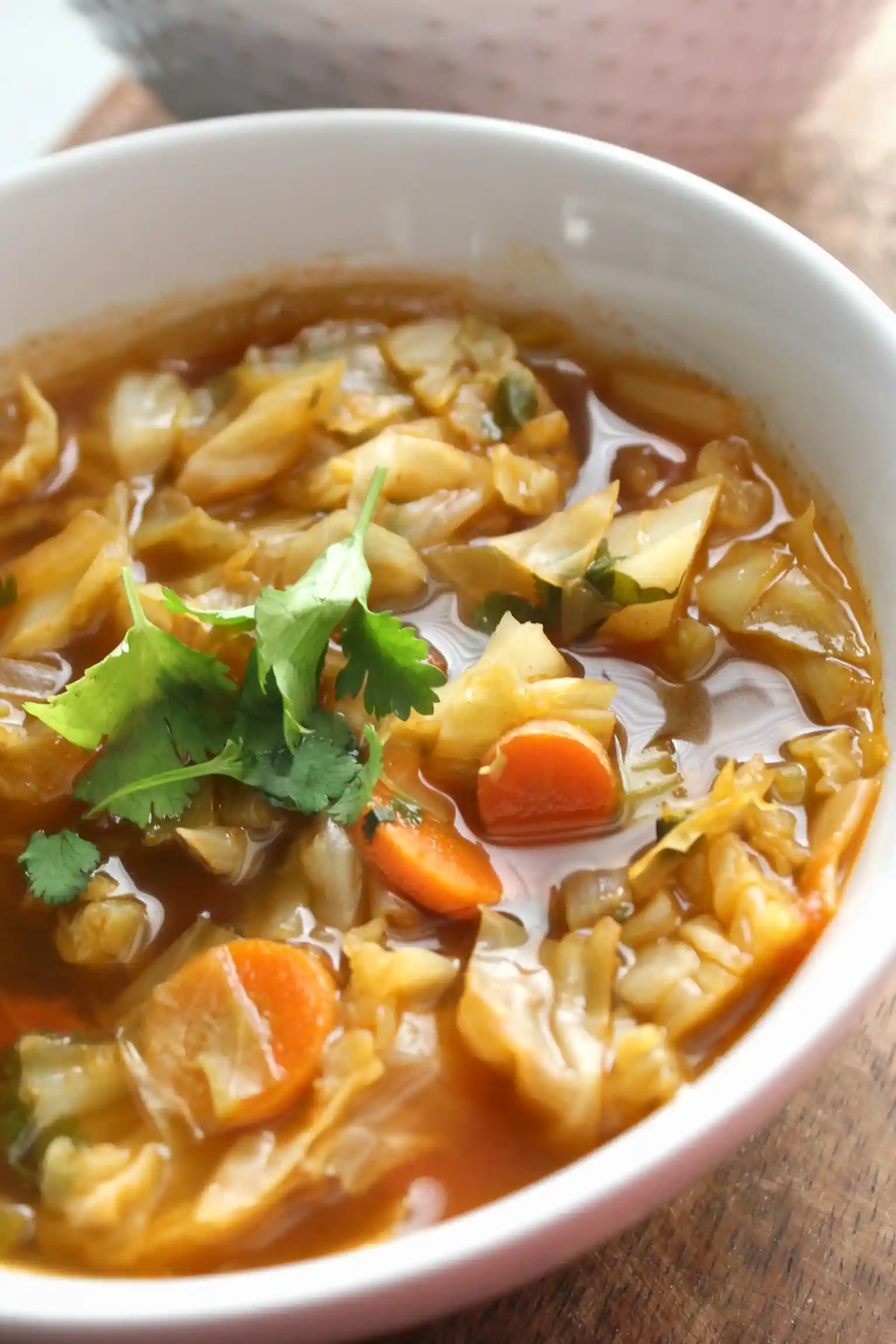
This nutrient-dense soup combines hearty vegetables with a bold, spicy broth to create a warming meal. It is a simple one-pot recipe that is ideal for cold weather or a dietary reset.
List of ingredients
- 8 cups broth – use a high-quality vegan beef broth or a mix of broth and water for salt control.
- 2 cloves garlic – peeled and finely diced.
- 1/2 inch ginger – peeled and finely diced.
- 2 carrots – sliced into uniform rounds.
- 2 stalks celery – chopped into small pieces.
- 1 jalapeño – chopped, including seeds for more heat.
- 1/2 large yellow onion – diced.
- 1/2 head green cabbage – chopped into bite-sized pieces.
- 1/2 cup chunky red salsa – adds depth and acidity.
- 2 tbsp low sodium soy sauce (or tamari) – provides umami flavor.
- 2 tbsp sriracha – adjust quantity based on your preferred spice level.
- pepper – added to taste.
step-by-step instructions
- Combine: Place the broth and all remaining ingredients into a large stockpot.
- Boil: Turn the heat to high and bring the liquid to a rolling boil.
- Simmer: Lower the heat to a simmer and cook until the vegetables reach your preferred tenderness.
- Serve: Ladle the hot soup into bowls and serve immediately.
Optimizing Your Broth Base
Choosing the Right Vegan Beef Base
Using a concentrated vegan beef base provides a rich, savory flavor that mimics traditional beef broth. Ensure the base is fully dissolved in the liquid to avoid salty pockets. If using a concentrate, start with less salt in other ingredients.
Balancing Salt with Water
If your broth is very strong or high in sodium, replace a portion of it with water. For example, using 5 cups of broth and 3 cups of water maintains the flavor while reducing sodium intake. Always taste the broth before adding extra soy sauce.
Alternative Vegetable Stocks
For a lighter flavor profile, you can substitute the beef broth with a high-quality vegetable stock. This will shift the soup toward a more garden-fresh taste rather than a hearty, savory one. Add a pinch of smoked paprika to regain some of the depth.
Vegetable Preparation Techniques
Achieving Consistent Carrot Rounds
Slice carrots into uniform thickness to ensure they all cook at the same rate. Thinner rounds will soften quickly, while thicker chunks may remain crunchy. Aim for about 1/4 inch thickness for the best texture.
Chopping Cabbage for Maximum Texture
Cut the cabbage into 1-inch squares to prevent them from disintegrating during the simmering process. If you prefer a more integrated texture, shred the cabbage thinly. Keeping the pieces larger allows the cabbage to maintain some structure.
Preparing Ginger and Garlic
Mince the ginger and garlic as finely as possible to distribute their aromatics evenly through the broth. Using a microplane or a fine grater can help integrate these flavors more effectively than rough chopping. This prevents biting into large, pungent pieces.
Managing Spice and Heat
Controlling Jalapeño Intensity
The heat of a jalapeño is concentrated in the seeds and white membranes. To reduce the spice, remove the seeds and ribs before chopping the pepper. For maximum heat, include everything and finely dice the pepper.
Adjusting Sriracha Levels
Sriracha adds both heat and a slight sweetness to the soup. Start with the recommended 2 tablespoons, then add more in small increments after the soup has simmered. This allows the flavors to meld before you make a final decision on the spice level.
Substituting Other Spicy Peppers
If jalapeños are unavailable, use serrano peppers for a sharper heat or habaneros for an intense kick. When using habaneros, reduce the quantity to a quarter of a pepper. Always wear gloves when handling high-heat peppers.
Ingredient Substitutions and Swaps
Replacing Green Cabbage
Kale or Savoy cabbage can be used as a substitute for green cabbage in this recipe. Kale should be added in the last 10 minutes of cooking to prevent overcooking. Savoy cabbage offers a softer leaf and a milder flavor.
Soy Sauce Alternatives
Coconut aminos are an excellent substitute for soy sauce if you require a soy-free option. Coconut aminos are naturally sweeter, so you may want to add a small squeeze of lime juice to balance the flavor. Tamari is a great option for those avoiding wheat.
Sriracha Substitutes
If you do not have sriracha, use a combination of hot sauce and a pinch of sugar. Chili garlic sauce is another viable alternative that adds a similar pungent heat. Adjust the amount based on the saltiness of the alternative sauce.
Flavor Enhancement Strategies
Adding Fresh Herbs
Fresh cilantro or parsley added at the very end provides a bright contrast to the spicy broth. Stir in the herbs just before serving to preserve their color and volatile oils. This adds a layer of freshness that cuts through the richness of the broth.
Integrating Citrus Accents
A squeeze of fresh lime or lemon juice stirred into the pot at the end enhances the flavors of the ginger and garlic. The acidity helps balance the saltiness of the soy sauce. This is particularly effective if the soup feels too heavy.
Boosting the Umami Profile
To deepen the savory notes, you can add a teaspoon of tomato paste or a dash of nutritional yeast. These additions complement the vegan beef broth and increase the overall richness. Stir them in during the boiling phase for maximum integration.
Serving and Pairing Suggestions
Pairing with Whole Grains
Serve this soup over a scoop of cooked brown rice or quinoa for a more filling meal. The grains absorb the spicy broth and provide a textural contrast to the soft vegetables. This transforms the detox soup into a complete dinner.
Ideal Bread Pairings
A slice of toasted sourdough or a piece of crusty whole-grain baguette complements the acidity of the salsa. Use the bread to soak up the remaining broth at the bottom of the bowl. Garlic toast is also a popular pairing for this flavor profile.
Garnish Ideas
Top each bowl with sliced green onions or a drizzle of toasted sesame oil for added aroma. A dollop of vegan sour cream or Greek yogurt can help mellow the heat for those with lower spice tolerances. Sliced avocado adds a creamy texture that balances the spice.
Storage and Preservation
Refrigerator Storage Guidelines
Store leftovers in airtight glass containers to maintain freshness and prevent odors from leaking. This soup stays fresh in the refrigerator for 5 to 7 days. Ensure the soup is cooled to room temperature before sealing the lid to avoid condensation.
Freezing Instructions
You can freeze this soup for up to three months by using freezer-safe containers. Leave about an inch of headspace at the top of the container to allow for liquid expansion. Note that the cabbage may become softer upon thawing.
Preventing Vegetable Mushiness
If you plan to store the soup for several days, undercook the vegetables slightly during the initial simmer. They will continue to soften during the reheating process. This preserves the bite and prevents the soup from becoming a puree.
Reheating Best Practices
Stovetop Reheating Method
Reheat the soup in a small pot over medium-low heat, stirring occasionally. This is the best method for maintaining the consistency of the vegetables. Add a splash of water or broth if the liquid has thickened too much in the fridge.
Microwave Instructions
Place the soup in a microwave-safe bowl and cover it with a lid or damp paper towel. Heat in 1-minute intervals, stirring in between to ensure even heating. Avoid overheating to prevent the cabbage from becoming overly soft.
Adjusting Liquid After Storage
Vegetables often absorb broth while sitting in the refrigerator, which can make the soup thicker. Add 1/4 cup of water or vegetable broth during reheating to restore the original consistency. Taste and adjust the seasoning as needed.
Make-Ahead Preparation
Pre-Chopping Vegetables
You can chop the carrots, celery, onion, and cabbage up to two days in advance. Store them in separate airtight bags or containers in the fridge. This reduces the actual cooking time to just a few minutes of assembly.
Batch Cooking for the Week
This recipe scales well for batch cooking. Double the ingredients and use a larger stockpot to prepare multiple portions at once. Divide the soup into individual serving containers for easy grab-and-go lunches.
Flavor Development Over Time
Like many vegetable soups, the flavors of this recipe often improve after 24 hours in the fridge. The ginger and garlic infuse more deeply into the broth over time. This makes it an ideal meal-prep option for the week.
Troubleshooting Common Issues
Managing Excess Saltiness
If the soup tastes too salty, add a diced potato and simmer it for 15 minutes to absorb some of the salt. Alternatively, stir in a tablespoon of apple cider vinegar or lemon juice. The acid helps mask the perception of salt.
Reducing Excessive Heat
If the soup is too spicy, increase the volume of the broth or add more cabbage. Adding a small amount of fat, such as a teaspoon of coconut oil or a splash of coconut milk, can also neutralize the heat. This coats the tongue and reduces the spice burn.
Fixing Thin Broth
If the broth feels too watery, simmer the soup uncovered for an additional 10-15 minutes to reduce the liquid. You can also blend a small portion of the vegetables and stir them back into the pot. This creates a naturally thicker consistency without adding flour.
Frequently Asked Questions
Can I use red cabbage instead of green?
Yes, red cabbage can be used, but it will change the color of the soup to a deep purple. The flavor is slightly sweeter, which works well with the spicy elements of the recipe.
Is this soup gluten-free?
This soup is gluten-free as long as you use tamari or a certified gluten-free soy sauce. Most vegan beef broths are gluten-free, but always check the label for hidden thickeners.
How long does the soup last in the fridge?
The soup remains safe and tasty for 5 to 7 days when stored in an airtight container. Always reheat it to a boil before consuming leftovers.
Can I add protein to this soup?
Yes, adding cubed tofu, chickpeas, or cooked lentils is a great way to increase the protein content. Add these ingredients during the last 10 minutes of simmering to avoid overcooking them.
Print
Spicy Cabbage Detox Soup
- Total Time: 40 minutes
- Yield: 8 servings 1x
- Diet: Vegan
Description
Perfect for those cold winter days, this Spicy Cabbage Detox Soup is packed full of veggies, spices and a delicious vegan beef broth.
Ingredients
- 8 cups vegan beef broth
- 2 cloves garlic, peeled and diced
- 1/2 inch ginger, peeled and diced
- 2 carrots, sliced in rounds
- 2 stalks celery, chopped
- 1 jalapeño, chopped
- 1/2 large yellow onion
- 1/2 head green cabbage, chopped
- 1/2 cup chunky red salsa
- 2 tbsp low sodium soy sauce or tamari
- 2 tbsp sriracha
- pepper to taste
Instructions
- Step: Add broth and all remaining ingredients to a large pot.
- Step: Bring to a rolling boil then lower heat and simmer until veggies are cooked to your liking.
- Step: Serve hot.
Notes
You can use a combination of broth and water depending on the strength of the broth flavor. For tender veggies, simmer for up to an hour; for more crunch, 30 minutes is sufficient.
- Prep Time: 10 minutes
- Cook Time: 30 minutes
- Category: Soups
- Method: Simmering
- Cuisine: American
Nutrition
- Serving Size: 1 serving
- Calories: 50 kcal
- Sugar: 4 g
- Sodium: 620 mg
- Fat: 1 g
- Saturated Fat: 0.1 g
- Unsaturated Fat: 0.9 g
- Trans Fat: 0 g
- Carbohydrates: 11 g
- Fiber: 3 g
- Protein: 3 g
- Cholesterol: 0 mg
Keywords: spicy cabbage soup, detox soup, vegan beef broth, winter soup, healthy vegan