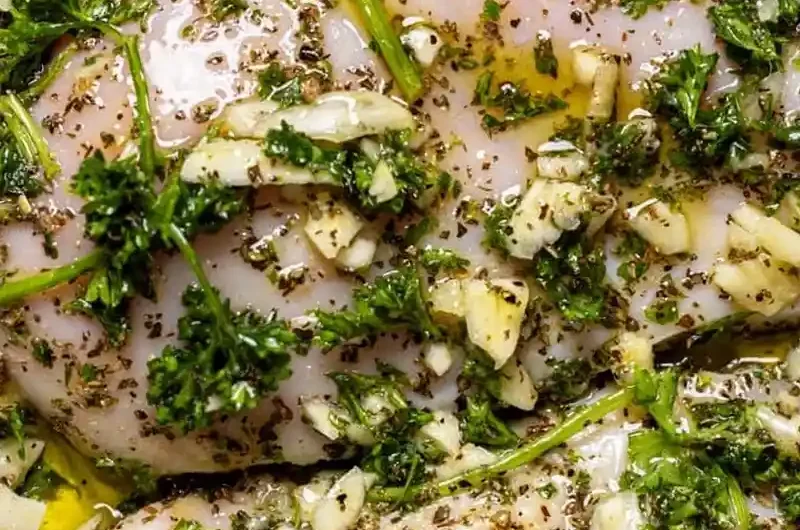
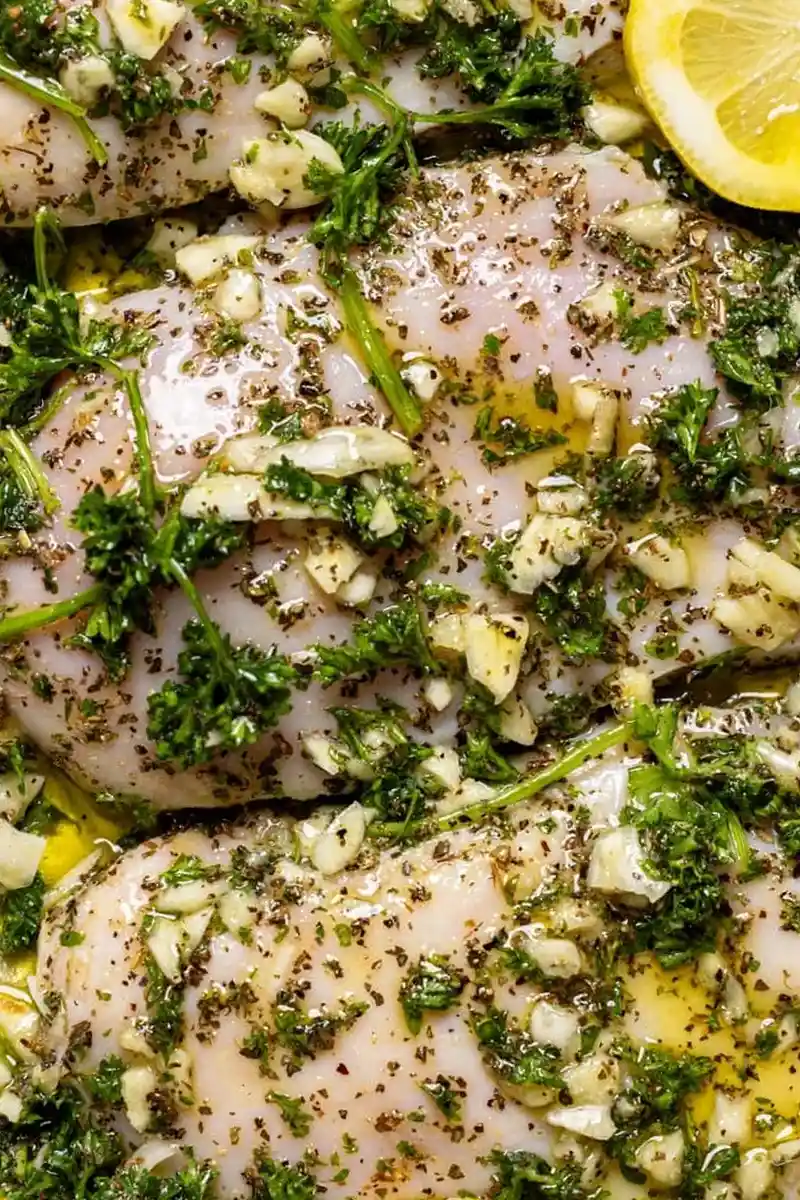
Creating the perfect chicken dish starts with a robust, flavor-packed marinade that penetrates the meat to ensure every bite is tender and aromatic. This zesty combination of fresh lemon, pungent garlic, and earthy dried herbs offers a versatile profile that suits almost any cooking technique, from high-heat grilling to gentle oven roasting. By balancing the acidity of the citrus with the richness of olive oil, you create a perfect environment for flavor infusion that results in moist, restaurant-quality chicken every time. This recipe is completely dairy-free and relies on pantry staples to transform humble poultry into a gourmet meal.
List of ingredients
- 1 cup Extra virgin olive oil
- 1 lemon, freshly-squeezed
- 4 garlic cloves, minced
- 1 tsp sea salt
- 1 tsp black pepper
- 1 tsp garlic powder
- 1 tsp onion powder
- 1 tsp dried basil
- 1 tsp dried thyme
- 1 tsp honey dijon mustard
- 1 handful fresh parsley, chopped
step-by-step instructions
- Step: In a bowl, add all the ingredients together, whisking to fully combine.
- Step: When ready to use, pour the marinade over the chicken and store the chicken in an airtight container or ziplock bag for 1-2 hours minimum or overnight for the best results.
- Step: Cook chicken per usual by your favorite method (baked, grilled, etc.).
Practical Preparation Strategies
Achieving Even Emulsification
When mixing the marinade, ensure the oil and lemon juice are properly emulsified to prevent the chicken from becoming too oily on one side and too acidic on the other. Using a balloon whisk or placing the ingredients in a mason jar and shaking vigorously will create a more stable mixture. The honey dijon mustard acts as a binding agent here, so do not skip it if you want a uniform coat on the meat.
Selecting the Right Containers for Marinating
Avoid using aluminum or reactive metal bowls when marinating with acidic ingredients like lemon juice. Instead, opt for glass, ceramic, or BPA-free plastic bags to prevent any metallic taste from leaching into the marinade. Glass containers are particularly effective as they are non-porous and do not absorb the pungent scents of the garlic and herbs over time.
Understanding Ingredient Substitutions
Swapping Dried Herbs for Fresh
If you prefer to use fresh herbs instead of dried ones, you must increase the quantity significantly. As a general rule, use three times the amount of fresh herbs compared to dried, as dried versions are more concentrated. For example, replace the one teaspoon of dried basil with one tablespoon of fresh chopped basil to achieve a similar aromatic impact.
Adapting the Acid Profile
While lemon juice provides the classic brightness for this marinade, you can successfully substitute it with lime juice if you are aiming for a more tropical or taco-inspired flavor profile. If you find the lemon too sharp, you can cut the acidity with an extra half-teaspoon of honey or agave syrup to balance the pH levels of the liquid. Avoid using vinegar as a substitute for lemon, as the flavor profile will become much harsher and may overpower the delicate balance of the thyme and basil.
Optimizing Flavor Infusion
Vacuum Sealing for Faster Results
If you are short on time, using a vacuum sealer bag for marinating can speed up the infusion process. The vacuum pressure forces the marinade into the pores of the chicken much faster than standard atmospheric pressure in a regular bag. This method can effectively cut your marinating time from two hours down to thirty minutes without sacrificing the depth of flavor.
Piercing the Chicken for Better Penetration
For thicker cuts like chicken breasts or bone-in thighs, use a fork to gently pierce the surface of the meat in a few places before adding the marinade. This creates small channels for the garlic, salt, and herb-infused oil to travel deeper into the tissue. This simple step ensures that the center of the meat is just as seasoned as the exterior surface.
Safe Storage and Handling
Refrigerating Leftover Marinade
Any marinade that has not come into contact with raw meat can be safely stored in the refrigerator in an airtight jar for up to one week. However, never reuse marinade that has touched raw chicken, as it will contain harmful bacteria that cannot be neutralized by simply refrigerating. If you intend to use some of the marinade as a basting sauce during cooking, set aside a portion in a separate container before adding the raw chicken to the main batch.
Freezing Marinated Chicken
You can freeze chicken directly in the marinade for up to three months. The marinade helps shield the meat from freezer burn, and as the chicken thaws in the refrigerator, it will continue to absorb the flavors. When you are ready to cook, simply pull the bag from the freezer and let it defrost slowly in the fridge for twenty-four hours before proceeding to the grill or oven.
Frequently Asked Questions
Why did my marinade turn cloudy in the refrigerator?
The cloudiness is simply the result of the extra virgin olive oil solidifying at colder temperatures. Once the marinade is removed from the refrigerator and sits at room temperature for a few minutes, the oil will return to a liquid state and blend seamlessly with the other ingredients.
Can I use this marinade for vegetables?
This marinade is excellent for hearty vegetables like zucchini, bell peppers, asparagus, and portobello mushrooms. Because vegetables have different cellular structures than meat, they only require about 15 to 30 minutes of marinating time, as they will become mushy if left in the acidic lemon juice for too long.
Does the honey dijon make the chicken taste sweet?
The honey dijon mustard is added primarily for its emulsifying properties and savory tang rather than for sweetness. The small amount used is barely perceptible as a distinct flavor, but it serves to round out the sharp edges of the lemon and the intensity of the raw garlic.
How do I know if my chicken is fully cooked?
The most accurate way to check for doneness is by using a digital meat thermometer inserted into the thickest part of the chicken. The chicken is safe and ready to eat when it reaches an internal temperature of 165°F (74°C). Relying on visual cues like skin color or juice clarity is often unreliable due to the herbs and garlic charring during the cooking process.
Print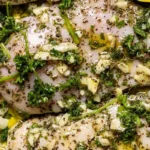
The Best Lemon Garlic Herb Chicken Marinade
- Total Time: 5 minutes
- Yield: 1 cup 1x
- Diet: Dairy-free
Description
Transform your chicken into something extraordinary with this zesty Lemon Garlic Herb Chicken Marinade. Bursting with flavors of fresh garlic, aromatic herbs, a hint of honey dijon mustard, and the freshness of parsley, this marinade elevates every bite. Whether you’re grilling, baking, or pan-searing, this marinade promises to infuse your chicken with tangy, herbaceous goodness! Completely Dairy-free.
Ingredients
- 1 cup Extra virgin olive oil
- 1 lemon, freshly-squeezed
- 4 garlic cloves, minced
- 1 tsp sea salt
- 1 tsp black pepper
- 1 tsp garlic powder
- 1 tsp onion powder
- 1 tsp dried basil
- 1 tsp dried thyme
- 1 tsp honey dijon mustard
- 1 handful fresh parsley, chopped
Instructions
- Step: In a bowl, add all the ingredients together, whisking to fully combine.
- Step: When ready to use, pour the marinade over the chicken and store the chicken in an airtight container or ziplock bag for 1-2 hours minimum or overnight for the best results.
- Step: Cook chicken per usual by your favorite method (baked, grilled, etc.).
Notes
Leftover marinade can be refrigerated in an airtight container for up to 1 week.
- Prep Time: 5 minutes
- Cook Time: 0 minutes
- Category: Main Course
- Method: Mixing
- Cuisine: American
Nutrition
- Serving Size: 1 tbsp
- Calories: 124 kcal
- Sugar: 0.2 g
- Sodium: 146 mg
- Fat: 14 g
- Saturated Fat: 2 g
- Unsaturated Fat: 11 g
- Trans Fat: 0 g
- Carbohydrates: 1 g
- Fiber: 0.3 g
- Protein: 0.2 g
- Cholesterol: 0 mg
Keywords: lemon garlic chicken, marinade, herb marinade, dairy-free, chicken marinade