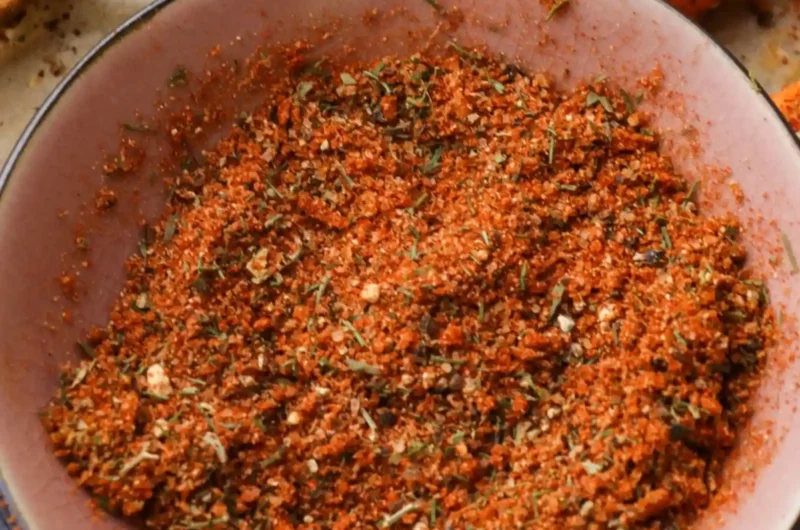
Create a versatile, sweet, and smoky rub that elevates any salmon fillet. This vegan and gluten-free spice blend is designed to enhance the fish’s natural flavor without overpowering it.
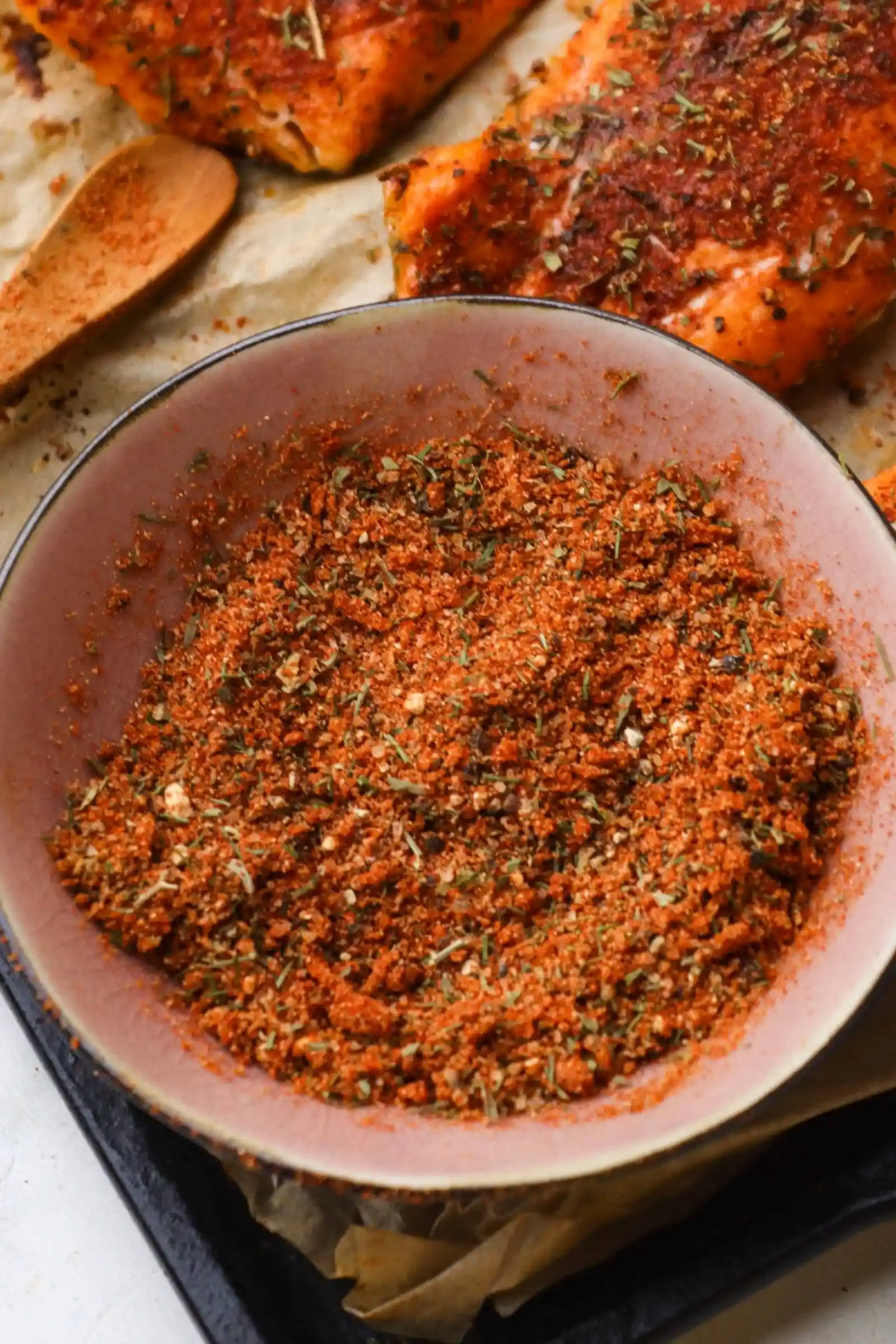
List of ingredients
- 1 tablespoon brown sugar – adds a caramelized sweetness.
- 2 teaspoons paprika – provides a smoky base and rich color.
- 1/2 teaspoon garlic powder – adds a savory, pungent depth.
- 1/2 teaspoon ginger powder – introduces a subtle warmth and zest.
- 1/2 teaspoon mustard powder – adds a slight tang to balance the sugar.
- 1 teaspoon dried tarragon – provides a delicate anise-like herbal note.
- 1/4 teaspoon salt – enhances all other flavors.
- 1/4 teaspoon pepper – adds a mild, earthy heat.
step-by-step instructions
- Measure: Combine all the listed ingredients into a medium-sized mixing bowl.
- Mix: Stir the spices together thoroughly until the color and texture are uniform.
- Store or Use: Apply the blend to your salmon immediately or transfer the mixture to an airtight container for future use.
Effective Application Techniques
Using Olive Oil for Adhesion
Brush a thin layer of olive oil over the flesh side of the salmon before applying the rub. The oil acts as a binder, ensuring the spices stick evenly to the fish. It also helps prevent the fish from sticking to the pan or grill.
Applying with Melted Butter
For a richer flavor, use melted unsalted butter instead of oil. The fat in the butter carries the flavors of the spices deeper into the meat. This is especially effective for oven-baked salmon to keep the fillet moist.
Pressing the Seasoning
Rather than just sprinkling the rub, lightly pat the spices into the flesh. This creates a crust-like layer that caramelizes during the cooking process. Be careful not to press too hard to avoid bruising the delicate fish fibers.
Optimal Cooking Methods
Oven Baking for Uniformity
Preheat your oven to 400°F (200°C) and line a baking sheet with parchment paper. Place the seasoned fillets skin-side down and bake for 12 to 15 minutes depending on thickness. The fish is done when it flakes easily with a fork or reaches an internal temperature of 145°F.
Pan-Searing for a Crispy Crust
Heat a tablespoon of oil in a stainless steel or cast-iron skillet over medium-high heat. Place the salmon skin-side down first and sear for about 4 to 5 minutes until the skin is crispy. Flip the fillet and cook the seasoned side for another 3 to 4 minutes until caramelized.
Outdoor Grilling Tips
Clean and oil your grill grates thoroughly to prevent the sugar in the rub from sticking. Grill the salmon over medium-high heat, starting with the flesh side down for a quick sear. Move the fish to an indirect heat zone to finish cooking through without burning the spices.
Air Frying for Efficiency
Place the seasoned fillets in an air fryer basket at 380°F (190°C). Cook for 8 to 12 minutes, depending on the thickness of the cut. This method creates a very consistent crust while keeping the interior juicy.
Ingredient Substitutions
Replacing Brown Sugar
If you prefer a different sweetness, replace brown sugar with coconut sugar or maple sugar. For a savory version with no sweetness, omit the sugar and increase the paprika by one teaspoon. This changes the profile from caramelized to purely savory.
Swapping Paprika Varieties
Use smoked paprika for a more intense campfire flavor. If you want a milder taste, standard sweet paprika is the best choice. Avoid hot paprika unless you want a significant increase in heat levels.
Alternative Herbal Notes
If you do not have dried tarragon, dried dill or dried parsley are excellent substitutes. Dill provides a classic seafood flavor, while parsley keeps the blend neutral. Use the same measurement of one teaspoon.
Flavor Profile Variations
Zesty Lemon Herb Twist
Combine this base rub with fresh lemon zest and a pinch of dried oregano. The acidity of the lemon cuts through the richness of the salmon. This variation is ideal for summer salads or light lunches.
Asian-Inspired Modification
Add a teaspoon of sesame seeds and a pinch of five-spice powder to the mixture. You can also brush the finished fish with a glaze of soy sauce and honey. This adds an umami depth that pairs well with steamed rice.
Bold Cajun Influence
Incorporate a half-teaspoon of cayenne pepper and extra thyme into the blend. This increases the heat and adds a rustic, earthy quality. It works exceptionally well for blackened salmon prepared in a very hot skillet.
Recommended Serving Ideas
Hearty Starchy Sides
Serve the seasoned salmon alongside classic scalloped potatoes for a comforting meal. Orzo pasta tossed with olive oil and garlic also complements the sweet and smoky notes. These sides balance the richness of the fish.
Nutritious Vegetable Pairings
Roasted asparagus and mushrooms provide an earthy contrast to the caramelized rub. Sautéed spinach with a hint of lemon also works well. These greens add color and freshness to the plate.
Fresh Salad Accompaniments
A cold quinoa salad with cucumber, feta, and a lemon vinaigrette is a refreshing pairing. The cool temperature of the salad contrasts nicely with the warm, seasoned fish. This makes the meal feel lighter and more balanced.
Storage and Freshness Guidelines
Storing the Dry Spice Blend
Keep the unused seasoning in a glass jar with a tight-sealing lid. Store it in a cool, dark pantry away from direct sunlight to prevent the spices from fading. The blend remains potent for up to a year, though maximum freshness is within six months.
Refrigerating Cooked Salmon
Allow cooked salmon to cool completely before transferring it to an airtight container. It can be stored in the refrigerator for 3 to 4 days. Ensure the container is sealed tightly to prevent the fish from absorbing other fridge odors.
Freezing for Long Term
Wrap cooked fillets in plastic wrap and then aluminum foil before placing them in a freezer bag. This double-layering prevents freezer burn. Store them for up to three months and thaw in the refrigerator overnight before reheating.
Proper Reheating Methods
Gentle Oven Reheating
Preheat your oven to 275°F (135°C). Place the salmon on a baking sheet and warm it for about 15 minutes. This slow process prevents the fish from drying out and maintains the integrity of the spice crust.
Stovetop Reheating
Place the salmon in a skillet over low heat with a small knob of butter or a drizzle of olive oil. Cover the pan with a lid to trap steam, which helps moisten the fish. Heat gently until the center is warm.
Avoiding the Microwave
Do not use a microwave to reheat seasoned salmon. The uneven heating often causes the fish to become rubbery and dry. It can also cause the sugar in the rub to overheat and change taste.
Troubleshooting Common Issues
Preventing Salmon from Sticking
Ensure your pan or grill is fully preheated before adding the fish. Using a high-smoke-point oil like avocado oil helps create a non-stick barrier. If the fish sticks, avoid forcing it; let it sear for another minute, and it will naturally release.
Avoiding Overcooked Fish
Use a digital meat thermometer to check the internal temperature. Remove the salmon from the heat when it reaches 140°F, as carry-over cooking will bring it to the safe 145°F. Overcooking leads to a dry, chalky texture.
Fixing a Burnt Rub
If the sugar in the rub burns due to excessive heat, gently scrape off the blackened bits with a knife. Next time, lower the heat or use a foil packet for grilling. This protects the sugars from direct flame contact.
Frequently Asked Questions
Can I use this on other fish?
Yes, this blend works well with other firm fish such as trout, mahi-mahi, or halibut. Because it is a balanced mix of sweet and savory, it complements most white fish. Adjust the amount of rub based on the thickness of the fillet.
How long does the rub last?
The dry spice blend lasts up to 12 months in an airtight container. However, for the best aromatic quality, try to use it within six months. Keep it away from heat sources like the stove to maintain potency.
Do I need to brine the salmon first?
Brining is not necessary for this recipe, as the salt in the rub provides sufficient seasoning. However, a quick dry brine can help the skin get crispier. If you choose to brine, reduce the salt amount in the rub to avoid oversalting.
Is this seasoning suitable for all diets?
This blend is naturally vegan and gluten-free. It avoids common allergens and animal-derived additives. It is a safe and flavorful option for those with dietary restrictions regarding dairy or gluten.
Can I apply the rub hours in advance?
Applying the rub 30 to 60 minutes before cooking can enhance the flavor penetration. However, do not leave it on for too long, as the salt can begin to cure the fish. For the best results, apply it shortly before cooking.
Print
All-Purpose Sweet and Smoky Salmon Seasoning
- Total Time: 10 minutes
- Yield: 1 batch 1x
- Diet: Vegan
Description
A sweet & smoky vegan, gluten-free spice blend for perfectly flavored fish.
Ingredients
- 1 tablespoon brown sugar
- 2 teaspoons paprika
- 1/2 teaspoon garlic powder
- 1/2 teaspoon ginger powder
- 1/2 teaspoon mustard powder
- 1 teaspoon dried tarragon
- 1/4 teaspoon salt
- 1/4 teaspoon pepper
Instructions
- Step 1: Measure out all of the ingredients into a bowl.
- Step 2: Mix the ingredients together until thoroughly combined. Either use the spice blend immediately, or transfer it to an airtight container for storage.
Notes
This seasoning can be stored in an airtight container for up to a year, though it is best used within 6 months for maximum freshness. For best results, rub salmon with olive oil or melted butter before applying the seasoning.
- Prep Time: 10 minutes
- Cook Time: 0 minutes
- Category: seasoning
- Method: Mixing
- Cuisine: American
Nutrition
- Serving Size: 1 batch
- Calories: 69 kcal
- Sugar: 15 g
- Sodium: 588 mg
- Fat: 1 g
- Saturated Fat: 0.1 g
- Unsaturated Fat: 0.9 g
- Trans Fat: 0 g
- Carbohydrates: 16 g
- Fiber: 1 g
- Protein: 1 g
- Cholesterol: 0 mg
Keywords: salmon seasoning